THE ASIA FOUNDATION
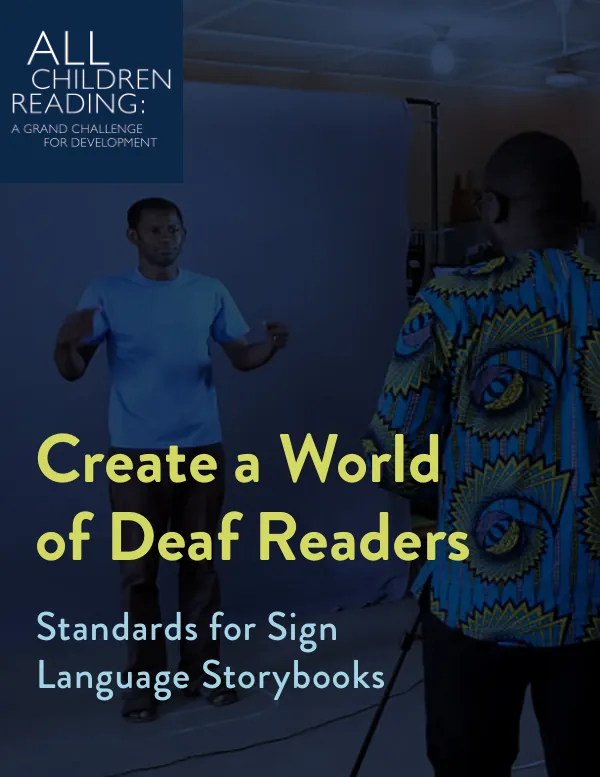
Create a World of Deaf Readers: Standards for Sign Language Storybooks
The creation of children's sign language storybooks is a crucial aspect of promoting literacy and education among Deaf children in underserved languages.
2023 · 115 pages
Sign in to readA free account is required to download.
Abstract
To support this effort, the Rochester Institute of Technology/National Technical Institute for the Deaf (RIT/NTID) developed the Standards for Sign Language Storybooks. These standards aim to provide a framework for creating high-quality sign language storybooks that cater to the unique needs of Deaf children. The standards emphasize the importance of sign language in Deaf children's education, highlighting the need for accessible language that promotes literacy and comprehension. The document reviews the current landscape of sign language storybooks, noting the dearth of materials available in many languages. It also explores the importance of books in sign language, citing research that suggests that Deaf children who have access to sign language storybooks tend to perform better academically. The standards outline guidelines for creating or adapting content for sign language storybooks, including recommendations for reading levels, grade-appropriate content, and storytelling techniques. The document also provides guidance on sign language translation, highlighting the need for accurate and culturally sensitive translations. In terms of video production, the standards emphasize the importance of high-quality video production that showcases the sign language storybook in a clear and engaging manner. The document provides guidance on handling a video camera, framing, background and lighting, and production crew and signer roles. The standards also highlight the importance of Deaf experience content, Deaf culture folktales, and Deaf family life in sign language storybooks. The document notes that these themes are essential for promoting Deaf identity and culture, and for providing Deaf children with positive role models and stories that reflect their experiences. Overall, the Standards for Sign Language Storybooks aim to provide a comprehensive framework for creating high-quality sign language storybooks that cater to the unique needs of Deaf children. By promoting literacy and education among Deaf children, these standards have the potential to make a significant impact on the lives of Deaf individuals around the world. The document emphasizes the importance of language development in Deaf children, highlighting the need for interactive and mediated sign language stories that promote language facilitation and attention span. The standards also note the connections between L1 modality 1 (spoken language) and L1 modality 2 (written language), as well as the connections between L1 modality 1 (signed language) and L2 modality 2 (written language). In terms of reading comprehension, the standards emphasize the importance of storybook glossary-dictionary, which provides a list of key vocabulary and definitions to support Deaf children's reading comprehension. The document also notes the importance of standards for sign language storybooks, which provide a framework for creating high-quality sign language storybooks that cater to the unique needs of Deaf children. The document also notes the importance of Deaf experience content, Deaf culture folktales, and Deaf family life in sign language storybooks, highlighting the need for positive role models and stories that reflect Deaf experiences. The standards also emphasize the importance of STEM content and contemporary content in sign language storybooks, noting the need for diverse and engaging stories that promote Deaf children's interests and learning.