USAID DEC
Creating Partnerships That Reduce the Impacts of Illegal Wildlife Trade on People, Elephants and Rhinos
Sign inUSAID
Creating Partnerships That Reduce the Impacts of Illegal Wildlife Trade on People, Elephants and Rhinos
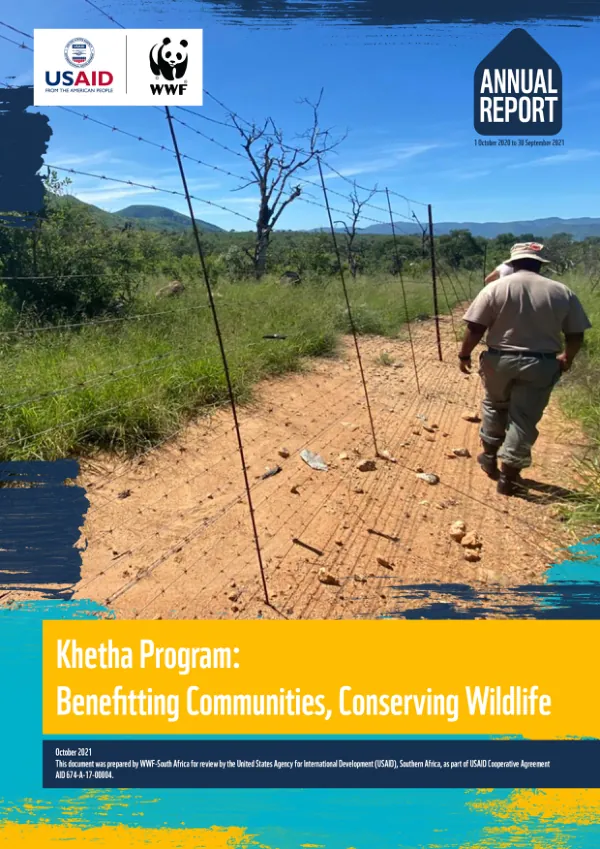
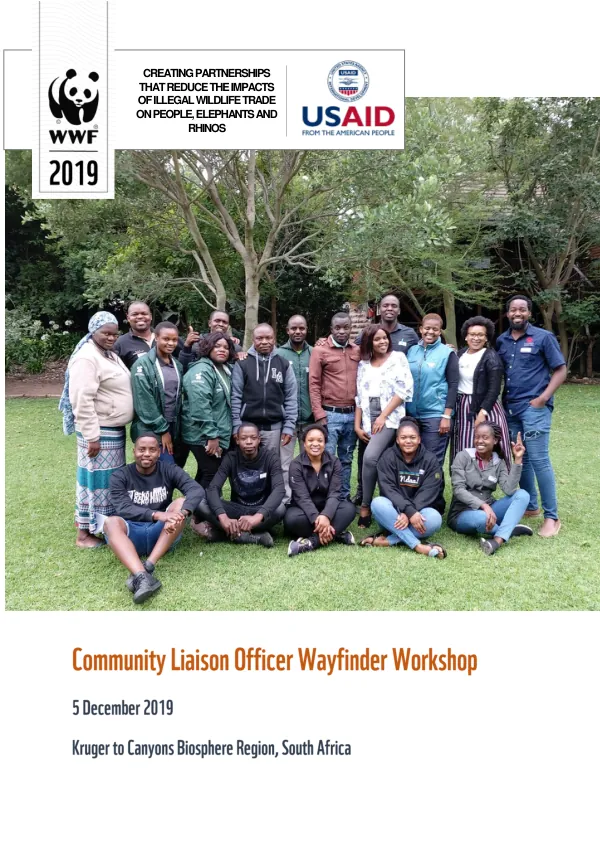
The Wayfinder Workshop with Community Liaison Officers in the Kruger to Canyons Biosphere Region (K2C) aimed to create partnerships that reduce the impacts of illegal wildlife trade on people, elephants, and rhinos.
2019 · 16 pages
Sign in to readA free account is required to download.
Abstract
The workshop was facilitated by the Khetha Program, supported by the United States Agency for International Development (USAID). The program seeks to support innovative partnerships and novel approaches within civil society, communities, private sector, and government to improve relationships between people and wildlife in the Great Limpopo Transfrontier Conservation Area (GLTFCA). The Wayfinder process is a facilitated approach useful for resilience assessment, planning, and action in social-ecological systems. It represents the frontier in resilience and sustainability science, synthesized into a clear, coherent, and hands-on approach. The process involves five phases, each divided into three modules, and consists of a set of work cards that describe specific concepts, tasks, and activities. Conducting a Wayfinder process requires skilled facilitation and involves a range of stakeholders engaged at different points in the process. The workshop participants, Community Liaison Officers (CLOs), were paired up to discuss their work experience and what they do on a daily basis. They were then required to write each other's name tags with a picture illustrating three things they have learned about their partner. This process introduced a safe space for engagement and an opportunity for participants to connect and get to know each other at a personal level. The CLOs were also introduced to the Five Why's tool, which helps identify the root cause of a problem and opens up discussion about whether projects exist in the landscape to address this challenge. The groups identified the following as the main challenges in the K2C landscape: unequal sharing of benefits in a community, waste, water scarcity, and poor communication between protected areas and communities as well as amongst community members. The workshop participants collectively unpacked each group's framing of the problem they identified, and the issues were constructively debated. The Five Why's tool is an easy, practical tool to help participants think critically about the challenges they experience without shifting blame. The CLOs were also introduced to the iceberg-analogy to help them think about their current work and the level of impact they are making in society. This tool helped the CLOs find opportunities for collaboration and highlighted where there are gaps at various levels of impact. By completing the iceberg diagram with existing CLO projects and initiatives, it revealed that most of the work done with communities focuses on a crisis and behavior change. The exercise also revealed gaps such as a lack in efforts that aim to understand the emerging patterns that cause a crisis, a lack in efforts to influence structures that cause a crisis or address the crisis. The workshop participants gained an appreciation for the socio-economic, environmental, and political complexity of their landscape through the use of a stakeholder mapping exercise. The participants mapped all the stakeholders they perceive to be important to address the challenges in their communities. At first, only two stakeholders were perceived as important – the South African Police Service and the Tribal Authority. However, more stakeholders were identified as the workshop participants explored different groups and stakeholders that should be engaged in the landscape. Working in groups and guided by the Three Ls (Landscape, Livelihoods, and Lifestyles), the CLOs painted a picture of what the landscape looks like, the type of economic activities communities engage in, and the social gatherings that bring people together in the communities. This gives the project designer a greater awareness of the social and cultural aspects of the community by painting a picture of how the community members understand their environment, how they interact with the environment and with one another, and identifying opportunities and barriers that might require intervention.