INTERNATIONAL COMMITTEE FOR THE RED CROSS
Current U.S. Humanitarian Assistance Efforts in Libya
Humanitarian assistance efforts in Libya have been ongoing since the conflict began.
2011 · 8 pages
Sign in to readA free account is required to download.
Abstract
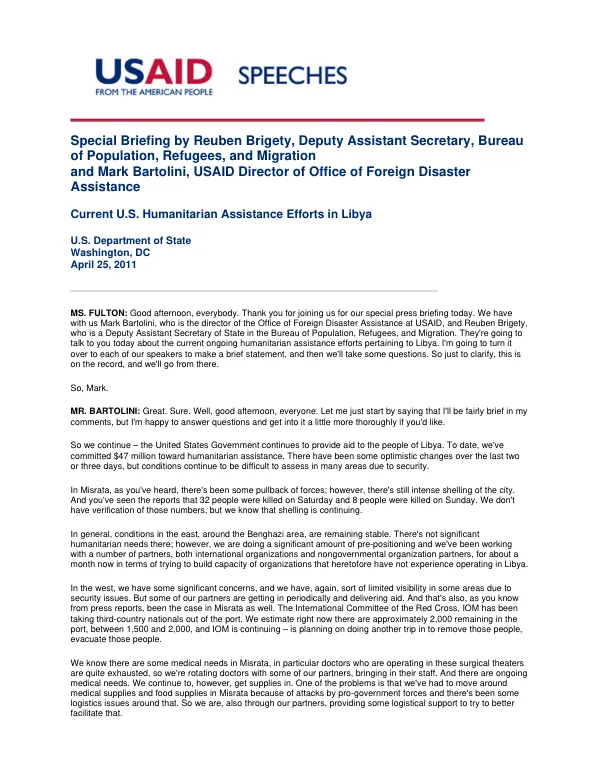
The United States Government has committed $47 million to aid the people of Libya. Initial assessments indicated that conditions in the east, particularly in the area around Benghazi, were relatively stable, with limited humanitarian needs. However, in the west, concerns have been expressed due to security issues, and some partners have been able to deliver aid periodically. In Misrata, intense shelling has continued, resulting in reported casualties. The International Committee of the Red Cross and the International Organization for Migration have been evacuating third-country nationals from the port. Approximately 2,000 people remain in the port, and the International Organization for Migration plans to conduct another evacuation. Medical needs have been reported in Misrata, with doctors operating in surgical theaters. The United States has provided medical supplies and food supplies, but logistical issues have arisen due to pro-government forces' attacks. The U.S. Government has also provided logistical support to facilitate the delivery of aid. A significant humanitarian airlift has been conducted to evacuate people from Libya to their home countries. The outflow of people has been substantial, with approximately 550,000 people fleeing Libya as of April 24. The majority of these people are third-country nationals who have left Libya and are heading to Tunisia and Egypt. The U.S. Government has committed $47 million to humanitarian assistance, with $13 million allocated to the International Organization for Migration, $10 million to the World Food Program, $7 million to the United Nations High Commissioner for Refugees, and $7 million to the International Committee of the Red Cross. The U.S. Government has also committed $10 million to support non-governmental organizations. Humanitarian aid has been distributed in both the east and west of Libya, with the International Committee of the Red Cross and non-governmental organizations operating in these areas. However, logistical challenges have arisen due to security issues. The U.S. Government has worked with partners to address these challenges and ensure the delivery of aid. The United Nations Flash Appeal for Libya has been launched, seeking $311 million to support humanitarian operations. Only 42% of this amount has been met by the international community. The U.S. Government continues to review its resources and encourage other donor governments to do the same to meet the humanitarian needs of the population. Non-lethal assistance has been provided to the rebels, but this is not humanitarian aid and does not meet the emergency needs of the population. The U.S. Government has committed $27 million to this effort, which is not part of the humanitarian assistance account. Encouraging signs have been reported in Misrata, with a decrease in street fighting and government forces pulling back. However, shelling continues, and access to the area remains limited. The U.S. Government remains hopeful that this trend will continue and that humanitarian aid will be able to reach the affected population more easily.
Related documents