FANTA
Defining Nutrition Assessment, Counseling, and Support (NACS)
The nutrition assessment, counseling, and support (NACS) approach aims to improve the nutritional status of individuals and populations by integrating nutrition into policies, programs, and the health service delivery infrastructure.
2012 · 4 pages
Sign in to readA free account is required to download.
Abstract
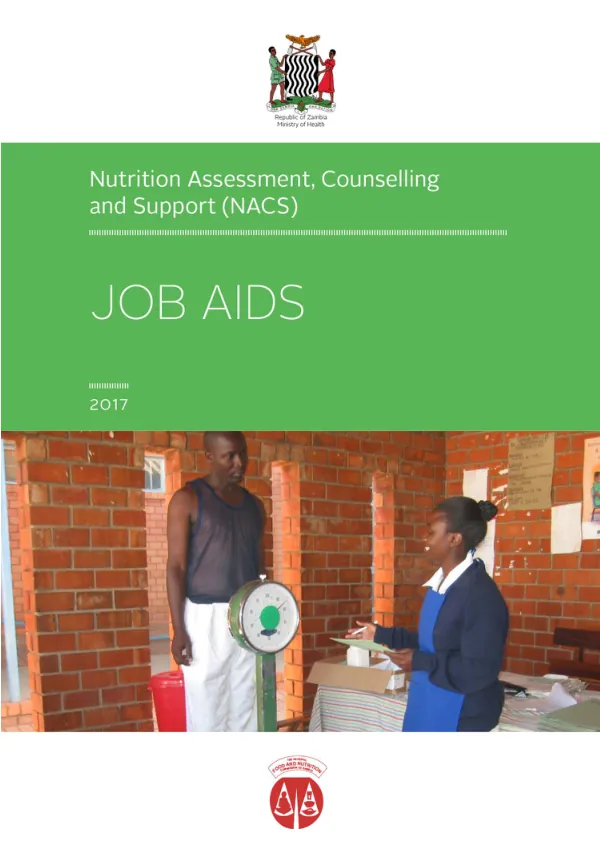
This approach strengthens the capacity of facility- and community-based health care providers to deliver nutrition-specific services while linking clients to nutrition-sensitive interventions provided by various sectors. Nutrition assessment is a critical first step in improving and maintaining nutritional status. It involves identifying medical complications that affect nutritional status, tracking growth and weight trends, detecting diet habits that make it difficult to improve health or increase the risk of disease, informing nutrition messages and counseling, and establishing a framework for an individual nutrition care plan. NACS aims to establish routine nutrition assessment as an integral component of both facility- and community-based screening, care, and support. Nutrition counseling is an interactive process between a client and a trained counselor that uses information from nutrition assessments to prioritize actions to improve nutritional status. Counseling helps identify client preferences, barriers to behavior change, and possible solutions to overcome those barriers. Nutrition support includes therapeutic and supplementary foods to treat clinical malnutrition, complementary food supplements for children 6-23 months old to prevent malnutrition, micronutrient supplements to prevent vitamin and mineral deficiencies, and point-of-use water purification products to prevent water-borne disease. The NACS approach also aims to strengthen referrals to nutrition-sensitive interventions that can help improve food security and nutritional status, thereby improving health outcomes. Such interventions include household food support, home-based care, agricultural extension services, and economic strengthening and livelihood support. A suggested bidirectional referral system links NACS clients to community-based economic strengthening, livelihoods, and food security support. The components of NACS reinforce and build on each other to improve health outcomes. No component of NACS should be addressed without the others. Health care providers need to know clients' nutritional status to counsel them on how to maintain healthy weight, manage common clinical symptoms, and avoid or treat infections and to refer them for needed medical care or social support. However, malnourished clients that do not have adequate access to nutritious food need more than nutrition counseling. They need support at various levels targeted to their specific needs to improve their nutritional status. The enabling environment for NACS includes program financing, global guidance, national policies and strategies, human resources, and partnerships and synergies with other programs, as well as the infrastructural support necessary to provide and access NACS services. Quality improvement is an essential element to improve the efficiency and effectiveness of health care delivery processes and systems, as well as the performance of health workers in delivering NACS services. Many countries have developed context-specific NACS guidelines, training materials, and job aids that can be adapted elsewhere.
Related documents