CATHOLIC RELIEF SERVICES ORGANIZATION
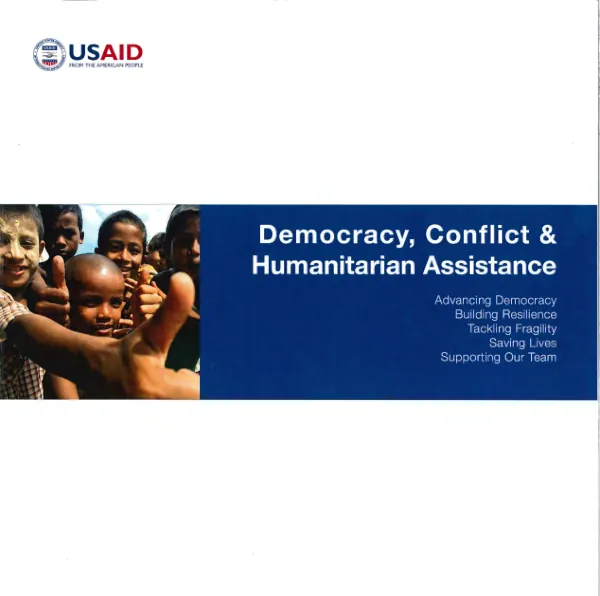
Democracy, Conflict & Humanitarian Assistance
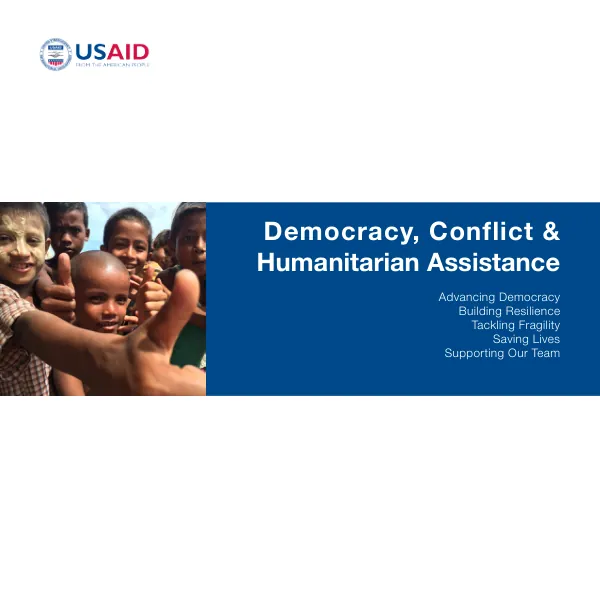
The Bureau for Democracy, Conflict, and Humanitarian Assistance is a key component of the United States Agency for International Development (USAID).
2015 · 12 pages
Sign in to readA free account is required to download.
Abstract
The Bureau's primary objective is to promote democratic and resilient societies that can mitigate disasters and conflicts, and stay on a path toward peace and prosperity. This is achieved by supporting inclusive and accountable democracies, strengthening resilience in areas of recurrent crisis, and providing timely and effective life-saving humanitarian responses. The Bureau has a global presence, with more than 800 team members across nine offices, who possess the expertise necessary to assess, design, and manage programs in difficult and rapidly evolving environments. The Bureau's technical assistance focuses on bolstering the role of civil society, establishing high-impact partnerships with local organizations, and building the capacity of local organizations and newly-formed or evolving governments to preserve and expand democratic and peaceful space in complex political environments. The Bureau's capabilities include early warning systems, such as the Famine Early Warning System Network (FEWSNET), which provides early warning on acute food insecurity, and assessment tools that measure the risk of armed conflict across countries. The Bureau also has prepositioned commodities, including emergency shelter materials, warm blankets, water treatment systems, and hygiene kits, that can be transported rapidly to disaster-affected areas around the globe. The Bureau manages innovative mechanisms that foster collaborative and innovative approaches to constantly evolving situations, including the Rapid Response Program, the International Emergency Food Assistance Annual Program Statement, the SWIFT indefinite quantity contract, the Consortium for Elections and Political Processes Strengthening cooperative agreement, the Global Civil Society Strengthening cooperative agreement, and Programming Effectively against Conflict and Extremism. The Bureau deploys funds to prevent, respond, recover, and transition from crisis, including the International Disaster Assistance account, the Food for Peace Title II cash assistance, the Transition Initiatives account, the Elections and Political Processes fund, the Human Rights Grants Program, and the Complex Crises Fund. The Complex Crises Fund, for example, enables timely investments to catalyze peace and mitigate conflict in advance or in the face of unforeseen crises or violence. The Bureau's offices, including the Office of U.S. Foreign Disaster Assistance, the Office of Transition Initiatives, the Office of Food for Peace, the Center of Excellence on Democracy, Human Rights, and Governance, and the Office of Crisis Surge Support Staff, work together to achieve the Bureau's objectives. The Office of U.S. Foreign Disaster Assistance leads and coordinates the U.S. Government's humanitarian assistance in response to disasters overseas, while the Office of Transition Initiatives supports U.S. foreign policy by seizing emerging windows of opportunity in the political landscape to promote stability, peace, and democracy. The Office of Food for Peace aims to improve the food security of vulnerable populations around the world through development and emergency food assistance.