USAID DEC
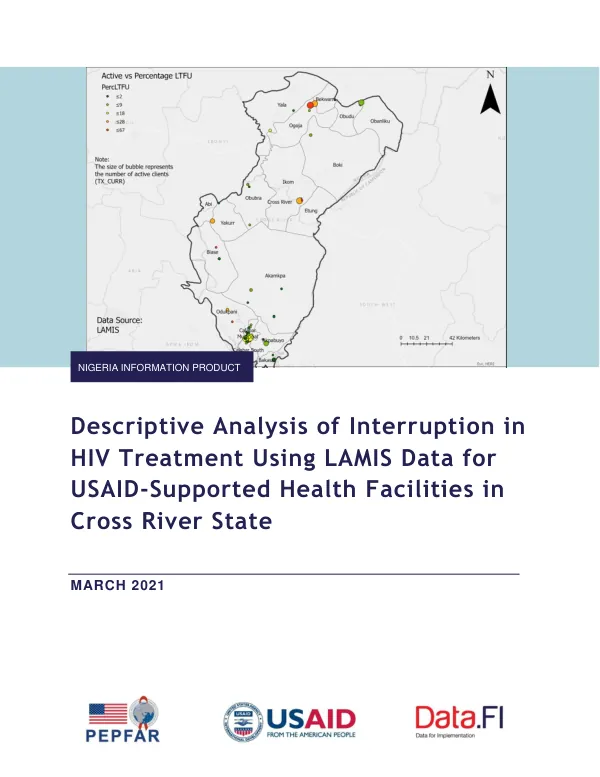
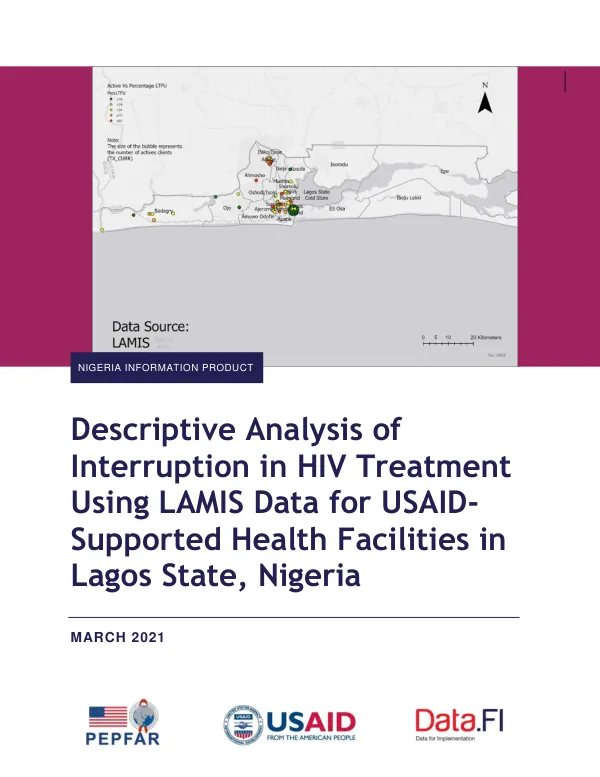
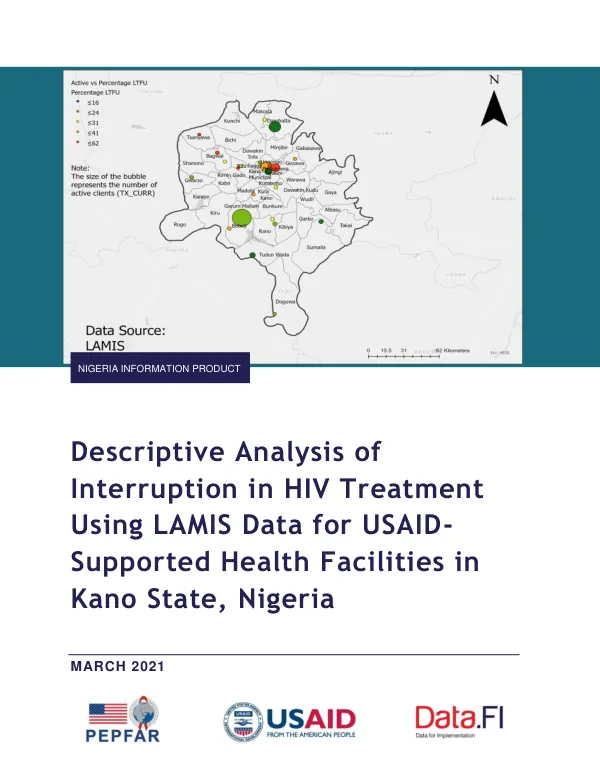
Descriptive Analysis of Interruption in HIV Treatment Using LAMIS Data for USAID-Supported Health Facilities in Akwa Ibom State
Sign inPALLADIUM INTERNATIONAL, LLC
Descriptive Analysis of Interruption in HIV Treatment Using LAMIS Data for USAID-Supported Health Facilities in Akwa Ibom State
The analysis of interruption in HIV treatment using LAMIS data for USAID-supported health facilities in Akwa Ibom State was conducted to identify potential relationships between clients' current 28-day status and other client variables.
2021 · 25 pages
Sign in to readA free account is required to download.
Abstract
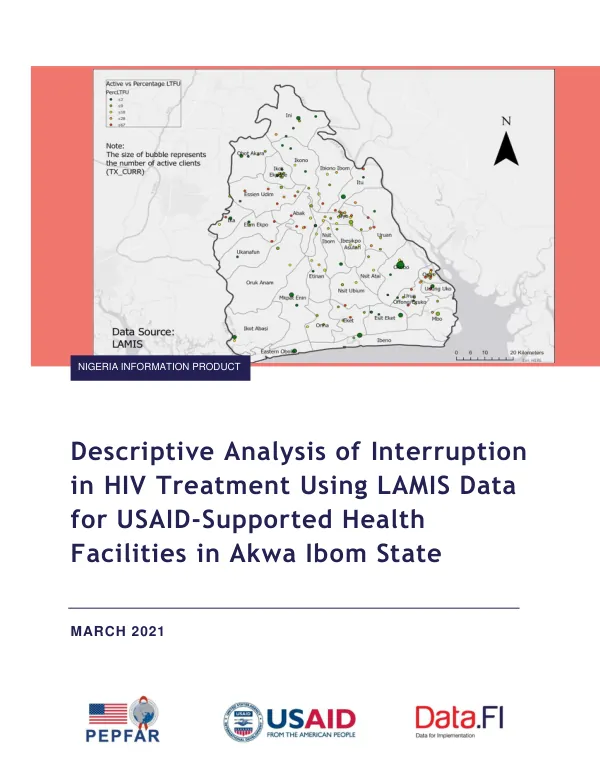
The objectives of the study were to perform a descriptive analysis of the LAMIS data, describe the relationship of a subset of variables with interruption in treatment, and identify and profile sites within Akwa Ibom State with disproportionally low continuity of treatment. The study used retrospective cohort data from 484 USAID-supported PEPFAR facilities across 16 states that initiated ART. The data was compiled into a single database for analysis, resulting in 616,762 LAMIS client records. The data was cleaned and evaluated using the R software to explore relationships associated with clients experiencing interruption in treatment. The analysis revealed that interruption in treatment was a significant issue in Akwa Ibom State, with 28% of clients experiencing treatment interruption. The study found that age, sex, and time on ART were significant predictors of interruption in treatment. Clients aged 25-34 years had the highest rate of interruption in treatment, followed by clients aged 35-44 years. Women had a higher rate of interruption in treatment compared to men, particularly in the 25-34 age group. The analysis also identified high-risk populations, including clients aged 25-34 years, women, and clients from certain local government areas (LGAs). The study found that clients from LGAs with high rates of interruption in treatment were more likely to experience treatment interruption. The top priority facilities with clients experiencing interruption in treatment were identified, and the geographic distribution of these facilities was mapped. The study's findings have implications for HIV programming in Akwa Ibom State. Understanding which clients are at risk of treatment interruption is essential to assessing program impact and tailoring HIV programming to bring those clients back into treatment with care models that are accessible and meet their needs. The study's results can inform the development of targeted interventions to reduce treatment interruption and improve continuity of care for clients living with HIV in Akwa Ibom State. The analysis of the LAMIS data highlights the importance of understanding facility and client data trends related to engagement in treatment. The study's findings can inform the development of client-centered care models to support people living with HIV in continuing to engage in treatment and achieving viral suppression. The study's results can also inform the development of facility programs to improve retention of clients on treatment and reduce treatment interruption. The study's methodology involved the use of descriptive analysis to explore relationships associated with clients experiencing interruption in treatment. The analysis was conducted using the R software, and the results were presented in a series of figures and tables. The study's findings are based on a large dataset of 616,762 LAMIS client records, making it a robust analysis of interruption in HIV treatment in Akwa Ibom State. The study's results have implications for HIV programming in Nigeria and can inform the development of targeted interventions to reduce treatment interruption and improve continuity of care for clients living with HIV. The study's findings can also inform the development of client-centered care models to support people living with HIV in continuing to engage in treatment and achieving viral suppression.
Related documents