USAID DEC
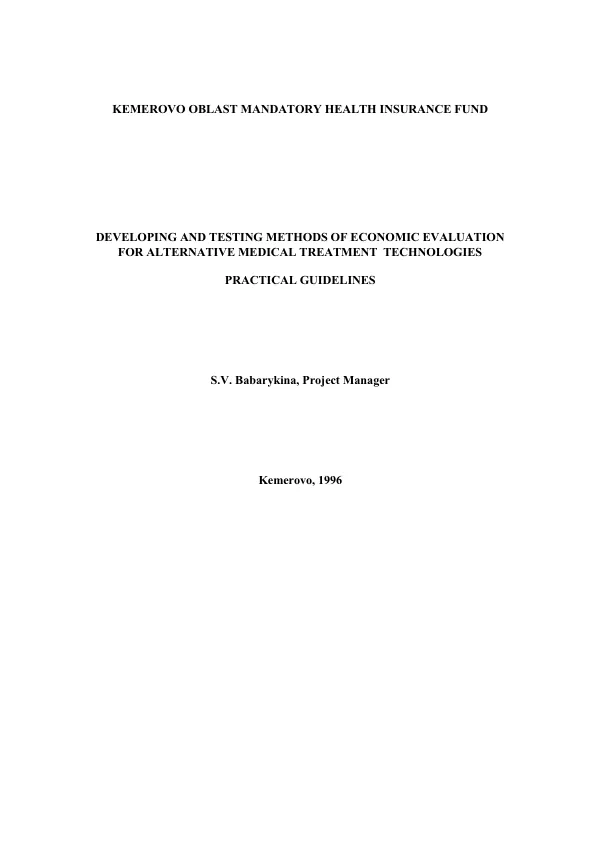
Developing and Testing Methods of Economic Evaluation for Alternative Medical Treatment Technologies
Sign inUSAID
Developing and Testing Methods of Economic Evaluation for Alternative Medical Treatment Technologies
The initiative's geographic focus was on Eastern Province, with a specific emphasis on the districts of Kirehe and Nyagatare.
17 pages
Sign in to readA free account is required to download.
Abstract
The program's timeframes were divided into three phases, with the first phase focusing on initial assessments and capacity building, the second phase on implementation and training, and the third phase on midterm evaluation and scaling up. Recommendations from the midterm evaluation included increasing support for irrigation infrastructure development and providing additional training on market linkage facilitation. The evaluation also highlighted the need for more targeted support for women-headed households and vulnerable populations. The initiative's implementation details were managed by a team of local and international partners, including the Rwandan Ministry of Agriculture and Animal Resources, the National Agricultural Export Development Board, and USAID. The program's budget was allocated across three main components: farmer training and capacity building, infrastructure development, and market linkage facilitation. The initiative's overall goal was to improve agricultural productivity and market access for smallholder farmers in Eastern Province, with a focus on increasing household income and improving food security. The program's success was measured through a combination of quantitative and qualitative indicators, including crop yields, household income, and food security status.
Classification
Related documents