INTERNATIONAL LIVESTOCK RESEARCH INSTITUTE
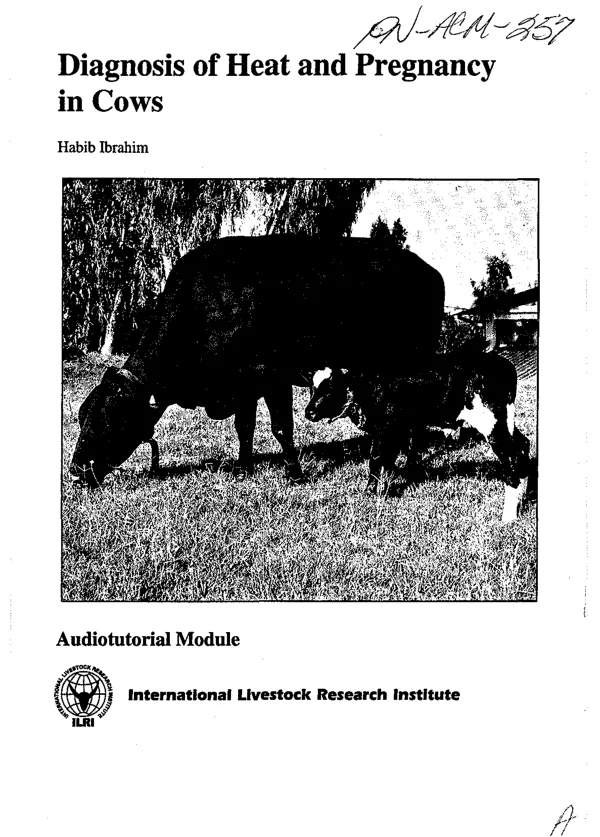
Diagnosis of Heat and Pregnancy in Cows
The reproductive cycle of a cow is a complex process involving various physiological changes.
14 pages
Sign in to readA free account is required to download.
Abstract
Heat and pregnancy are two critical events that occur during this cycle. Heat, also known as oestrus, is the period when a cow is receptive to mating and can become pregnant. Pregnancy, on the other hand, is the period when a cow is carrying a developing fetus. The interval between two successive heats is called the oestrus cycle, which typically lasts around 21 days in cattle. The heat period is the shortest phase of this cycle, lasting around 12-24 hours. To observe as many episodes of heat as possible, cows should be observed carefully and often, especially in the morning and late afternoon. Cows that are on heat exhibit specific behavioral changes, including restlessness and noise. The surest sign of heat is when the cow or heifer permits other animals to mount her while she remains standing, known as standing heat. This behavior is often accompanied by physical changes, such as ruffled hair on the tail head and flank, and scarred and dirty skin on either side of the tail. In addition to behavioral changes, physical signs of heat include a moist, slightly swollen, and pink vulva. Hormonal changes associated with heat cause an increase in blood supply to the reproductive organs, leading to swelling and reddening of the vulva. Mucus hanging in strings from the vulva indicates that a cow has been on heat and should not be used for breeding. Artificial methods can be used to help detect the onset of heat in cattle. One simple method is to release a teaser bull among cows, which can help identify animals on heat. The teaser bull mounts the cow on heat but fertilization does not occur. Pregnancy diagnosis is critical for managing cattle fertility. Traditionally, farmers declare a cow pregnant when it fails to return to the oestrus cycle or heat. However, this method is not always accurate and can lead to incorrect diagnoses. In the field, palpation is the most reliable method to diagnose pregnancy, which involves inserting a hand via the rectum and gently palpating the ovaries and the uterus. Palpation is a skilled technique that requires training and expertise, and should be performed by a veterinary surgeon or trained technician. A veterinary surgeon uses the palpation method to detect swelling of the uterus and ovary, the presence of foetal contents, and enlarged uterine arteries. However, this method is difficult and the results of the diagnosis are not reliable during early stages of pregnancy. A simpler method for diagnosing pregnancy is to analyze progesterone in the blood or milk. Progesterone is essential to maintain pregnancy, and its concentration increases when an animal conceives and maintains a corpus luteum on her ovaries. Blood sampling is usually recommended on day 20 or 21 after mating or insemination, and involves simple jugular collection of approximately 10 ml taken from the distended neck vein with a needle and glass vacuum tube. Plasma progesterone concentration can be estimated by the enzyme-linked immunosorbent assay (ELISA) technique using test kits. The ELISA technique involves adding 10 μl of four undiluted standards to the appropriate wells on the microtitre plates, then adding all samples to the remaining wells. The plate is then incubated at room temperature for 30 minutes, washed twice with cold water, and read at 405 nm using a spectrophotometer or plate reader. Records of dates of heat period and pregnancy checks must be kept so that reproductive data can be interpreted. This information is essential for managing cattle fertility and making informed decisions about breeding and reproduction.
Related documents
Documents in this collection
 2021
2021USAID DEC
Breakthrough RESEARCH—Social and Behavior Change Costing Community of Practice Series Brief #1: Costing social and behavior change programming—the role of the denominator
Open record 2021
2021USAID DEC