CHILD FUND INTERNATIONAL
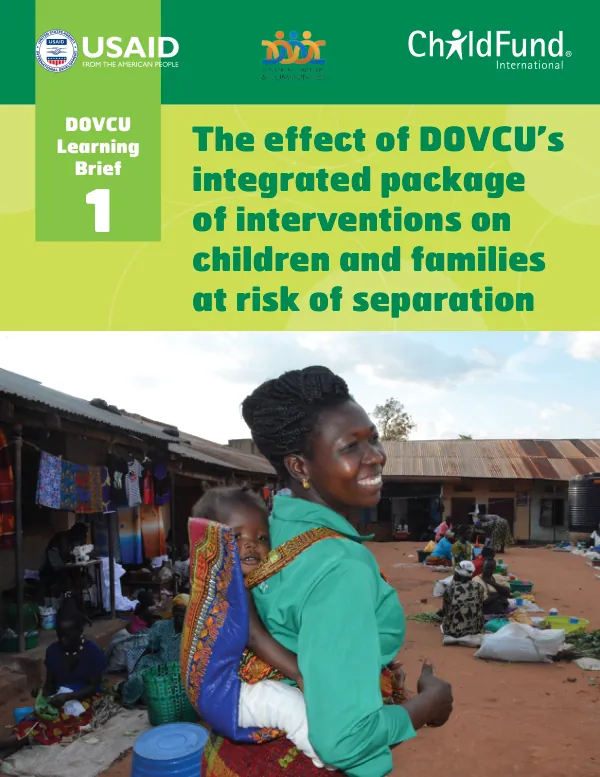
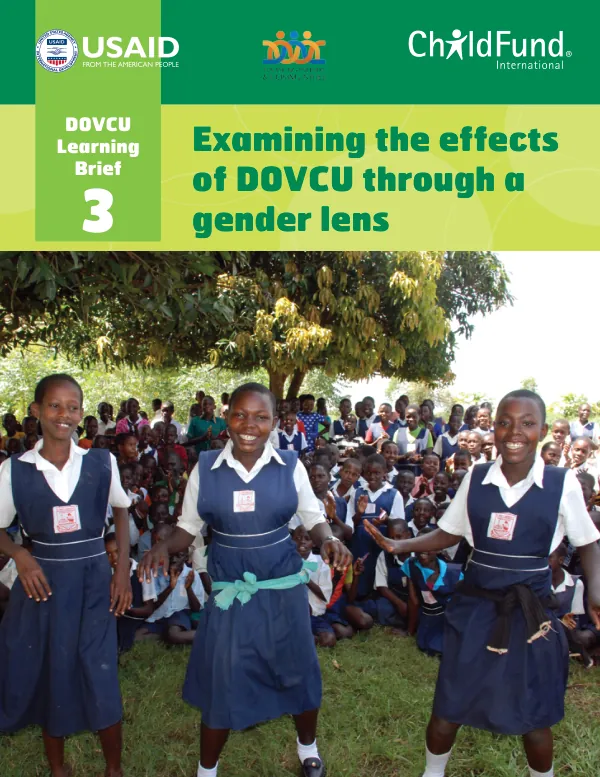
DOVCU Learning Brief 3: Examining the effects of DOVCU through a gender lens
The Deinstitutionalization of Orphans and Vulnerable Children in Uganda (DOVCU) Project was a three-year initiative implemented by ChildFund International, Uganda, between July 2014 and June 2017.
2017 · 9 pages
Sign in to readA free account is required to download.
Abstract
The project aimed to keep and reintegrate children into the care of families, with a focus on reducing household vulnerabilities for households at risk of separation and those with reintegrating children. ChildFund International led a consortium of project partners, including Transcultural Psychosocial Organization (TPO Uganda), Child's i Foundation (CiF), and Retrak. The DOVCU project delivered an integrated package of interventions, including economic and social support, to address the needs of vulnerable households and children. The project's approach was based on a graduated model, which classified households into three categories: destitute, struggling, and growing. Destitute households received cash transfers to stabilize household consumption, while struggling households were provided with options such as savings and credit to manage household cash flow and promote asset growth. Growing households were linked to micro-enterprise opportunities to expand their household income. The project's analysis focused on the effects of DOVCU through a gender lens, examining the differences in child vulnerability scores between male and female children, as well as between households headed by males and females. The analysis was based on data collected from 1,511 households with 2,675 children at risk of separation and 528 households with 786 reintegrating children. The data was assessed for vulnerability in three categories: Household Economic Vulnerability, Household Vulnerability, and Child Vulnerability. The results of the analysis showed relative parity between male and female children in terms of their change in child vulnerability class over the life of the project. For instance, the percentage of boys assigned to "critical risk" decreased from 4 percent to 0 percent, while the percentage of girls assigned to the same category decreased from 3 percent to 1 percent. The analysis also found that there were minimal differences between male and female children in terms of reductions in child vulnerability scores between baseline and endline. However, statistically significant differences between males and females did exist in the age cohort of 15-17, with females showing a greater reduction in child vulnerability scores than males. The analysis also found that households headed by females showed a greater reduction in household economic vulnerability scores than households headed by males. The DOVCU project's findings suggest that the integrated package of interventions was effective in reducing vulnerabilities for households at risk of separation and those with reintegrating children, regardless of the sex of the child or household head. The project's approach, which prioritized a graduated model and integrated social and economic support, appears to have been effective in addressing the needs of vulnerable households and children.