AMHARA DEVELOPMENT ASSOCIATION
Draft Outline
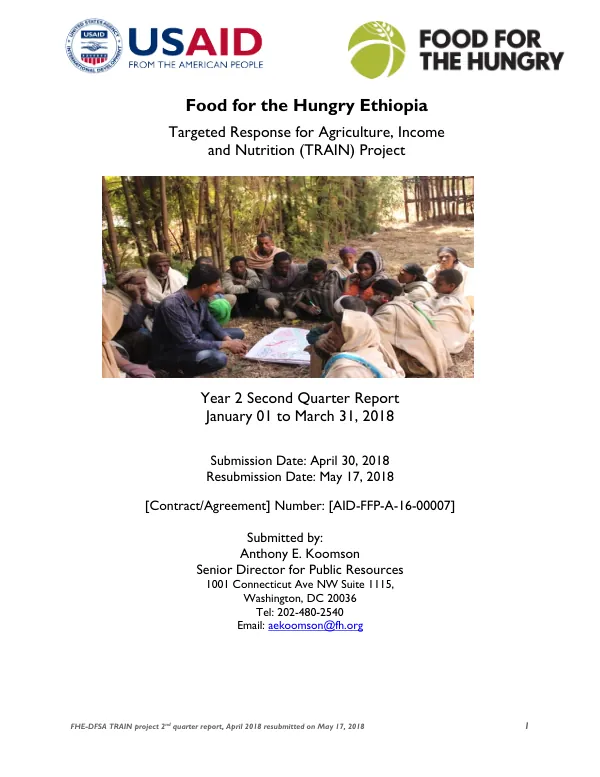
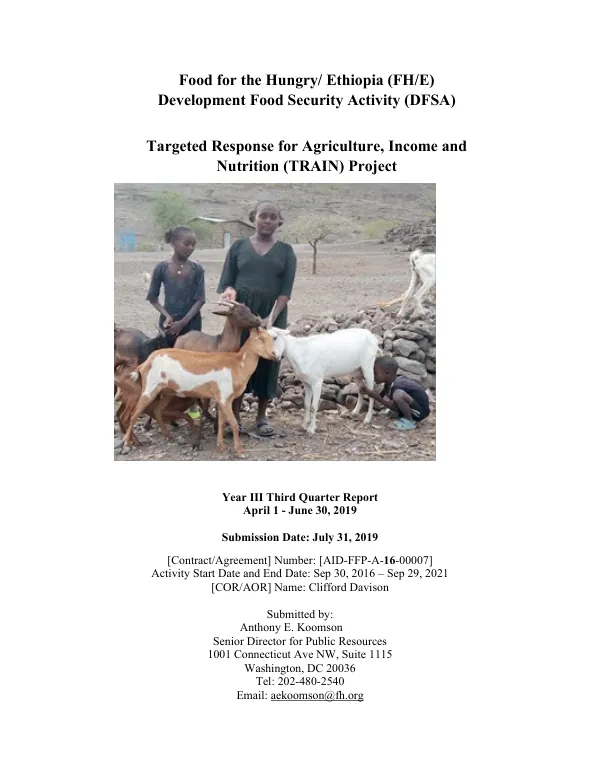
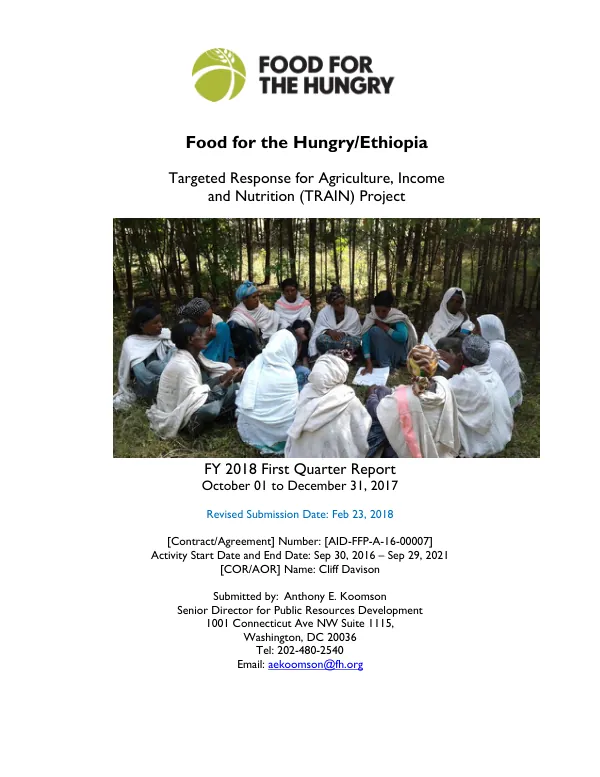
The Targeted Response for Agriculture, Income, and Nutrition (TRAIN) project is currently operational in seven food-insecure woredas of Amhara Regional state, including Lay Gayint, Tach Gayint, Sedi-Muja, Simada, Abergele, Sahela, and Ziquala.
2018 · 37 pages
Sign in to readA free account is required to download.
Abstract
The project aims to enhance resilience to shocks and livelihoods, improve food security and nutrition, and enhance the overall well-being of rural households vulnerable to food insecurity. The TRAIN project has made significant progress towards its goals, with a focus on building upon the results of the first fiscal year. The project has achieved notable accomplishments in various areas, including the establishment of Disaster Risk Reduction (DRR) committees, the implementation of climate-smart agriculture practices, and the promotion of social accountability and social accountability committees. The project has also made progress in increasing the availability of safe, diverse, and nutritious foods, with a focus on improving crop yields and promoting the production of high-value crops. Additionally, the project has implemented activities aimed at increasing equitable income for men, women, and youth, including the promotion of agricultural sales and the establishment of profitable off-farm activities. Furthermore, the project has made progress in reducing acute and chronic malnutrition among children under two, women of reproductive age, and adolescent girls, with a focus on improving food intake and reducing water, sanitation, and hygiene-related illnesses. The TRAIN project has also implemented activities aimed at promoting social accountability and social accountability committees, with a focus on enhancing the participation of local communities in decision-making processes. The project has also made progress in promoting environmental compliance, environmental compliance, and global climate change adaptation. The project has also made progress in promoting stakeholder participation and involvement, with a focus on enhancing the participation of local communities in decision-making processes. The project has also made progress in promoting local capacity development, with a focus on enhancing the capacity of local institutions and local organizations. The TRAIN project has also made progress in promoting financial management, with a focus on ensuring the effective use of project resources. The project has also made progress in addressing comments from the last quarterly report, with a focus on enhancing the project's overall performance and impact. The TRAIN project has made significant progress towards its goals, with a focus on enhancing resilience to shocks and livelihoods, improving food security and nutrition, and enhancing the overall well-being of rural households vulnerable to food insecurity. The project has achieved notable accomplishments in various areas, including the establishment of DRR committees, the implementation of climate-smart agriculture practices, and the promotion of social accountability and social accountability committees. The TRAIN project has also made progress in promoting financial management, with a focus on ensuring the effective use of project resources. The project has