GEORGE WASHINGTON UNIVERSITY CIBER
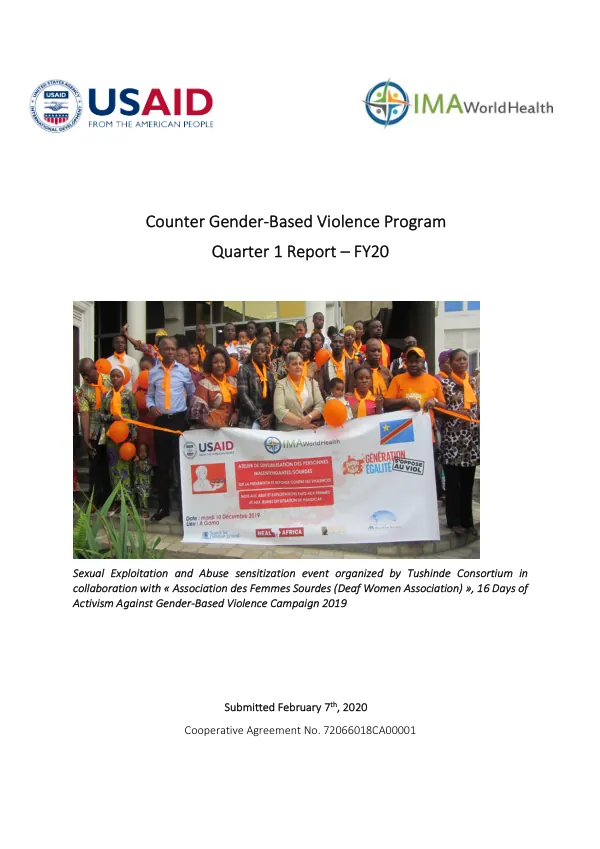
Counter Gender-Based Violence Program, Quarter 1 Report – FY20
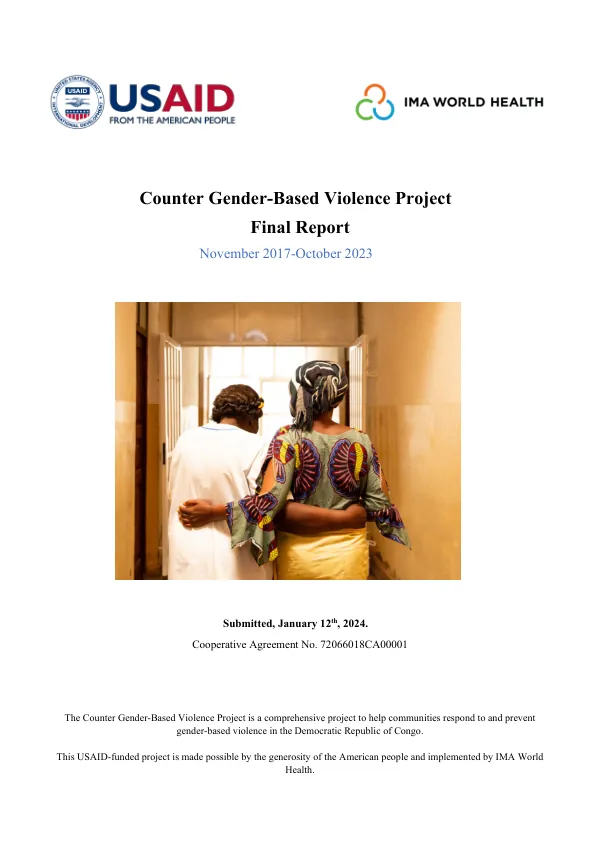
The USAID Counter Gender-Based Violence Program (CGBV or "Tushinde Ujeuri" in Swahili) is a comprehensive program to help communities respond to and prevent gender-based violence and Trafficking in Persons (TIP) in the Democratic Republic of Congo (DRC).
2020 · 50 pages
Sign in to readA free account is required to download.
Abstract
The program is implemented in five Health Zones (HZs) in the North and South Kivu Provinces of the DRC. The project goals are to strengthen community-based prevention of and response to gender-based violence (GBV), effectively reduce GBV incidence, and improve the quality of and access to holistic care for survivors, particularly among vulnerable groups including LGBTQI. The program is implemented in North Kivu Province in two HZs, Walikale and Karisimbi by Heal Africa, while Panzi Foundation is implementing in South Kivu Province (three HZs, Nyangezi, Bunyakiri, and Katana). Additional consortium technical partners include Search for Common Ground (SFCG), the American Bar Association Rule of Law Initiative (ABA-ROLI), and University of Washington (UWASH)/Johns Hopkins University (JHU). The program's quarterly report presents achievements on key indicators for Project Year 3, Quarter 1, of the CGBV/Tushinde program (or FY20, 1 October 2019 – 31 December 2019). The report highlights the program's progress in strengthening community-based prevention of and response to GBV, reducing GBV incidence, and improving the quality of and access to holistic care for survivors. The overall security situation was tense in North Kivu during this reporting period. Presumed members of the Allied Democratic Forces (ADF) armed group continued to target civilians, with reported incursions in Mbau, Ndama, and Nobili. Following the incursions, seven civilians were found dead on December 5th in villages around Nobili in the Beni territory. Some 3,000 people left Beni town to settle in Makumu, Mambasa Territory (Ituri Province). Other internal displacements were recorded in the same period in Mangina, following attacks in Musandaba, Mandumbi, and Biakato as well as in Rutshuru and Masisi. Despite the security challenges, the program continued to make progress in achieving its goals. The report highlights the program's achievements in strengthening community-based prevention of and response to GBV, reducing GBV incidence, and improving the quality of and access to holistic care for survivors. The program's technical partners, including SFCG, ABA-ROLI, and UWASH/JHU, played a crucial role in supporting the program's implementation and achieving its goals. The program's achievements are presented in the report through various indicators, including the prevalence rate of GBV among women, men, and children in target geographic areas. The report also highlights the program's progress in strengthening community organizational capacity, reducing community tolerance of GBV, and improving the availability and quality of GBV-related services. The program's quarterly report provides a comprehensive overview of its progress in achieving its goals and highlights the challenges faced by the program in the reporting period. The report provides valuable insights into the program's implementation and achievements, and it serves as a useful tool for stakeholders, including USAID, the program's technical partners, and the communities served by the program. The program's achievements in Quarter 1 of FY20 are significant, and they demonstrate the program's commitment to strengthening community-based prevention of and response to GBV, reducing GBV incidence, and improving the quality of and access to holistic care for survivors. The program's progress in achieving its goals is a testament to the hard work and dedication of the program's staff, technical partners, and stakeholders. The program's quarterly report also highlights the importance of continued support for the program's implementation and achievement of its goals. The program's success depends on the continued commitment of its stakeholders, including USAID, the program's technical partners, and the communities served by the program. The program's quarterly report serves as a reminder of the importance of continued support for the program's implementation and achievement of its goals.