USAID
Driving Demand for Chlorhexidine: A Human-Centered Design Toolkit
The human-centered design toolkit for driving demand for chlorhexidine in umbilical cord care was developed by the Center for Accelerating Innovation and Impact (CII) at USAID.
2016 · 37 pages
Sign in to readA free account is required to download.
Abstract
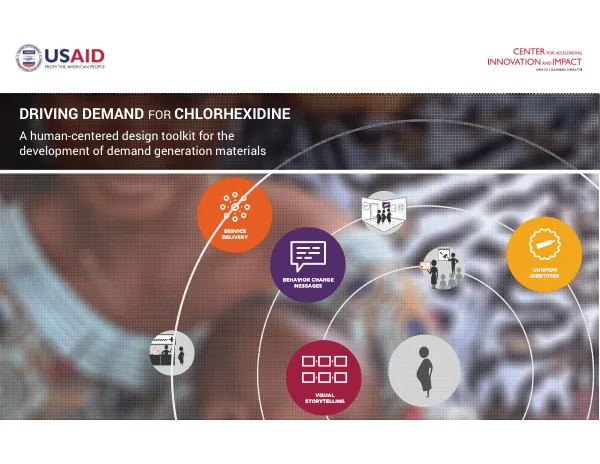
The toolkit is designed to support countries and communities in introducing and scaling chlorhexidine, with Nigeria serving as a representative example. The guide walks users through the process of mapping a birthing ecosystem to understand the people and organizations associated with birth. A birthing ecosystem is a network of stakeholders, relationships, and influences that inform childbirth. In the Nigerian ecosystem, the expectant mother is at the center, surrounded by family, community, health facilities, and manufacturers. The family includes the people closest to the expectant mother, such as the mother-in-law, husband, and sisters. The community encompasses people, groups, and locations, including traditional birth attendants, chemists, and local government. Health facilities include institutions like pharmacies, hospitals, and clinics, and individuals such as nurses, doctors, and midwives. Manufacturers and their supply partners are responsible for getting products like chlorhexidine into the community. The challenges manufacturers and suppliers face in ensuring chlorhexidine availability vary from state to state. The toolkit uses a human-centered design approach, which puts the focus on understanding the people, traditions, and context that inform behavior. This approach guides the collaborative development of concepts likely to shift behavior to the best outcome. The toolkit includes a guide and an asset library, which provide a starting point for adapting the concepts in the guide or building new ones. The guide explains how to map a birthing ecosystem, capture and document representative birth stories, and generate concepts designed to create demand for chlorhexidine. The asset library includes images and editable templates that can be used to create sample versions of the concepts. The toolkit is designed to be adaptable to different countries and contexts, and it includes lessons learned from other countries' successful efforts. The toolkit is intended for a range of audiences, including implementing partners, health promotion divisions, pharmacists, and community health workers. The ultimate goal of the toolkit is to drive demand for chlorhexidine and increase its availability in communities, ultimately improving maternal and newborn health outcomes.