MERCY CORPS INTERNATIONAL
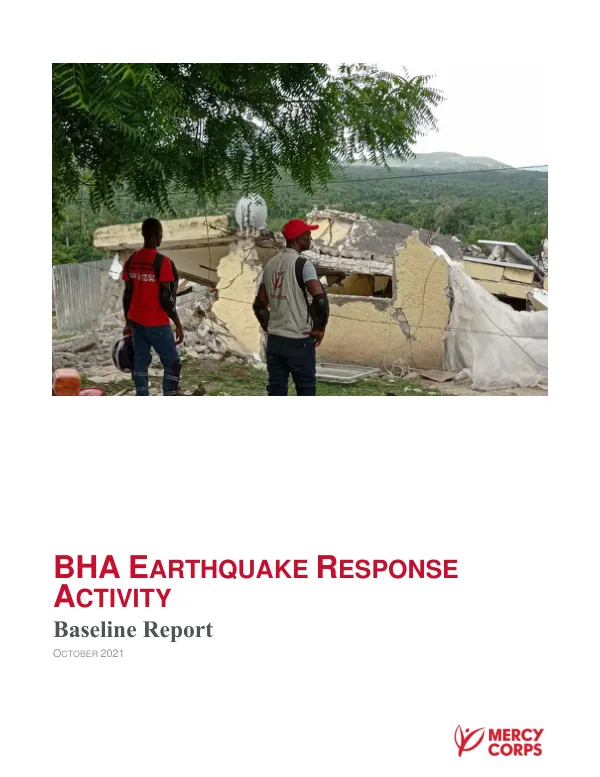
Earthquake Response Activity: Baseline Report
The Earthquake Response Activity in Haiti was launched in September 2021 by Mercy Corps, with funding from the USAID Bureau for Humanitarian Assistance (BHA).
2021 · 13 pages
Sign in to readA free account is required to download.
Abstract
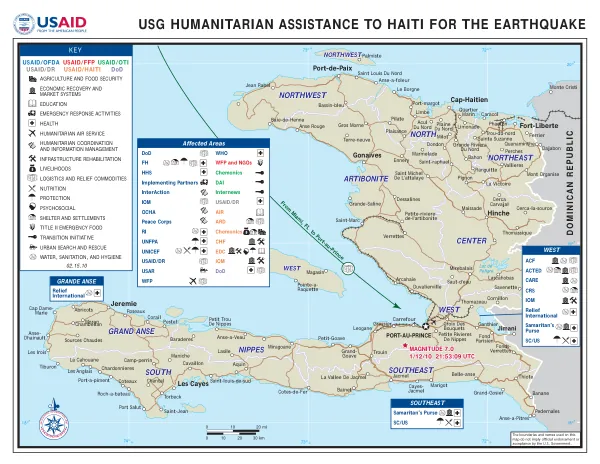
The program aims to provide 2,000 households with multipurpose cash assistance (MPCA) and emergency and extended WASH support, as well as 33 small-holder producer associations and 300 small to medium enterprises with small cash transfers to support livelihoods in the Nippes and Grand'Anse departments. The baseline study found that 17.4% of eligible earthquake-affected households are able to meet all or most of their basic needs, while 79.4% of households do not currently live in a safe and dignified shelter. Additionally, 31.9% of households can name 3 of 5 critical times to wash their hands, highlighting the need for critical hygiene promotion and awareness-raising activities. The earthquake on August 14, 2021, caused extensive devastation in Haiti, with over 60,000 homes destroyed and 76,000 damaged in the hardest-hit departments of Sud, Grand Anse, and Nippes. The government estimates that approximately 600,000 people are in need of humanitarian assistance. Mercy Corps conducted a rapid needs assessment in the week of August 16, 2021, which included a household-level survey with 3,599 households in the commune of L'Asile in the Nippes department. The baseline study used a participatory sampling strategy, selecting communes based on data collected by the Direction Generale Protection Civile (DGPC), which detailed the most earthquake-affected communes in Nippes. Within each commune, the number of households to be surveyed was proportional to the number of earthquake-affected households. A total of 2,162 households were surveyed, with 1,441 households considered eligible for assistance and included in the baseline analysis. The quantitative household survey was administered to adults 18 years or older in the crisis-affected zone, with enumerators instructed to alternate between male and female respondents to ensure a gender balance. The survey collected data on household composition, vulnerability, and access to basic needs such as shelter, water, and sanitation. The baseline study aimed to inform an understanding of the immediate intervention context, measure program outcome-level indicator baseline values, and identify opportunities for improved implementation in future program design. The baseline findings highlight the significant needs of earthquake-affected households in Haiti, including the need for safe shelter, access to clean water and sanitation, and critical hygiene promotion and awareness-raising activities. The Earthquake Response Activity aims to address these needs through the provision of MPCA, emergency and extended WASH support, and small cash transfers to support livelihoods.
Related documents