USAID/OFDA
USAID/OFDA Haiti Earthquake Response
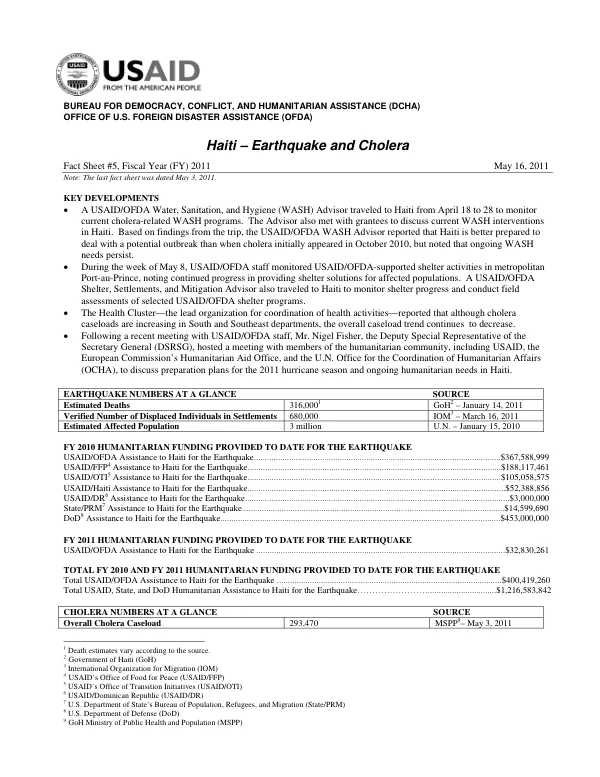
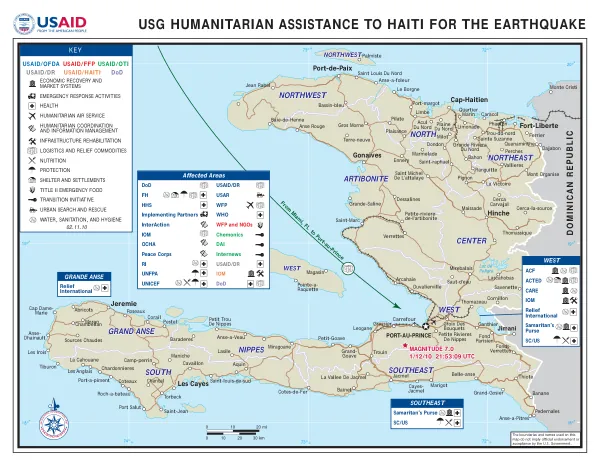
The earthquake that struck Haiti on January 12, 2010, had a magnitude of 7.0 and occurred at 21:53:09 UTC.
2 pages
Sign in to readA free account is required to download.
Abstract
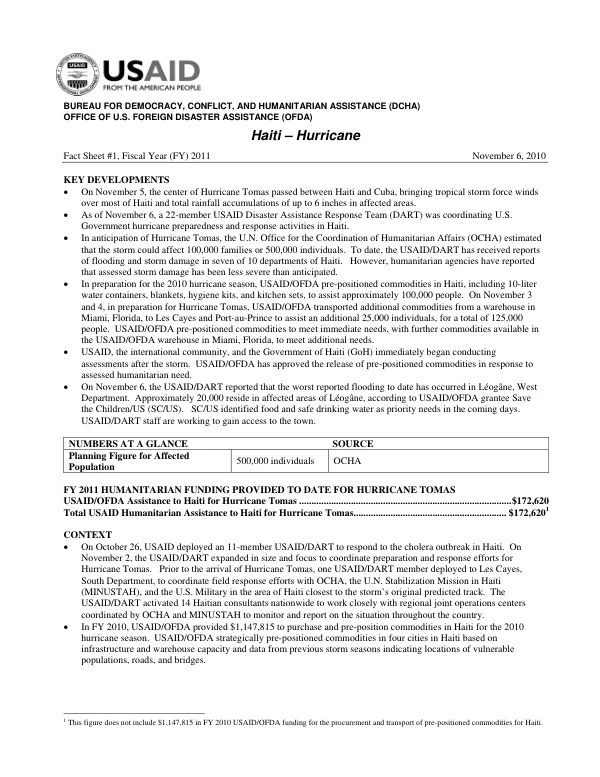
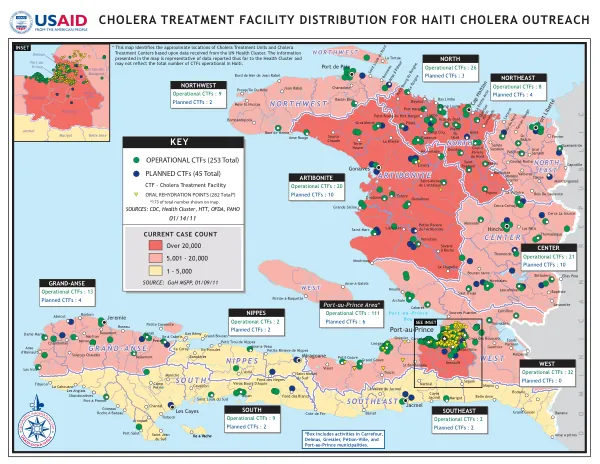
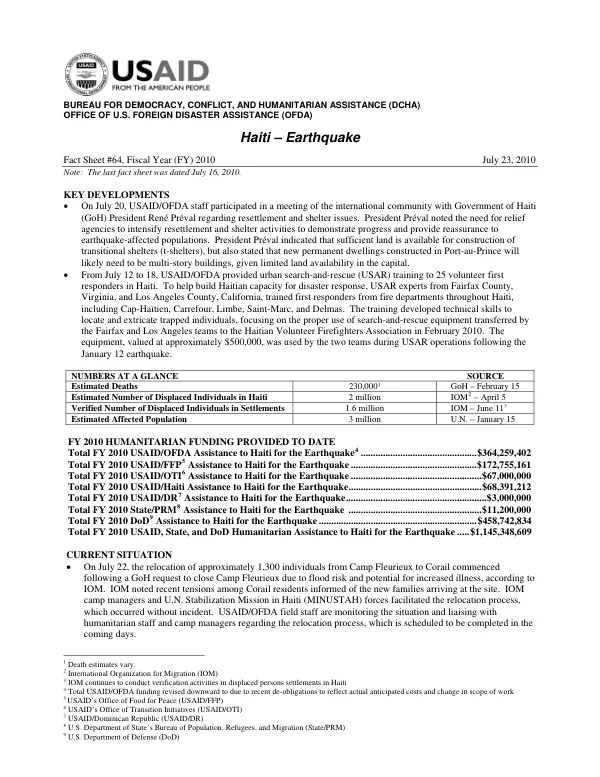
The epicenter was located in the region of Léogâne, approximately 16 miles west of Port-au-Prince. The earthquake caused widespread destruction and resulted in significant loss of life, with an estimated 200,000 fatalities and 300,000 injuries. The affected areas included the capital city of Port-au-Prince, as well as several surrounding communes, including Léogâne, Petit-Goâve, Gressier, and Jacmel. The Modified Mercalli (MMI) Intensity Scale was used to assess the severity of the earthquake's impact, with areas such as Léogâne and Jacmel experiencing the most significant damage, with 80-90% and 50-60% of structures destroyed, respectively. The population of the affected areas was severely impacted, with an estimated 800,000 to 1,000,000 people displaced and 2,000,000 in need of food assistance. The total number of people affected by the earthquake was approximately 3,000,000. The commune population figures, as of 2003, were 117,504 for Petit-Goâve, 134,190 for Léogâne, 25,947 for Gressier, and 137,966 for Jacmel. The earthquake also caused significant damage to infrastructure, including roads, bridges, and buildings. The estimated population of the metropolitan area of Port-au-Prince was over 2,000,000, with the commune population of Port-au-Prince itself being 704,776. The earthquake's impact was felt across the country, with the most affected areas being the South, West, and Center departments. The earthquake's impact was further exacerbated by the country's already fragile infrastructure and the lack of preparedness for such a disaster. The response to the earthquake was led by the Haitian government, with support from international organizations and aid agencies. The United States Agency for International Development (USAID) played a key role in the response efforts, providing humanitarian assistance and coordinating relief efforts with other organizations. The affected areas included the departments of Artibonite, Nippes, and Grand Anse, with the city of Port-au-Prince being the most severely impacted. The earthquake's impact was felt across the country, with the most affected areas being the South, West, and Center departments. The estimated population of the affected areas was approximately 3,000,000, with the commune population figures being 117,504 for Petit-Goâve, 134,190 for Léogâne, 25,947 for Gressier, and 137,966 for Jacmel. The earthquake's impact on the population was severe, with an estimated 200,000 fatalities and 300,000 injuries. The total number of people affected by the earthquake was approximately 3,000,000, with the commune population figures being 117,504 for Petit-Goâve, 134,190 for Léogâne, 25,947 for Gressier, and 137,966 for Jacmel. The estimated population of the metropolitan area of Port-au-Prince was over 2,000,000, with the commune population of Port-au-Prince itself being 704,776.