CHF
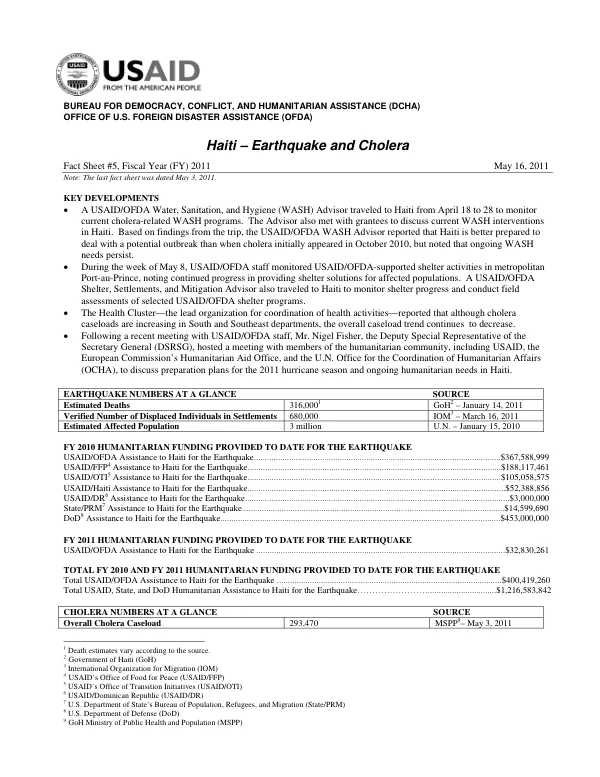
Haiti Earthquake and Cholera Fact Sheet #5 - FY 2011
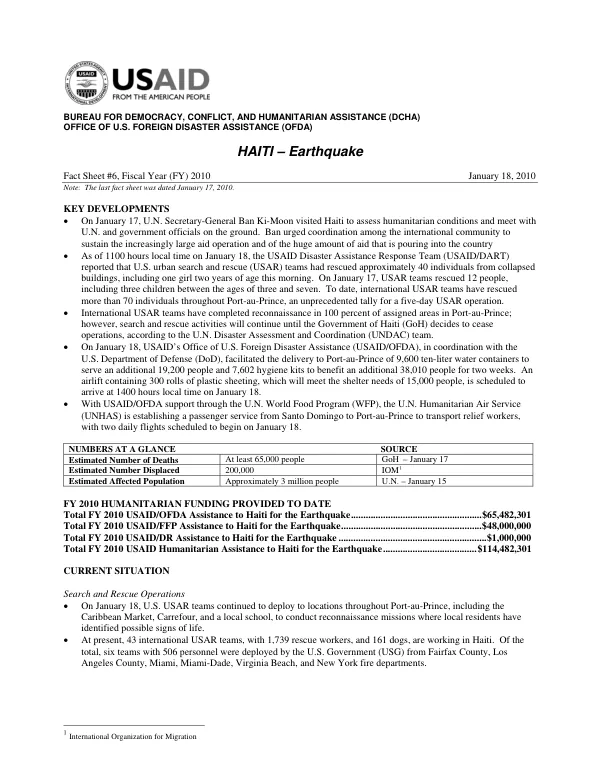
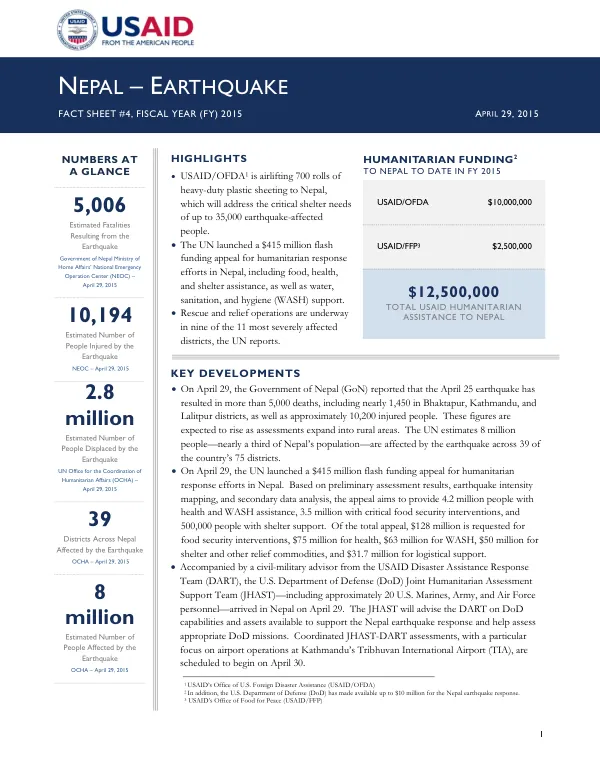
The Haiti earthquake and cholera response efforts have been ongoing since January 2010.
2011 · 5 pages
Sign in to readA free account is required to download.
Abstract
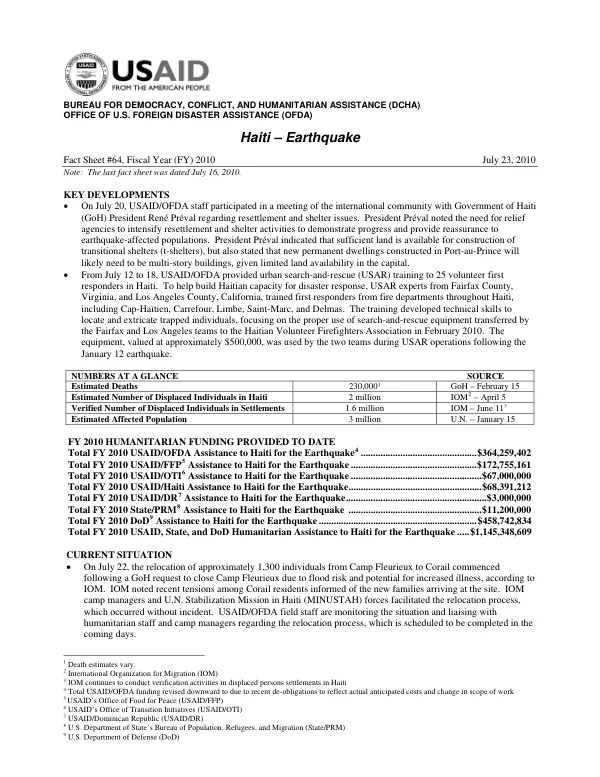
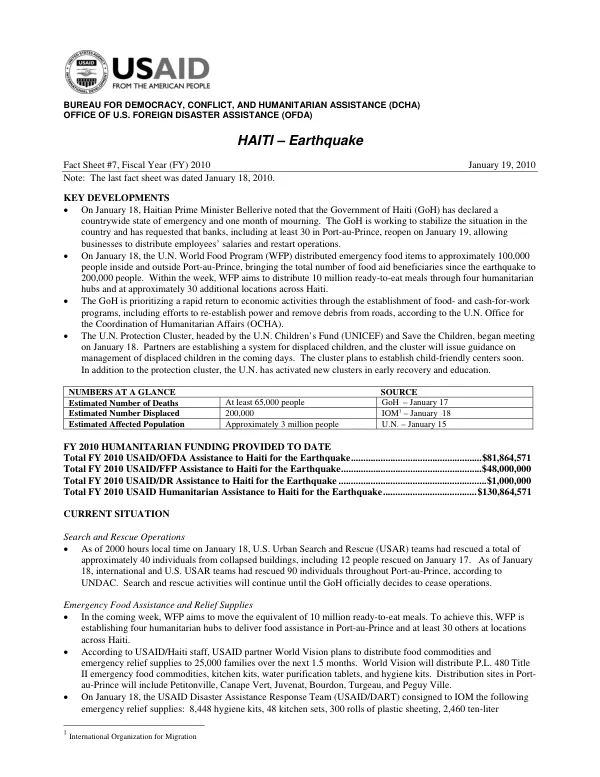
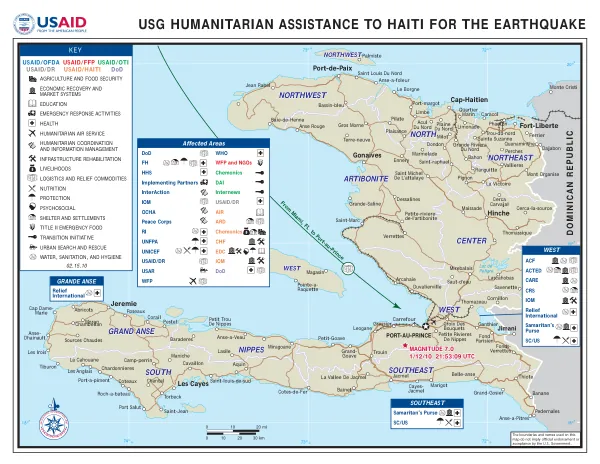
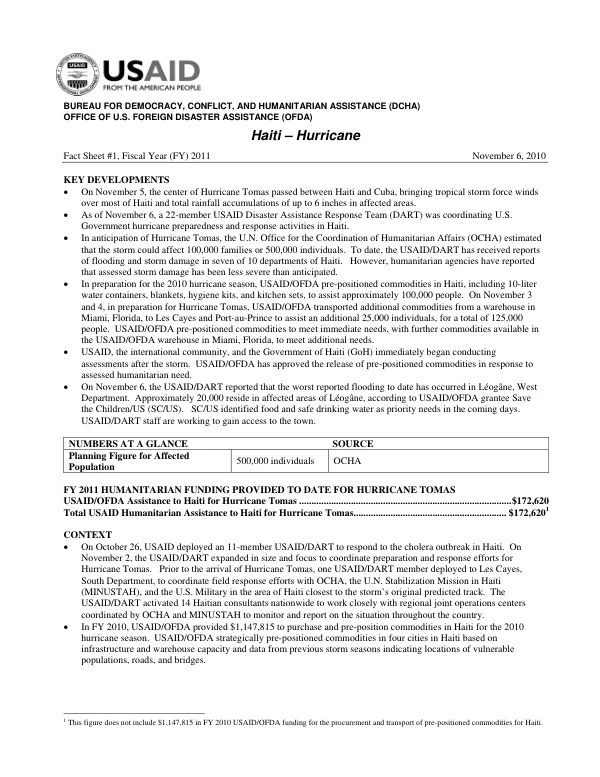
A magnitude 7.0 earthquake struck southern Haiti on January 12, 2010, resulting in an estimated 316,000 deaths and affecting approximately 3 million people. The U.S. Government provided more than $1.1 billion to meet humanitarian needs in Haiti in FY 2010, including over $716 million from USAID. Humanitarian efforts in the year following the earthquake focused on providing safe drinking water, food, household items, shelter, sanitation facilities, and health services to affected populations. USAID continues to work closely with other U.S. Government agencies, the Government of Haiti, international organizations, the United Nations, and non-governmental organizations to coordinate ongoing efforts and facilitate the transition from emergency relief activities to recovery operations. A cholera outbreak occurred in Haiti on October 22, 2010, prompting a disaster declaration by U.S. Ambassador Kenneth H. Merten. USAID/OFDA's emergency cholera response plan focused on preventing cholera cases, reducing the number of cases requiring hospitalization, and reducing the case fatality rate. The plan included four elements: provision of chlorine to increase availability of safe drinking water, expansion of national hygiene education outreach, provision of sachets of oral rehydration salts and medical supplies, and an increase in the number of cholera treatment facilities, particularly in underserved and rural areas. As of May 16, 2011, USAID/OFDA had provided $400,419,260 in humanitarian assistance to Haiti for the earthquake, including $367,588,999 from USAID/OFDA Assistance to Haiti for the Earthquake. For cholera, USAID/OFDA had provided $40,436,354 in assistance, with a total of $63,019,887 in USG humanitarian assistance to Haiti for cholera. Shelter and settlement programs have been a key component of the humanitarian response in Haiti. As of May 10, USAID/OFDA grantees had completed 22,106 transitional shelters, sufficient to house more than 110,500 beneficiaries. USAID/OFDA has provided more than $106 million for earthquake-related shelter and settlement programs in Haiti. A cholera risk and vulnerability analysis conducted by the Pan-American Health Organization (PAHO), the Government of Haiti's Ministry of Public Health and Population (MSPP), and USAID/OFDA health grantees indicated that cholera outbreaks could occur in areas with large population concentrations and a high risk of water contamination. The analysis results highlighted the need for continued cholera prevention and control efforts in Haiti. The humanitarian context in Haiti remains complex, with ongoing needs for shelter, sanitation, and health services. USAID/OFDA continues to work closely with other U.S. Government agencies, the Government of Haiti, international organizations, the United Nations, and non-governmental organizations to coordinate ongoing efforts and facilitate a smooth transition from emergency relief activities to development programming.