USAID DEC
Economic Consequences of Post–Kala-Azar Dermal Leishmaniasis in a Rural Bangladeshi Community
Sign inJOHNS HOPKINS UNIVERSITY
Economic Consequences of Post–Kala-Azar Dermal Leishmaniasis in a Rural Bangladeshi Community
Visceral leishmaniasis is a disease caused by protozoan parasites of the Leishmania donovani complex, transmitted by sand fly vectors.
2011 · 7 pages
Sign in to readA free account is required to download.
Abstract
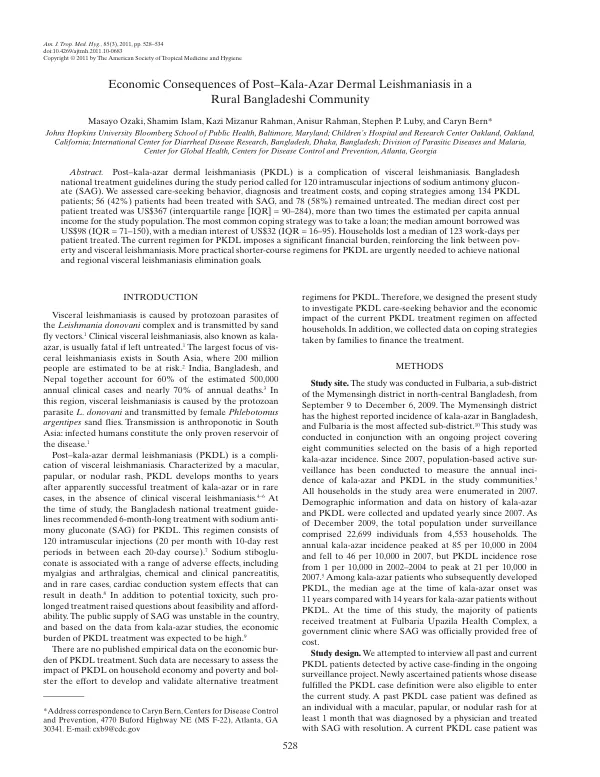
Clinical visceral leishmaniasis, also known as kala-azar, is usually fatal if left untreated. The largest focus of visceral leishmaniasis exists in South Asia, where 200 million people are estimated to be at risk. India, Bangladesh, and Nepal together account for 60% of the estimated 500,000 annual clinical cases and nearly 70% of annual deaths. In this region, visceral leishmaniasis is caused by the protozoan parasite L. donovani and transmitted by female Phlebotomus argentipes sand flies. Post-kala-azar dermal leishmaniasis (PKDL) is a complication of visceral leishmaniasis, characterized by a macular, papular, or nodular rash. PKDL develops months to years after apparently successful treatment of kala-azar or in rare cases, in the absence of clinical visceral leishmaniasis. The Bangladesh national treatment guidelines recommended a 6-month-long treatment with sodium antimony gluconate (SAG) for PKDL. This regimen consists of 120 intramuscular injections, which raises questions about feasibility and affordability due to potential toxicity and economic burden. The study was conducted in Fulbaria, a sub-district of the Mymensingh district in north-central Bangladesh, from September 9 to December 6, 2009. The Mymensingh district has the highest reported incidence of kala-azar in Bangladesh, and Fulbaria is the most affected sub-district. The study aimed to investigate PKDL care-seeking behavior and the economic impact of the current PKDL treatment regimen on affected households. A total of 134 PKDL patients were assessed, with 56 (42%) patients having been treated with SAG and 78 (58%) remaining untreated. The median direct cost per patient treated was US$367, more than two times the estimated per capita annual income for the study population. The most common coping strategy was to take a loan, with a median amount borrowed of US$98 and a median interest of US$32. Households lost a median of 123 work-days per patient treated. The current regimen for PKDL imposes a significant financial burden, reinforcing the link between poverty and visceral leishmaniasis. More practical, shorter-course regimens for PKDL are urgently needed to achieve national and regional visceral leishmaniasis elimination goals. The study used a structured questionnaire to collect information on care-seeking behavior and household costs incurred through activities related to the diagnosis and treatment of PKDL. The questionnaire was administered to the PKDL patient or a member of the household who served as a caretaker and could provide the relevant information. All interviews were conducted in Bengali, and data entry errors were checked against completed questionnaires. The study protocol was reviewed and approved by the ethical review committees of the International Center for Diarrheal Disease Research, Bangladesh (ICDDR,B) and the Centers for Disease Control and Prevention (CDC). Written informed consent was obtained from the adult study participants in each household before administering the questionnaire.
Related documents
Documents in this collection
 2019
2019USAID DEC
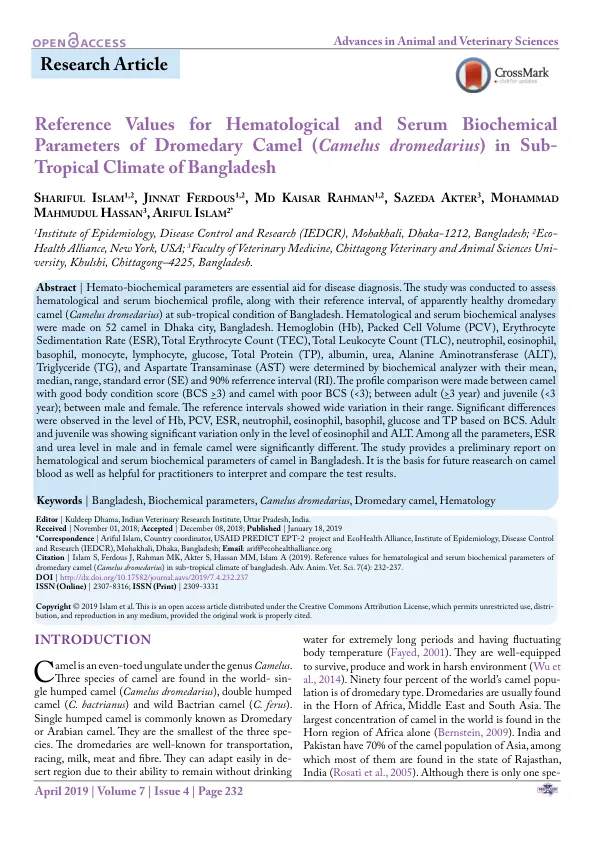
Reference Values for Hematological and Serum Biochemical Parameters of Dromedary Camel (Camelus dromedarius) in Sub-Tropical Climate of Bangladesh
Open record 2017
2017USAID DEC