CREATIVE ASSOCIATES INTERNATIONAL INC.
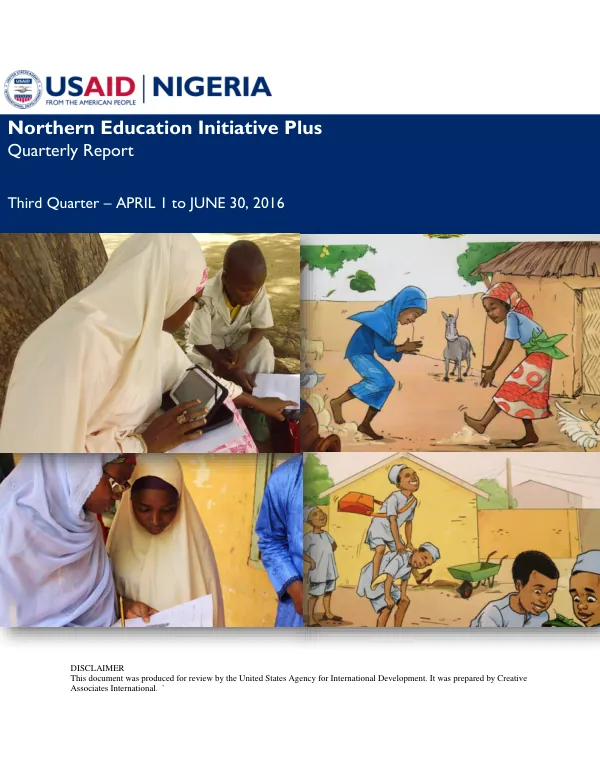
Education Crisis Response Project Year Two, Quarter Three Report
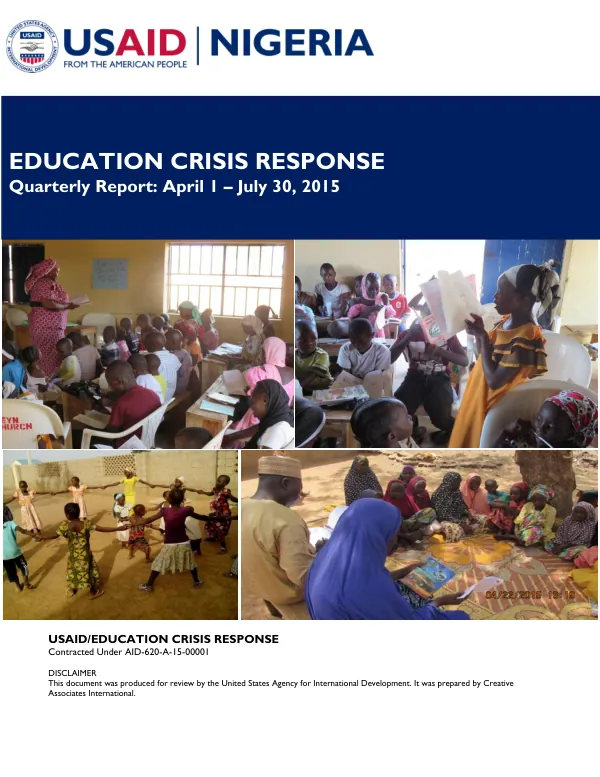
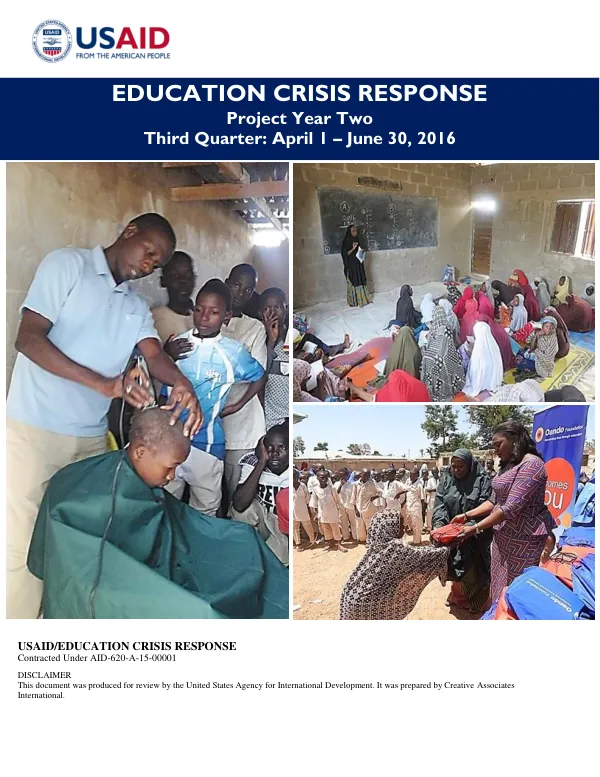
The Education Crisis Response Project in Nigeria began in 2015 with the goal of expanding access to quality, protective, and relevant non-formal education and alternative education opportunities for internally displaced out-of-school children aged 6-17 in the Adamawa, Bauchi, Borno, Gombe, and Yobe states.
2016 · 70 pages
Sign in to readA free account is required to download.
Abstract
The project is designed to address the main learning needs of internally displaced children and host learners affected by the crisis in northeastern Nigeria. The project establishes non-formal learning centers (NFLCs), youth learning centers (YLCs), and adolescent girls learning centers (AGLCs) in religious centers, community centers, formal schools, and other available alternative learning centers. These alternative educational opportunities are carried out in collaboration with other implementing partners in the region. The project also collaborates with State Ministries of Education, State Agencies for Mass Education, State Emergency Management Agencies, State Universal Basic Education Boards, and 33 Non-governmental Organizations (NGOs) sub-grantees. The project's geographic coverage includes Adamawa, Bauchi, Borno, Gombe, and Yobe states of Nigeria. The project aims to provide safe, quality, and relevant non-formal education and alternative learning centers for internally displaced out-of-school children. The project's objectives are to increase the availability of safe, quality, and relevant non-formal education and alternative learning centers, increase the quality and relevance of instructions and teaching-learning materials for literacy, mathematics, and life skills in non-formal education and alternative learning centers, increase community engagement and support of schooling in targeted non-formal education, and increase state and local government and civil society support for non-formal education and alternative learning centers. The project's implementation progress is monitored and evaluated through a monitoring and evaluation plan. The plan includes tracking the number of learners enrolled in non-formal education and alternative learning centers, the quality of instructions and teaching-learning materials, and the level of community engagement and support. The project also conducts regular assessments to identify areas of improvement and to inform future programming. The project's integration of cross-cutting issues and USAID forward priorities includes gender equality and female empowerment, sustainability mechanisms, youth development, policy and government, and local capacity development. The project aims to promote gender equality and female empowerment by increasing the participation of girls and women in non-formal education and alternative learning centers. The project also aims to develop the capacity of local governments and civil society organizations to support non-formal education and alternative learning centers. The project's stakeholder participation and involvement include collaboration with USAID and other implementing partner projects, as well as with State Ministries of Education, State Agencies for Mass Education, State Emergency Management Agencies, State Universal Basic Education Boards, and 33 Non-governmental Organizations (NGOs) sub-grantees. The project also engages with local communities and civil society organizations to promote community ownership and support of non-formal education and alternative learning centers. The project's management and administrative issues are addressed through regular monitoring and evaluation, as well as through the implementation of a management and administrative plan. The plan includes procedures for financial management, human resources management, and logistics management. The project also conducts regular assessments to identify areas of improvement and to inform future programming. The project's lessons learned include the importance of community engagement and support, the need for sustainable funding mechanisms, and the importance of collaboration with local governments and civil society organizations. The project also identifies areas for improvement, including the need to increase the quality and relevance of instructions and teaching-learning materials, and the need to improve the capacity of local governments and civil society organizations to support non-formal education and alternative learning centers. The project's planned activities for the next quarter include the establishment of new non-formal learning centers, the expansion of existing centers, and the implementation of new programs and activities. The project also plans to conduct regular assessments to identify areas of improvement and to inform future programming.