MERCY CORPS INTERNATIONAL
Effective Seed Storage in Rural Timor Leste Quarterly Report
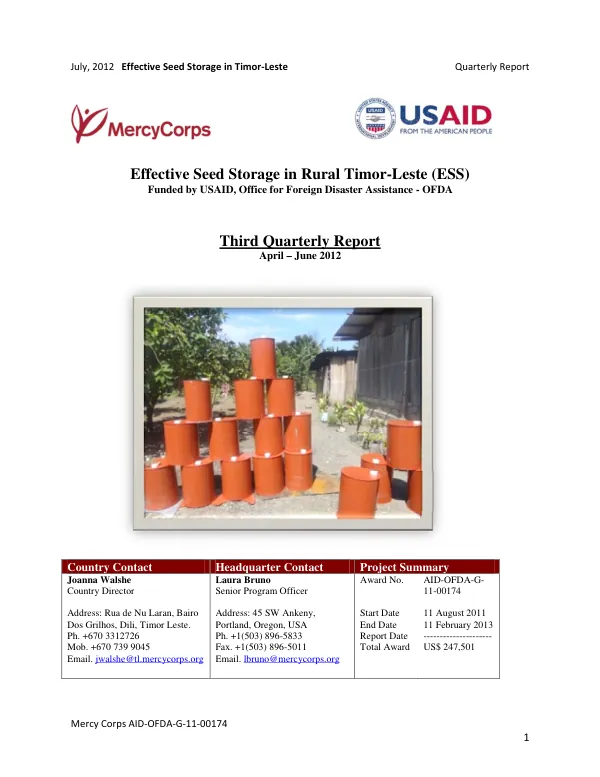
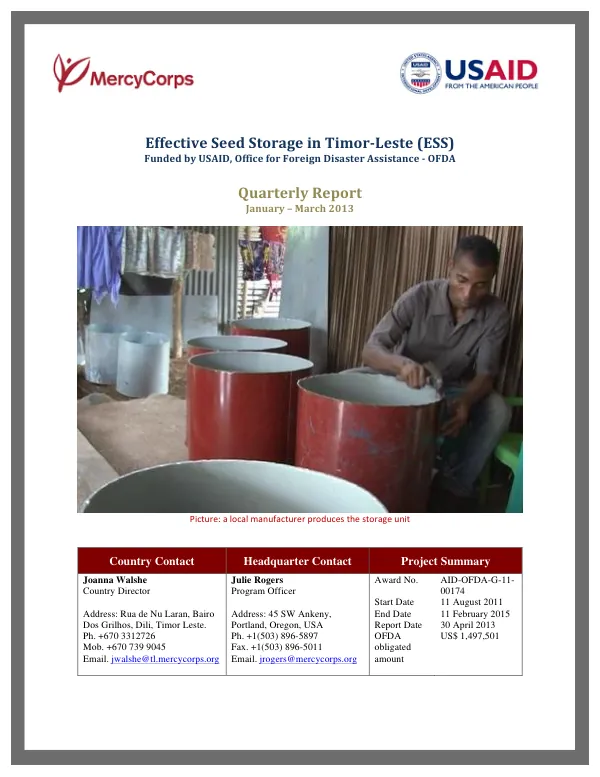
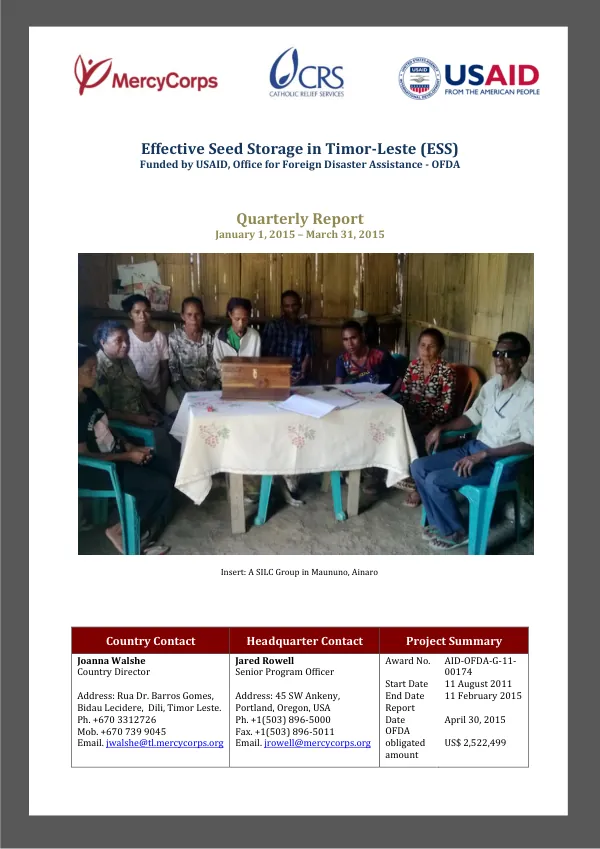
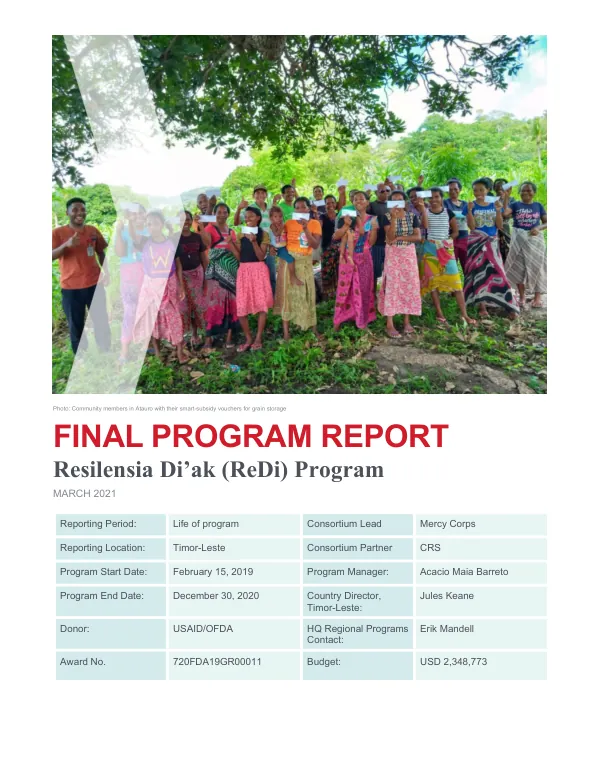
The Effective Seed Storage in Rural Timor Leste program, funded by USAID's Office for Foreign Disaster Assistance, aims to introduce improved seed storage solutions for farmers in the target districts of Ainaro and Manufahi.
2012 · 8 pages
Sign in to readA free account is required to download.
Abstract
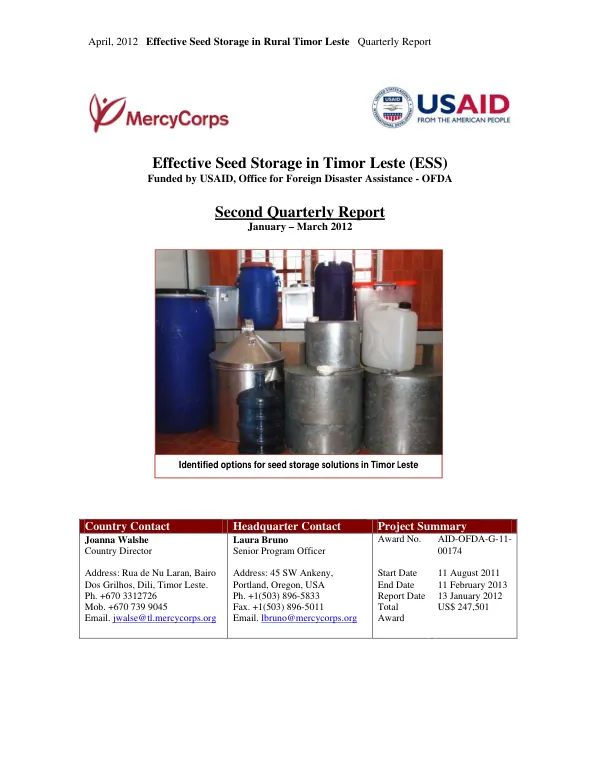
The program is designed to be sustainable by involving local manufacturers and capacity building of farmers and extension workers to connect farmers with viable input and output markets. An external consultant was brought on board to conduct an assessment and make recommendations for improved storage solutions. The consultant provided recommendations on storage containers, drying practices, and input about the local market for seed storage solutions. The ESS program team took the consultant's recommendations and conducted extensive follow-up to explore the proposed options from the market perspective to gauge availability and feasibility. The consultant also highlighted the need to increase local knowledge of seed storage principles and best practices. The ESS team developed a locally adapted training module and promotional brochure to be used in tandem with the introduction of new seed storage options. The training materials were developed in consultation with the local agriculture extension works, community mobilizers, and the Seeds of Life (SOL) program. Farmers are providing feedback on the training materials at present. The program has identified several key practices to ensure successful seed storage, including naming and identifying seed stock as distinctly different and of higher value than food grain, training regional drying and storage experts to train farmers, and encouraging farmers to be entrepreneurial and develop local solutions and businesses around seed storage and marketing. Different approaches are possible in designing the seed storage solution, including selecting and prescribing solutions for farmers, suggesting alternatives from which end users can select, and sharing principles and best practices from which end users can design and test solutions themselves. The consultative study on seed storage involved various stakeholders, including government officials, NGOs, relevant projects, and target farmers. The study confirmed that there are opportunities to enhance storage, many at low cost and with significant enhancement of seed quality and preservation. Farmers in the target districts practice seed management based on long-standing traditions and methods passed from ancestors, but they do not yet fully understand the guiding principles of seed preservation nor do they have the resources and tools for enhanced postharvest seed drying and storage. The study presents various options for seed storage that can be used by farmers, which can be categorized into two approaches: using a storage system combining a primary outer container and a secondary airtight inner container holding the seed, and using a storage system with a single container that has all the desired attributes, such as glass jars, jugs, or bottles with an airtight lid. The study also recommends that seed to be used for planting be selected and separated from the grain that will be used as food, seed be dried quickly and to 12-13% moisture content, and seed be stored in airtight, durable containers. The program has made progress toward identifying improved seed storage solutions for the target areas of Ainaro and Manufahi. The ESS program team will finalize the selection process among the recommended storage options with target farmers and continue to finalize the value-chain strategy for the selected storage options in the coming quarter.
Related documents