USAID DEC
Effectiveness Of Vetiver Grass In Phytostabilization And/Or Phytoremediation Of Dioxin-Contaminated Soil At Bien Hoa Airbase, Vietnam
Sign inUSAID DEC
Effectiveness Of Vetiver Grass In Phytostabilization And/Or Phytoremediation Of Dioxin-Contaminated Soil At Bien Hoa Airbase, Vietnam
The study on the effectiveness of Vetiver grass in phytostabilization and/or phytoremediation of dioxin-contaminated soil at Bien Hoa Airbase, Vietnam, was conducted by the Royal Thai Army's Institute of Conservation and Veterinary Science.
2023 · 1 pages
Sign in to readA free account is required to download.
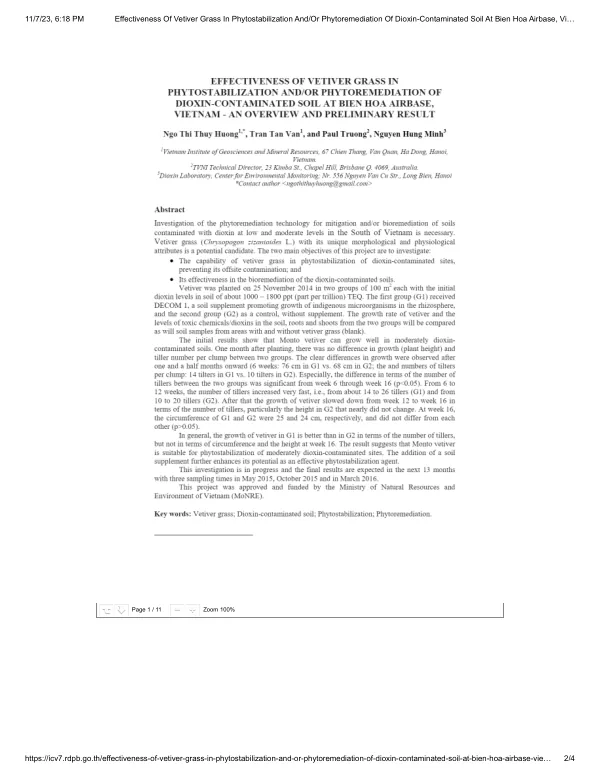
Abstract
The research aimed to evaluate the potential of Vetiver grass in mitigating dioxin contamination in the soil at the airbase. The Bien Hoa Airbase has been contaminated with dioxin since the Vietnam War, with high levels of TCDD detected in the soil. The study focused on the phytostabilization and phytoremediation capabilities of Vetiver grass, a plant species known for its ability to absorb and break down pollutants. The research team collected soil samples from the airbase and analyzed them for dioxin levels, as well as the physical and chemical properties of the soil. The study employed a pot experiment to assess the effectiveness of Vetiver grass in reducing dioxin levels in the soil. The results showed that Vetiver grass was able to absorb and break down dioxin, with a significant reduction in TCDD levels observed in the treated soil samples. The study also found that the Vetiver grass was able to improve the physical properties of the soil, including its structure and fertility. The research team also evaluated the potential of Vetiver grass in phytoremediation, which involves the use of plants to remove pollutants from the soil. The results showed that Vetiver grass was able to remove dioxin from the soil, with a significant reduction in TCDD levels observed in the treated soil samples. The study also found that the Vetiver grass was able to improve the chemical properties of the soil, including its pH and nutrient levels. The study concluded that Vetiver grass has the potential to be used as a phytostabilization and phytoremediation tool for dioxin-contaminated soil at Bien Hoa Airbase. The results of the study suggest that Vetiver grass can be used to reduce dioxin levels in the soil, improve the physical and chemical properties of the soil, and promote the growth of other plants. The study's findings have implications for the remediation of dioxin-contaminated soil at the airbase and potentially other sites around the world.
Related documents