THE CLOUDBURST GROUP
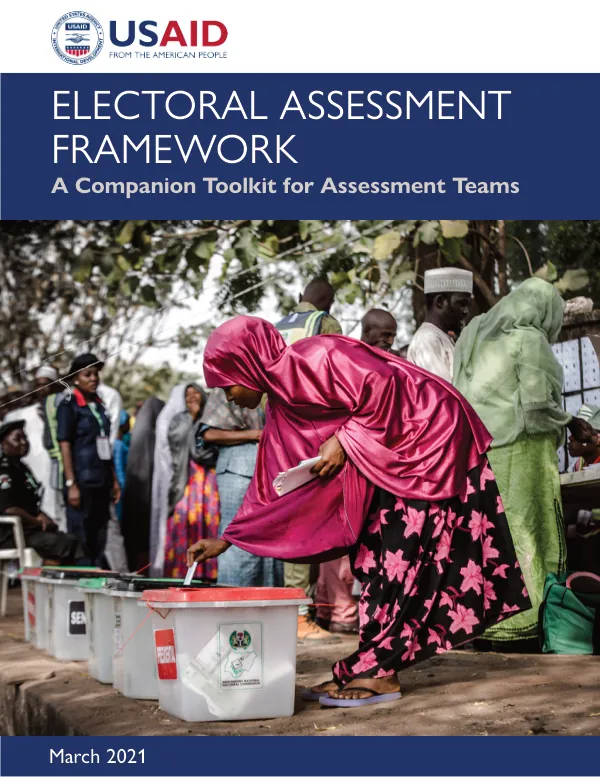
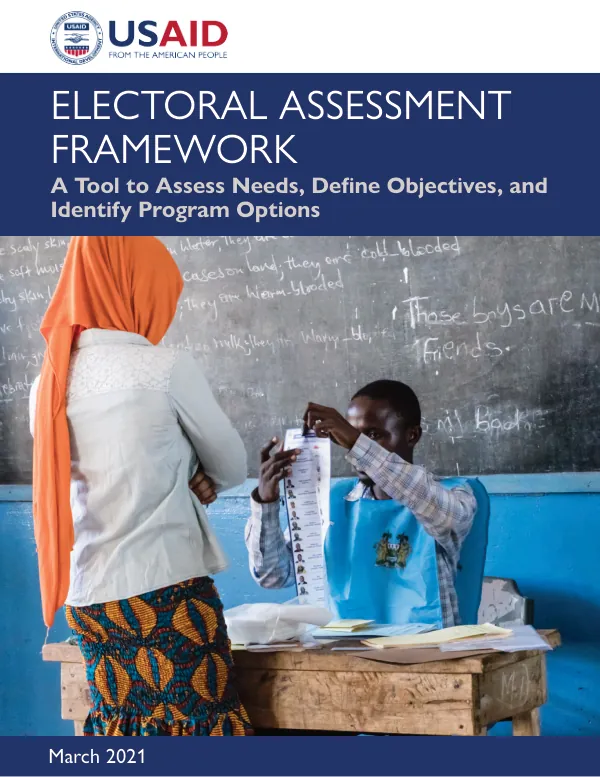
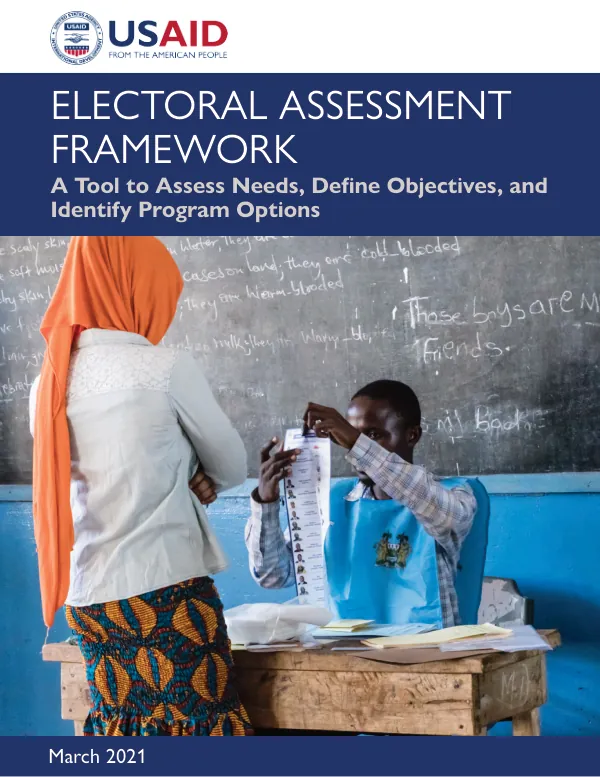
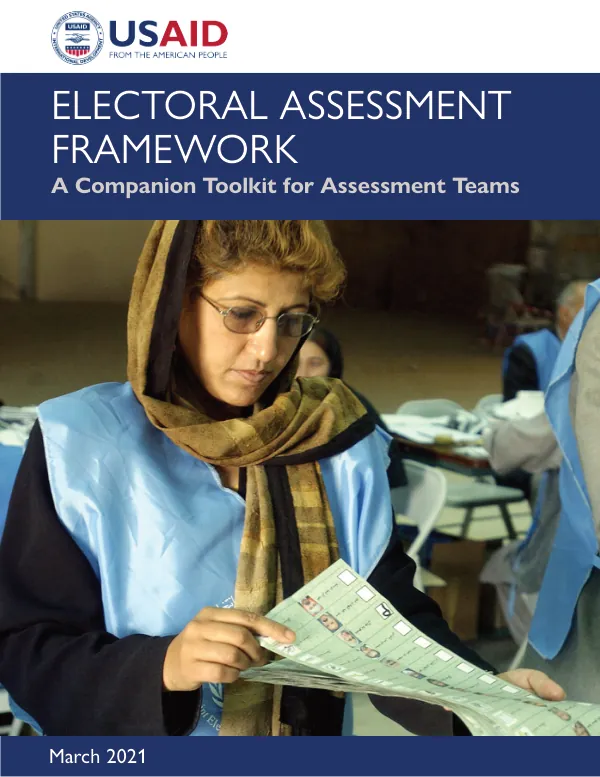
Electoral Assessment Framework: A Companion Toolkit for Assessment Teams
The Electoral Assessment Framework is a tool developed by the United States Agency for International Development (USAID) to assist in assessing and prioritizing the challenges in the electoral sector, and then developing a strategy to identify the best program options to promote credible elections.
2021 · 28 pages
Sign in to readA free account is required to download.
Abstract
The framework is intended to help USAID DRG officers and other relevant USG personnel assess and prioritize the challenges in the sector, and then develop a strategy to identify the best program options to promote credible elections. The framework involves four steps: (1) assessing the country context; (2) assessing the electoral context; (3) defining objectives and developing an elections and political processes assistance strategy; and (4) identifying priority programs. The country context assessment examines the key political, foundational, and conflict-related factors that can impact opportunities and create risks to credible elections. This includes assessing the regime type and political system, foundational factors, regional political dynamics and foreign actors, and the conflict and security environment. Assessing the regime type and political system provides insight into the country's overall commitment to holding genuine elections, as well as the status of the core democratic principles and freedoms that provide a foundation for credible elections. This involves examining power dynamics, identifying key actors, and assessing their commitment or opposition to democratic reforms, as well as their capacity to implement or influence changes. Foundational factors, such as economic, cultural, demographic, historical, and social considerations, are slow to change or fix and provide insight into how a country's power structures, social and historical alignments, cleavages, and alliances influence political culture and norms. This can illuminate areas of opportunity and risk for promoting credible and inclusive elections. Regional political dynamics and foreign actors are also considered, including regional political trends, the history of relations between neighboring countries, and key regional developments that may affect the elections. The assessment also examines the motivations and actions of malign foreign actors who have become increasingly involved in influencing elections and political transitions through disinformation campaigns, cyber attacks, fake election observers, and support for illiberal political actors. The conflict and security environment is also analyzed, including conflict dynamics, the role of security forces, and the impact of conflict on the electoral process. This assessment is essential to understanding the risks and opportunities for promoting credible elections in a country. The electoral context assessment examines the legal framework and electoral reform, election management, political parties and candidates, voter education, election observation, media ecosystem, electoral security and conflict, electoral justice, and post-election transitions. This assessment provides insight into the country's electoral system, the role of key stakeholders, and the potential risks and opportunities for promoting credible elections. The framework provides a checklist of key questions that can be used to guide the assessment of each topic, and the four steps include the following: Step 1: Assess the Country Context; Step 2: Assess the Electoral Context; Step 3: Define Objectives and Develop an Elections and Political Processes Assistance Strategy; and Step 4: Identify Priority Programs. The framework is intended to help USAID DRG officers and other relevant USG personnel assess and prioritize the challenges in the sector, and then develop a strategy to identify the best program options to promote credible elections.