RTI INTERNATIONAL
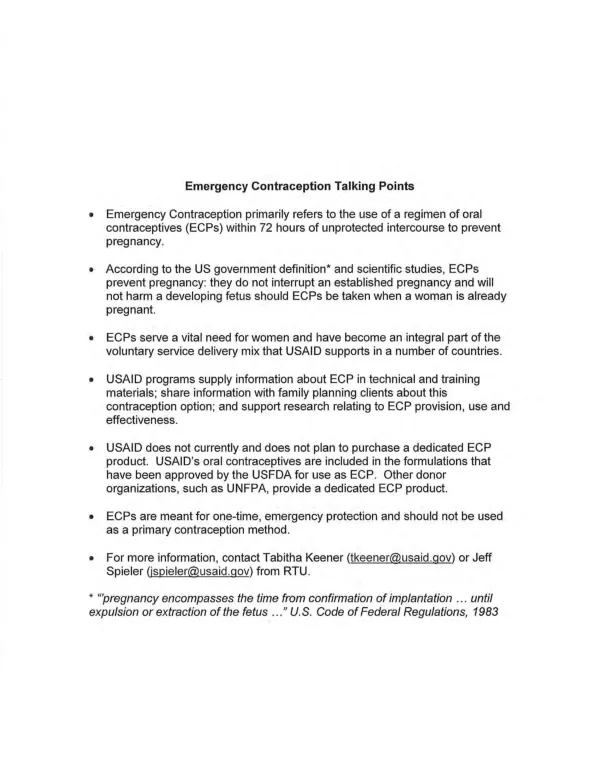
Emergency Contraception Talking Points
Emergency contraception primarily refers to the use of a regimen of oral contraceptives (ECPs) within 72 hours of unprotected intercourse to prevent pregnancy.
2014 · 1 pages
Sign in to readA free account is required to download.
Abstract
According to the US government definition and scientific studies, ECPs prevent pregnancy by inhibiting ovulation, fertilization, or implantation of a fertilized egg, and do not interrupt an established pregnancy. Furthermore, ECPs will not harm a developing fetus should they be taken when a woman is already pregnant. ECPs serve a vital need for women and have become an integral part of the voluntary service delivery mix that USAID supports in a number of countries. USAID programs supply information about ECP in technical and training materials, share information with family planning clients about this contraception option, and support research relating to ECP provision, use, and effectiveness. The organization's oral contraceptives are included in the formulations that have been approved by the USFDA for use as ECP. USAID does not currently purchase a dedicated ECP product, but other donor organizations, such as UNFPA, provide a dedicated ECP product. ECPs are meant for one-time, emergency protection and should not be used as a primary contraception method. They are intended to provide a temporary solution to prevent unintended pregnancy in situations where regular contraception methods have failed or were not used. The US government defines pregnancy as the time from confirmation of implantation until expulsion or extraction of the fetus. This definition is based on the U.S. Code of Federal Regulations, 1983. The use of ECPs is a critical component of family planning and reproductive health services, particularly in emergency situations where access to regular contraception may be limited. USAID's support for ECPs is part of a broader effort to improve access to family planning and reproductive health services, particularly in developing countries. The organization's programs aim to increase awareness and understanding of ECPs among healthcare providers and clients, and to improve the availability and quality of ECP services. By providing information and support for ECPs, USAID is working to reduce unintended pregnancy and improve reproductive health outcomes.