USAID DEC
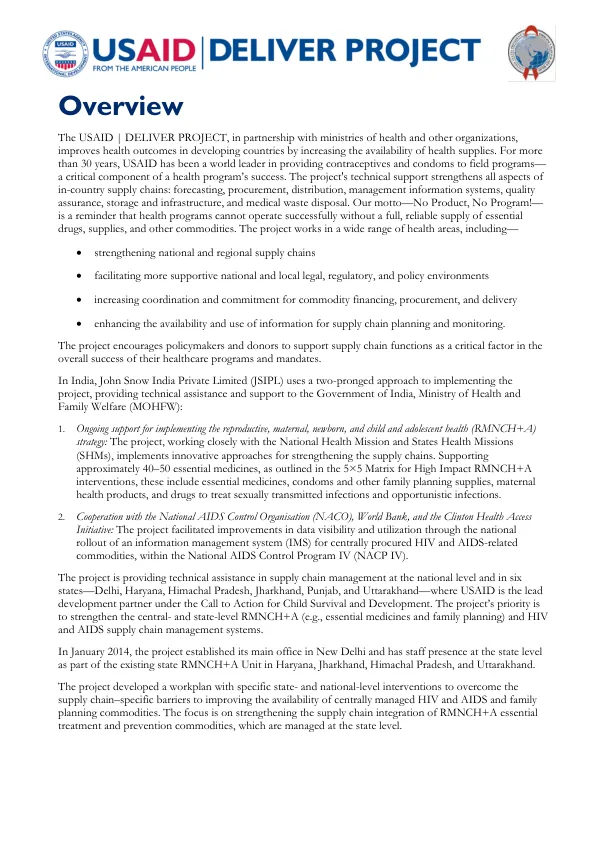
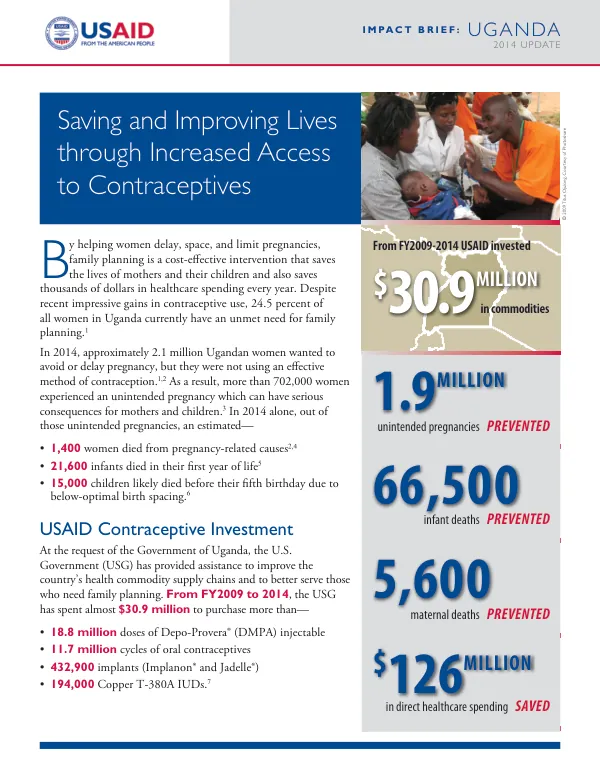
Impact Brief: Bangladesh--Saving and Improving Lives through Increased Access to Contraceptives, September 2014
Sign inICF
Impact Brief: Bangladesh--Saving and Improving Lives through Increased Access to Contraceptives, September 2014
The agricultural development initiative in Bangladesh began with the goal of improving access to family planning and reducing the unmet need for modern contraceptive methods.
2014 · 2 pages
Sign in to readA free account is required to download.
Abstract
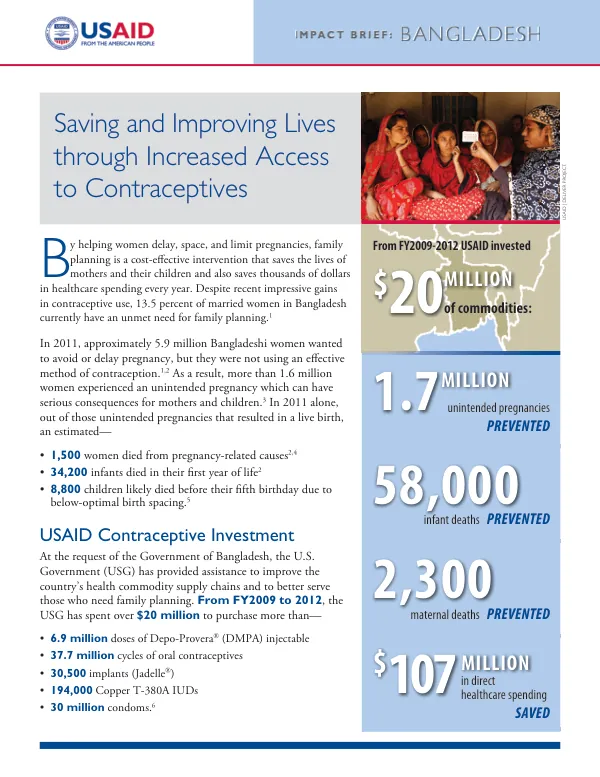
In 2011, approximately 5.9 million Bangladeshi women wanted to avoid or delay pregnancy, but they were not using an effective method of contraception. This resulted in more than 1.6 million women experiencing an unintended pregnancy, which can have serious consequences for mothers and children. According to the Bangladesh Demographic and Health Survey 2011, in 2011 alone, out of those unintended pregnancies that resulted in a live birth, an estimated 1,500 women died from pregnancy-related causes, 34,200 infants died in their first year of life, and 8,800 children likely died before their fifth birthday due to below-optimal birth spacing. The U.S. Government (USG) has provided assistance to improve the country's health commodity supply chains and to better serve those who need family planning. From FY2009 to 2012, the USG spent over $20 million to purchase more than 6.9 million doses of Depo-Provera injectable, 37.7 million cycles of oral contraceptives, 30,500 implants, 194,000 Copper T-380A IUDs, and 30 million condoms. This investment had the potential to meet the needs of more than 5.5 million Bangladeshi couples. In the hands of women and men who need them, these contraceptives prevented approximately 1.7 million unintended pregnancies, 291,000 induced abortions, 58,000 infant deaths, 15,000 child deaths due to improved birth spacing, and 2,300 maternal deaths. During this time, by avoiding the direct costs of unintended pregnancy and delivery care, and of treating complications from unsafe abortions, Bangladeshi families and the public health system saved an estimated U.S. $107 million in direct healthcare spending. The USAID | DELIVER PROJECT has been a leader in efforts to meet the reproductive health needs of women in Bangladesh and other countries in the developing world. Improving access to modern methods of contraception is crucial to meeting these needs. The national supply chain systems in Bangladesh are essential to increasing access and reducing the unmet need for family planning. Through implementing partners, and in partnership with ministries of health and other organizations, USAID develops and strengthens reliable and sustainable public health supply chains by implementing robust logistics solutions, promoting supportive commodity security environments, procuring health commodities, and building lasting local capacity. This ensures that contraceptives make it into the hands of the women and men who need them.