USAID DEC
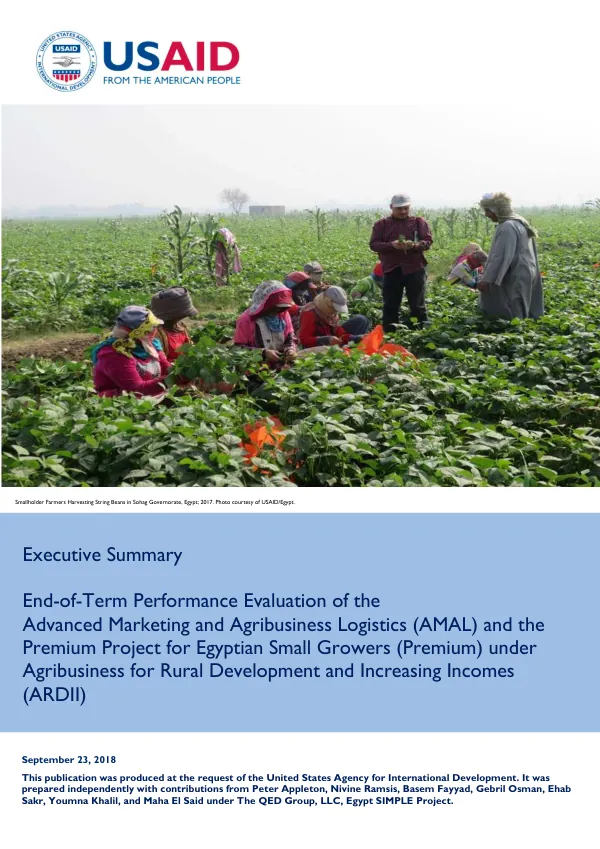
End-of-Term Performance Evaluation of the Advanced Marketing and Agribusiness Logistics (AMAL) and the Premium Project for Egyptian Small Growers (Premium) under Agribusiness for Rural Development and Increasing Incomes (ARDII)
Sign inTHE QED GROUP, LLC
End-of-Term Performance Evaluation of the Advanced Marketing and Agribusiness Logistics (AMAL) and the Premium Project for Egyptian Small Growers (Premium) under Agribusiness for Rural Development and Increasing Incomes (ARDII)
The agricultural development initiative in Egypt aims to increase the incomes of smallholder farmers in Upper Egypt through sustainable intensification of agricultural productivity, post-harvest efficiency, and improved marketing of their products.
2018 · 14 pages
Sign in to readA free account is required to download.
Abstract
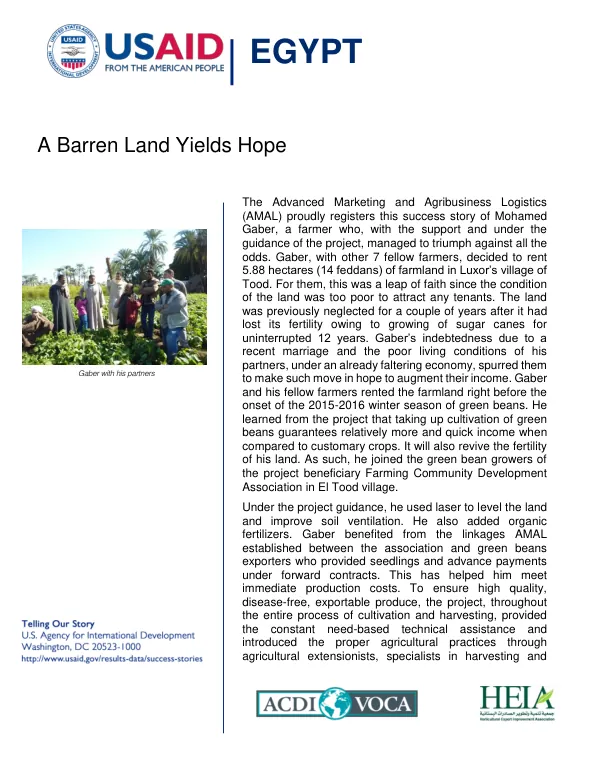
The initiative is part of the Agribusiness for Rural Development and Increasing Incomes (ARDII) project, which is funded by the United States Agency for International Development (USAID). The project's primary goal is to contribute to USAID's development objective of private sector-led growth in Egypt. The Advanced Marketing and Agribusiness Logistics (AMAL) project is one of the key components of the ARDII project. The AMAL project aims to increase the incomes of 4,300 rural households in Upper Egypt through the development of sustainable horticulture value chains. The project's activities are divided into four components: improving market intelligence, value-chain linkages, market-oriented production practices, and organizing and strengthening producer organizations. The Premium Project for Egyptian Small Growers is another key component of the ARDII project. The Premium project aims to strengthen the capacity of smallholder farmers and their organizations to increase farmers' productivity and income. The project's activities include establishing a robust traceability system, developing a food safety and quality management system, training small producers to comply with these standards, and independently monitoring products to ensure compliance with legal levels in export markets. The evaluation of the AMAL and Premium projects was conducted by the Services to Improve Performance Management, Enhance Learning and Evaluation (SIMPLE) evaluation team. The evaluation team collected data through site visits, interviews, and group discussions with key stakeholders, including farmers, project staff, and government officials. The evaluation aimed to assess the projects' progress, identify challenges, and identify areas for improvement. The evaluation found that the AMAL project has made significant progress in improving market intelligence, value-chain linkages, and market-oriented production practices. The project has also strengthened producer organizations and improved the marketing of horticulture products. However, the evaluation also identified challenges, including limited access to finance, inadequate infrastructure, and inadequate information about domestic and international markets. The Premium project has also made significant progress in strengthening the capacity of smallholder farmers and their organizations. The project has established a robust traceability system, developed a food safety and quality management system, and trained small producers to comply with these standards. However, the evaluation also identified challenges, including limited access to finance, inadequate infrastructure, and inadequate information about domestic and international markets. The evaluation recommends that the projects continue to focus on improving market intelligence, value-chain linkages, and market-oriented production practices. The evaluation also recommends that the projects address the challenges identified, including limited access to finance, inadequate infrastructure, and inadequate information about domestic and international markets.