THE QED GROUP, LLC
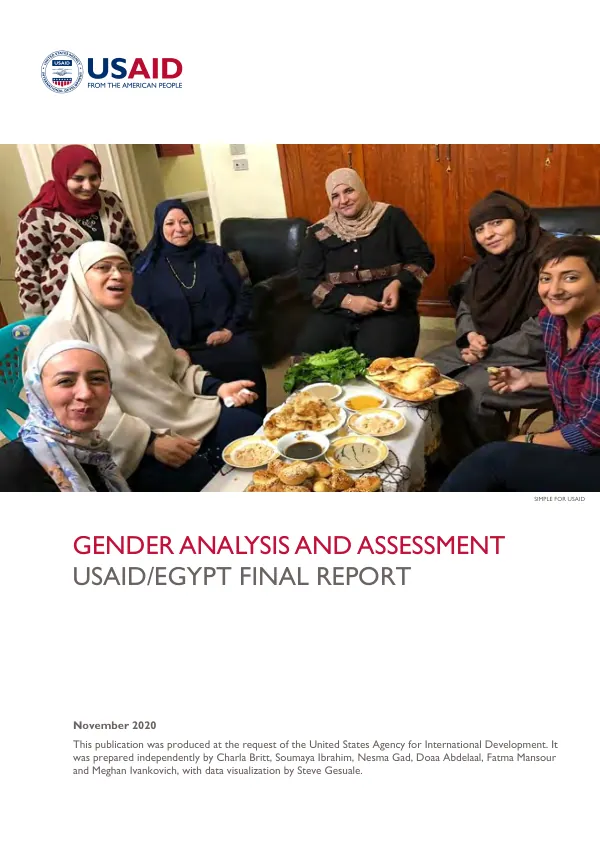
Gender Analysis and Assessment: USAID/Egypt Final Report
In Egypt, the Government of Egypt (GOE) has made significant strides in promoting gender equality and women's empowerment.
2020 · 231 pages
Sign in to readA free account is required to download.
Abstract
The GOE has ratified several international conventions, including the Convention on the Elimination of All Forms of Discrimination Against Women (CEDAW) and the Convention on the Rights of the Child (CRC). These conventions have guided the development of national policies and laws aimed at promoting gender equality and protecting the rights of women and children. The USAID/Egypt Gender Analysis and Assessment (GAA) was conducted to assess the GOE's progress in achieving its development objectives related to gender equality and women's empowerment. The GAA team used a mixed-methods approach, combining both quantitative and qualitative data collection and analysis techniques. The team conducted key informant interviews with government officials, civil society organizations, and implementing partners, as well as reviewed existing data and literature on gender equality and women's empowerment in Egypt. The GAA report highlights several key findings related to gender equality and women's empowerment in Egypt. These include the persistence of gender-based violence, particularly in the form of female genital mutilation (FGM) and child, early, and forced marriage (CEFM). The report also notes that women's participation in the labor force is low, with only 25% of women aged 15-64 years participating in the labor force, compared to 75% of men. Additionally, the report highlights the limited access to education and healthcare for women and girls, particularly in rural areas. The GAA report provides several recommendations for USAID/Egypt to improve its programming and support for gender equality and women's empowerment. These include increasing support for programs aimed at preventing and responding to gender-based violence, promoting women's economic empowerment through job training and microfinance programs, and improving access to education and healthcare for women and girls. The report also highlights the importance of integrating gender equality and women's empowerment into the GOE's development planning and budgeting processes. The report recommends that the GOE establish a gender-responsive budgeting system to ensure that gender equality and women's empowerment are prioritized in the budgeting process. Overall, the GAA report provides a comprehensive assessment of the GOE's progress in achieving its development objectives related to gender equality and women's empowerment. The report highlights several key challenges and opportunities for USAID/Egypt to support the GOE in promoting gender equality and women's empowerment. The report also highlights the importance of collaboration and coordination among government agencies, civil society organizations, and implementing partners to achieve gender equality and women's empowerment. The report recommends that USAID/Egypt support the establishment of a national gender equality and women's empowerment coordination mechanism to facilitate collaboration and coordination among stakeholders. In terms of implementation, the report recommends that USAID/Egypt support the GOE in implementing the recommendations outlined in the report. This includes increasing support for programs aimed at preventing and responding to gender-based violence, promoting women's economic empowerment, and improving access to education and healthcare for women and girls. The report also recommends that USAID/Egypt support the GOE in establishing a gender-responsive budgeting system to ensure that gender equality and women's empowerment are prioritized in the budgeting process. This includes providing technical assistance and capacity building support to the GOE to establish a gender-responsive budgeting system.
Related documents
Documents in this collection
 2018
2018USAID DEC
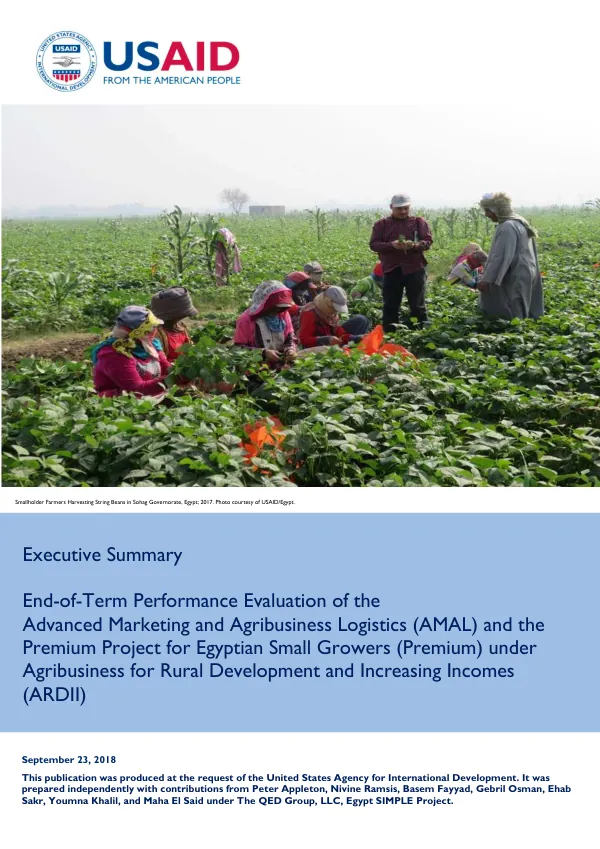
End-of-Term Performance Evaluation of the Advanced Marketing and Agribusiness Logistics (AMAL) and the Premium Project for Egyptian Small Growers (Premium) under Agribusiness for Rural Development and Increasing Incomes (ARDII)
Open record 2015
2015USAID DEC