USAID
End-of-Tour Report
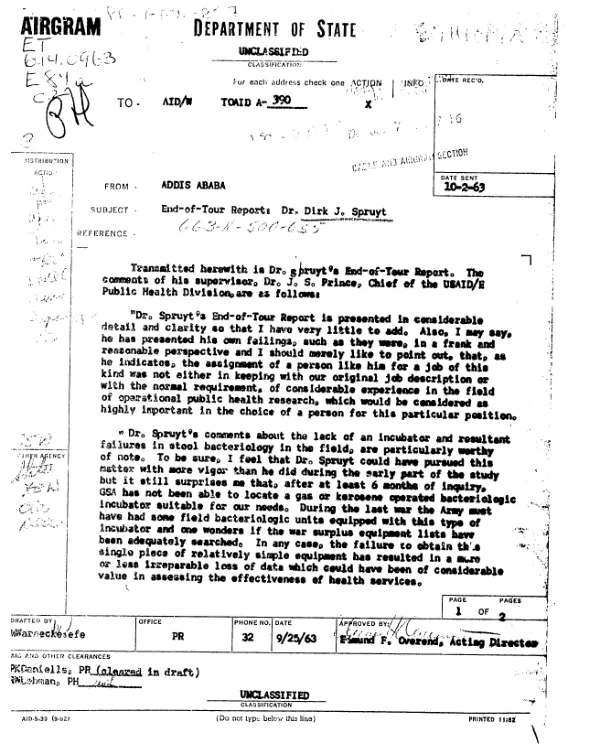
The End-of-Tour Report submitted by Dr.
13 pages
Sign in to readA free account is required to download.
Abstract
Dirk J. Spruyt, a medical doctor and project director, provides an in-depth evaluation of the Ethiopian Health Center Evaluation Project. The project aimed to assess the effectiveness of health services in Ethiopia, with a focus on the decentralized health center program. Dr. Spruyt's report highlights the project's objectives, methodology, and challenges faced during the implementation period. The project's objectives were multifaceted, including gaining an appreciation of the background training and experience of health center staff, developing a research design and methodology for data collection, and providing overall direction of the project. Dr. Spruyt's report emphasizes the importance of understanding the environmental, social, and medical aspects of field work, as well as the need for continuing supervision and evaluation. During the project's orientation period, Dr. Spruyt observed the health center staff training program, which was hindered by limited numbers and faculty members living far from the campus. This situation contributed to poor student morale and disciplinary problems. Dr. Spruyt also notes the importance of establishing a training health center, which would have provided a unique opportunity to assess the strengths and weaknesses of the program. The basic research design employed by the project was a "before" and "after" study, using a number of indices in the areas of environmental sanitation, prevalence of common diseases, attitudes, practices, and aspiration levels. The individual items to be studied were selected as important indicators of a change in the level of health or as indicators of the nature of administrative health problems. Despite the project's ambitious objectives, Dr. Spruyt notes that the three-month preparation period proved insufficient to accomplish all the objectives. The project faced numerous challenges, including difficulties in obtaining necessary supplies and personnel, making arrangements for adequate office space, and the death of the Empress. Dr. Spruyt's lack of experience in field research techniques and methods also posed significant challenges. The project's administrative needs consumed more than 50% of Dr. Spruyt's time, with acute problems arising from obtaining necessary budget, supplies, and equipment, arranging transportation, settling personnel problems, promoting and coordinating work with referral lecturers, and developing methods of data and specimen processing. The project's field work was conducted in a variety of climates, from dry and dusty to heavy and cold rains, requiring provision for sheltering townspeople undergoing medical processing. Additional facilities included a complete field laboratory and out-patient clinic. The development of initial technical and administrative procedures had to be rushed to meet the first study community before the rainy season, necessitating subsequent modifications and improvements. Dr. Spruyt's report provides a comprehensive evaluation of the Ethiopian Health Center Evaluation Project, highlighting the challenges faced and the lessons learned during the implementation period. The report serves as a valuable resource for future projects and researchers, emphasizing the importance of careful planning, effective administration, and ongoing supervision and evaluation.
Related documents