ADVANCED ENGINEERING ASSOCIATES INTERNATIONAL, INC. /SGGA
Energy Efficiency of the Cultural Center in Bihać
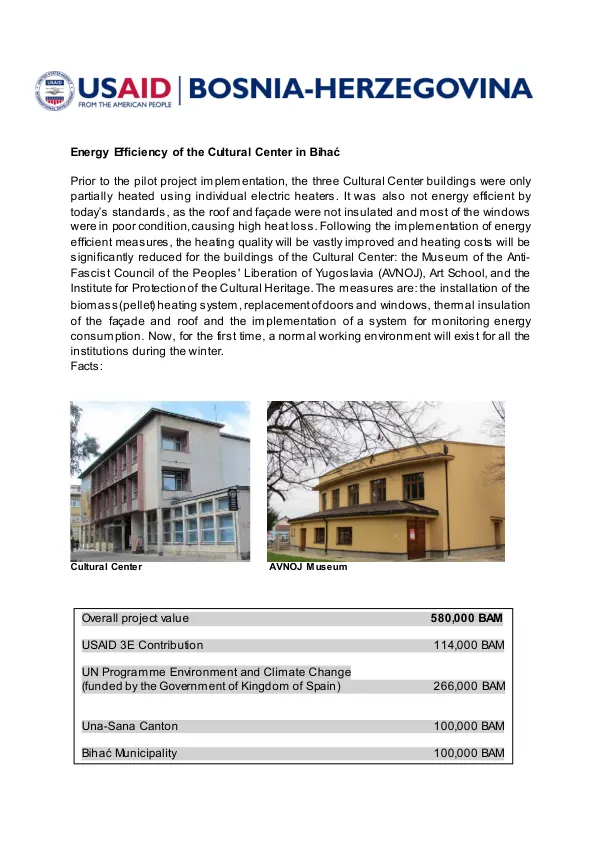
The Cultural Center in Bihać, Bosnia and Herzegovina, consists of three buildings: the Museum of the Anti-Fascist Council of the Peoples' Liberation of Yugoslavia (AVNOJ), the Art School, and the Institute for Protection of the Cultural Heritage.
2014 · 2 pages
Sign in to readA free account is required to download.
Abstract
Prior to the implementation of energy-efficient measures, the buildings were only partially heated using individual electric heaters, resulting in high heat loss due to uninsulated roofs and facades, as well as poor condition windows. The pilot project aimed to improve heating quality and reduce costs by installing a biomass (pellet) heating system, replacing doors and windows, and implementing thermal insulation of the facade and roof. Additionally, a system for monitoring energy consumption was implemented. The expected results of the project include a 70% reduction in annual heating costs, a 38% improvement in the energy characteristics of the Cultural Center buildings and the shared heating system, and a reduction of CO2 emissions by 114 tons per year. The project is part of the USAID Enterprise Energy Efficiency (3E) Project, a USD 4.2 million program for promoting energy efficiency technologies through the development of pilot projects in buildings that are co-financed by the public and private sector. The project aims to increase the capacity building of municipal partners from the public sector and small and medium enterprises, as well as increase public awareness about the benefits of energy efficiency. The project is co-financed by the USAID 3E Contribution of 114,000 BAM, the UN Programme Environment and Climate Change funded by the Government of the Kingdom of Spain with 266,000 BAM, Una-Sana Canton with 100,000 BAM, and Bihać Municipality with 100,000 BAM. The total project value is 580,000 BAM. The project also includes training and seminars on energy efficiency in the region of the pilot projects, which will be carried out by local companies to establish new jobs in energy efficiency. The expected outcomes of the project will not only improve the energy efficiency of the Cultural Center buildings but also raise the level of citizens' awareness and knowledge of the opportunities and benefits of energy efficiency measures. The project is a step towards promoting energy efficiency in Bosnia and Herzegovina, which is in line with the country's efforts to reduce greenhouse gas emissions and improve energy security.