FEED THE FUTURE
Policy Kenya Final Web 2018
The Enabling Environment for Food Security Project in Kenya is a key component of the Feed the Future initiative, aimed at addressing policies and regulatory factors affecting food security.
2018 · 2 pages
Sign in to readA free account is required to download.
Abstract
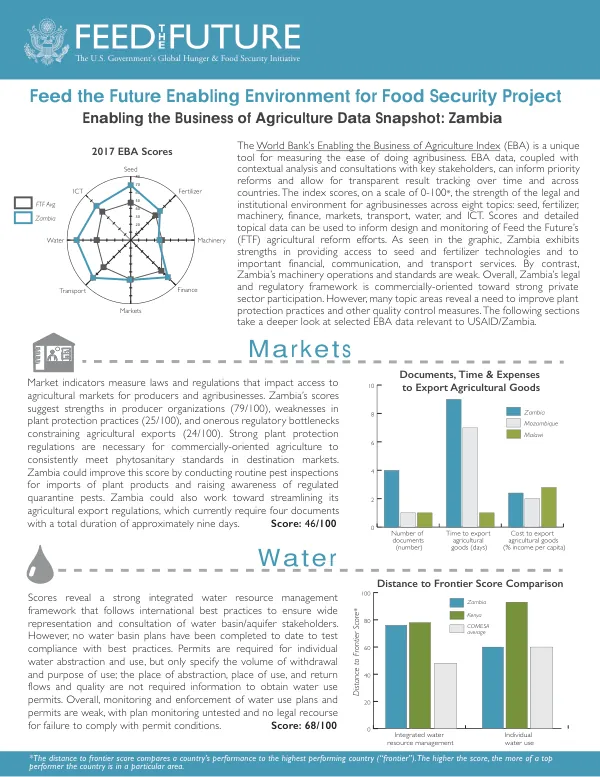
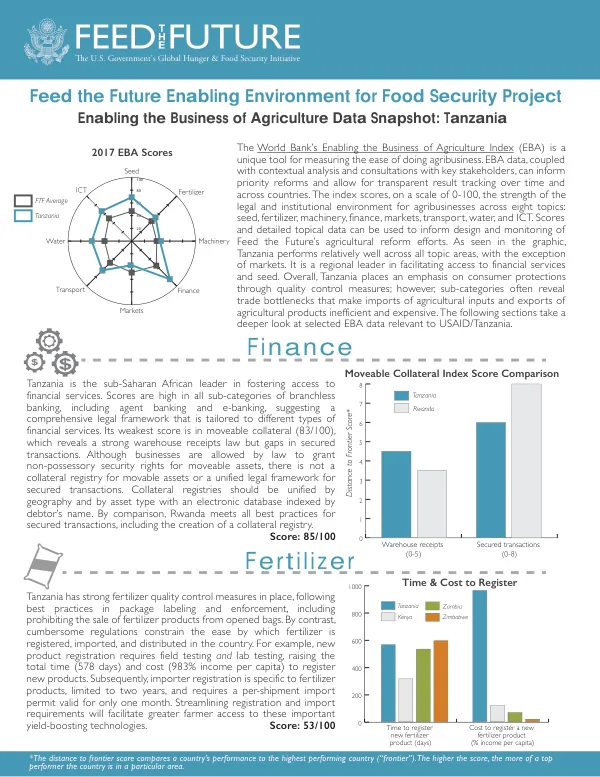
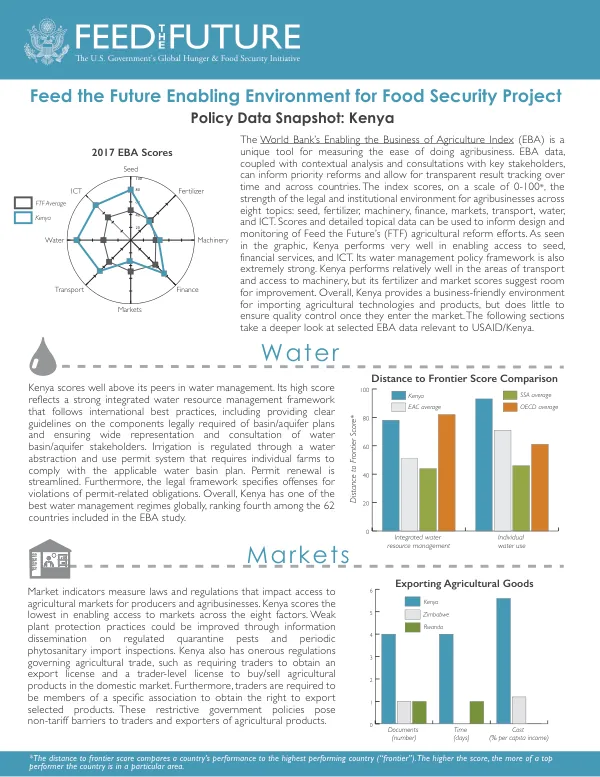
The project utilizes the Enabling the Business of Agriculture Index (EBA) to measure the ease of doing agribusiness in Kenya. The EBA scores, ranging from 0 to 100, assess the strength of the legal and institutional environment for agribusinesses across eight topics: seed, fertilizer, machinery, finance, markets, transport, water, and ICT. Kenya performs exceptionally well in enabling access to seed, financial services, and ICT, with scores of 90, 92, and 95, respectively. The country's water management policy framework is also extremely strong, with a score of 98. Kenya's performance in transport and access to machinery is relatively good, with scores of 74 and 78, respectively. However, the country's fertilizer and market scores suggest room for improvement, with scores of 44 and 38, respectively. Market indicators measure laws and regulations impacting access to agricultural markets for producers and agribusinesses. Kenya scores the lowest in enabling access to markets across the eight factors, with a score of 38. Weak plant protection practices could be improved through information dissemination on regulated quarantine pests and periodic phytosanitary import inspections. Kenya also has onerous regulations governing agricultural trade, such as requiring traders to obtain an export license and a trader-level license to buy/sell agricultural products in the domestic market. Kenya's water management regime is one of the best globally, ranking fourth among the 62 countries included in the EBA study. The country's integrated water resource management framework follows international best practices, providing clear guidelines on the components legally required of basin/aquifer plans and ensuring wide representation and consultation of water basin/aquifer stakeholders. Irrigation is regulated through a water abstraction and use permit system that requires individual farms to comply with the applicable water basin plan. Permit renewal is streamlined, and the legal framework specifies offenses for violations of permit-related obligations. Kenya is a regional leader in tractor import scores, reflecting few regulatory barriers to the private sector's ability to import and sell tractors. Once imported, tractors can be registered through an efficient and affordable process, requiring 7 days at a cost of 2% per capita income. However, there is no law requiring tractors to obtain type approval before they are sold in the country, making it unclear how tractors are tested and evaluated for performance, quality, durability, and safety before they enter the market. Best practices suggest that tractor type approvals and test reports issued by an authority in another country should be recognized, reducing the cost to comply. Kenya has a perfect score for plant breeding, reflecting best practices such as allowing companies to access germplasms conserved in public genebanks and to produce breeder and foundation seed from local public varieties. Kenya's variety registration process is affordable and efficient, with a legally established variety release committee meeting regularly to balance public and private sector participation in the evaluation and registration of new varieties. However, weaknesses in seed quality control highlight the need to modify the law to require plant breeders to ensure the traceability of their plant reproductive materials for at least two years or allow seed certification activities to be performed by an accredited third party.