USAID DEC
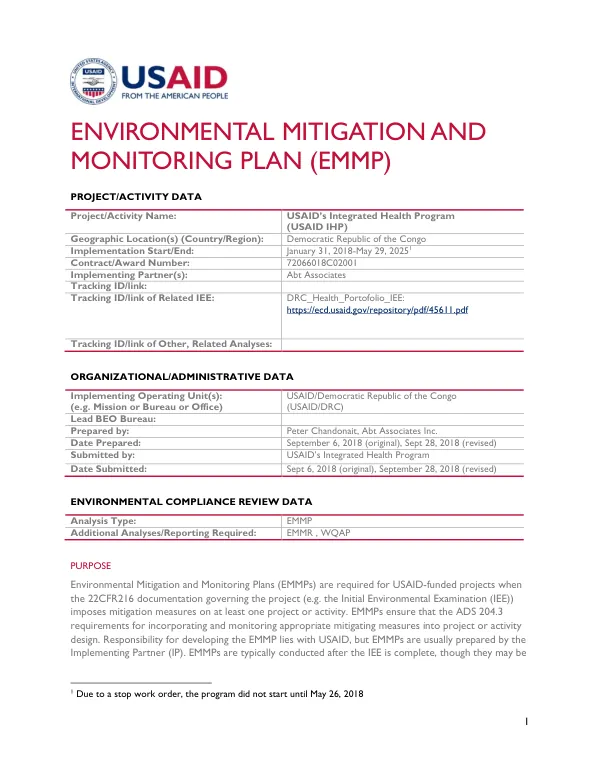
Environmental Mitigation and Monitoring Plan (EMMP) for USAID’s Integrated Health Program (USAID IHP) in the Democratic Republic of the Congo
Sign inABT ASSOCIATES
Environmental Mitigation and Monitoring Plan (EMMP) for USAID’s Integrated Health Program (USAID IHP) in the Democratic Republic of the Congo
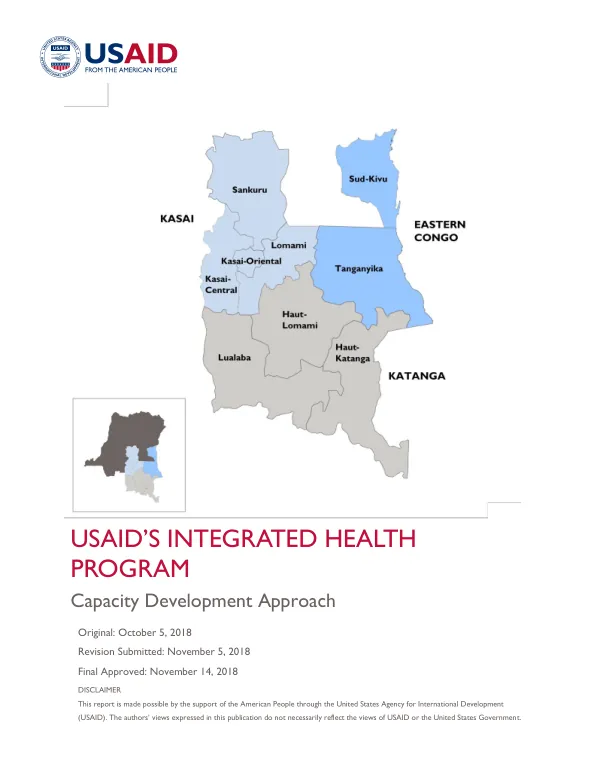
The USAID's Integrated Health Program (USAID IHP) in the Democratic Republic of the Congo aims to strengthen the capacity of Congolese institutions and communities to deliver high-quality, integrated health services.
2018 · 14 pages
Sign in to readA free account is required to download.
Abstract
The program builds on previous health investments in the DRC and USAID's Country Development Cooperation Strategy (CDCS). The program will provide support to empower health zones (HZs) and sustainably improve the ability of the DRC's health system to deliver quality services in reproductive health and family planning, maternal, newborn, and child health, nutrition, tuberculosis, malaria, water, sanitation, and hygiene, and supply-chain services. The program will operate in nine provinces, operationally grouped in three regions: Eastern Congo, Katanga, and Kasai. The implementation of USAID IHP is subject to the requirements of the USAID/DRC Health Office Portfolio Initial Environmental Examination (IEE), which examined the proposed activities of the Portfolio and assigned a threshold determination to each activity. The threshold determinations include Categorical Exclusion, Negative Determination with Conditions, and Positive Determination. Several activities could have negative environmental impacts if not executed properly. USAID anticipated that environmental compliance and achieving optimal development outcomes for the proposed activities require environmental management expertise. This Environmental Mitigation and Monitoring Plan (EMMP) elucidates impacts that may be expected from USAID IHP and mitigation efforts to eliminate or minimize those potential impacts. A major environmental concern about health projects such as USAID IHP is the proper disposition of wastes generated from health facilities. These wastes include general healthcare waste, hazardous healthcare waste, and highly hazardous healthcare waste. Proper disposal of these wastes is essential to prevent environmental pollution and health risks. Storing pharmaceutical and medical commodities also poses challenges, particularly special storage temperature requirements and expiration dates. Sub-grant activities can cover a wide range of interventions, and environmental compliance requirements will vary accordingly. Environmental Review Forms (ERF) must be completed to gauge the potential environmental impacts of the contemplated activities under the grant and to develop mitigation strategies and plans. Due diligence must be performed on the grantee to confirm that they have the institutional knowledge, capacity, and will to perform within environmental compliance standards. Training must be provided and ongoing monitoring and inspection must be conducted to ensure compliance with environmental regulations. The EMMP will be amended to address and mitigate any potential environmental impacts not anticipated during the life of the project. The training must include cautions and guidance about avoiding or minimizing environmental impacts. The program will also ensure that the training includes guidance on proper waste disposal and storage of pharmaceutical and medical commodities.
Related documents