DAI GLOBAL, LLC
Theories of Change and Results Chains
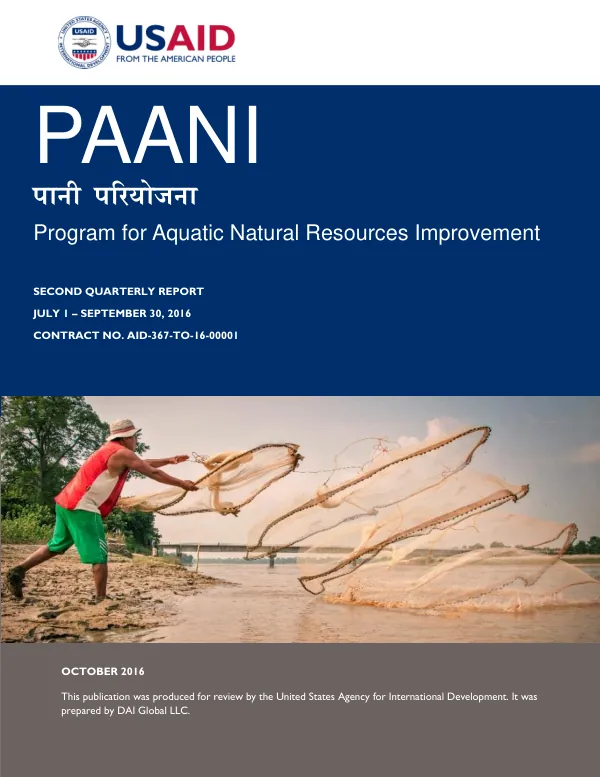
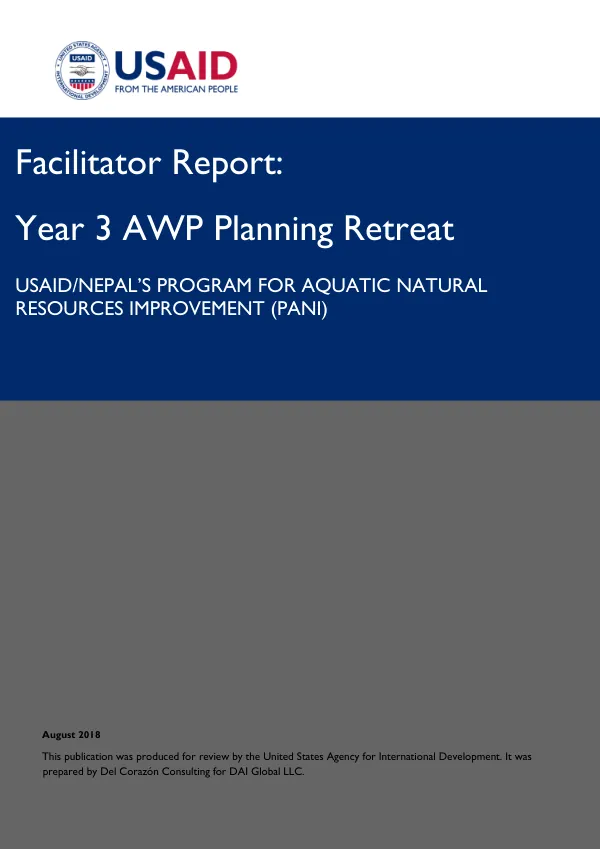
The Program for Aquatic Natural Resources Improvement (PANI) is a 5-year, $25 million USAID-funded project in Nepal, awarded on April 11, 2016.
2018 · 29 pages
Sign in to readA free account is required to download.
Abstract
The project aims to enhance Nepal's ability to manage water resources for multiple uses and users through climate change adaptation and the conservation of freshwater biodiversity. The focus will be at the watershed, basin, and national scales, with approximately $5 million in grants and activity procurements. PANI has four intermediate results (IRs): IR 1 - Increased knowledge, engagement, and benefits for local water users; IR 2 - Improved river-basin-level resource management; IR 3 - Increased coordination and strengthened enabling environment; and IR 4 - Expanded knowledge base. The project's objectives include reducing threats to freshwater biodiversity in the Karnali, Mahakali, and Rapti river basins and increasing the ability of targeted human and ecological communities to adapt to the adverse impacts of climate change through improved water management. A facilitator report was prepared for the Year 3 AWP Planning Retreat, which took place in August 2018. The facilitator provided short-term technical assistance to work with Measuring Impact (MI) on the design of a reflection and/or learning review workshop on Paani's progress to date in light of MI's theory of change (TOC) approach. The facilitator also helped design and facilitate an Annual Planning Workshop from June 11-14, 2018, and collaborated with Paani's senior leadership to design, develop, and facilitate team-building sessions. The facilitator's activities included reviewing relevant documents, meeting with Paani senior management team and technical team members, conducting and analyzing a workshop survey of staff desired outcomes, coordinating with and participating in the Measuring Impact evaluation workshop, and designing and facilitating workshop sessions. The facilitator also worked with Paani staff to refine the Year 3 work plan. The consultant's deliverables included a draft learning objectives and agenda, a final workshop agenda, a planning workshop summary, and a final report. The consultant observed significant advancements in areas where new staff hires brought in capacity with hydropower, fisheries, operations, and communications. The consultant also observed a shift in the quality of partnerships with Federations, NESS, WWF, SNV, and SILT from slightly competitive to more collaborative as trust has been built. Based on the outcomes of the annual work plan workshop, the following are recommendations to follow up on ideas proposed in the workshop for sustaining Paani's progress: schedule the quarterly CST and PCT meetings for the year, establish a system for tracking and monitoring progress, and continue to build capacity for the entire Paani team to understand how to strategically leverage opportunities and build a sustainable project initiative. The facilitator's report highlights the importance of building trust and collaboration among partners, including Federations, NESS, WWF, SNV, and SILT. The report also emphasizes the need to continue to build capacity for the Paani team to understand how to strategically leverage opportunities and build a sustainable project initiative. The facilitator's recommendations aim to sustain Paani's progress and ensure the project's long-term success.