USAID DEC
Ethics in Brief
Gifts from Outside Sources are subject to specific restrictions.
2010 · 1 pages
Sign in to readA free account is required to download.
Abstract
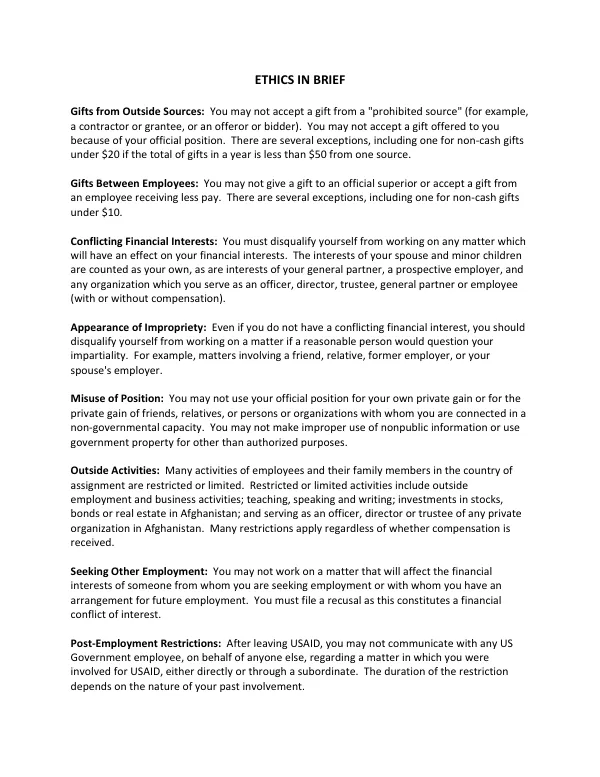
Prohibited sources include contractors, grantees, offerors, and bidders. Accepting gifts from these sources is not permitted, as it may create a conflict of interest. However, there are exceptions for non-cash gifts under $20, provided the total value of gifts from one source in a year does not exceed $50. Gifts Between Employees are also regulated. Employees are prohibited from giving gifts to their official superiors or accepting gifts from employees receiving lower pay. Exceptions include non-cash gifts under $10. These restrictions aim to maintain a level of professionalism and prevent favoritism within the organization. Conflicting Financial Interests are a significant concern. Employees must disqualify themselves from working on matters that will affect their financial interests, including those of their spouse, minor children, general partner, prospective employer, and any organization they serve as an officer, director, trustee, or employee. This ensures that employees remain impartial and avoid conflicts of interest. The Appearance of Impropriety is also a critical consideration. Even if an employee does not have a conflicting financial interest, they should disqualify themselves from working on a matter if a reasonable person would question their impartiality. This includes matters involving friends, relatives, former employers, or their spouse's employer. The goal is to maintain public trust and confidence in the organization. Misuse of Position is strictly prohibited. Employees may not use their official position for personal gain or for the benefit of friends, relatives, or organizations with which they have a non-governmental connection. They must also refrain from making improper use of nonpublic information and using government property for unauthorized purposes. Outside Activities are subject to various restrictions. Employees and their family members in the country of assignment are limited in their ability to engage in outside employment, business activities, teaching, speaking, and writing. They are also restricted from investing in stocks, bonds, or real estate in Afghanistan and serving as officers, directors, or trustees of private organizations in the country. These restrictions apply regardless of whether compensation is received. Seeking Other Employment is also regulated. Employees may not work on matters that will affect the financial interests of someone from whom they are seeking employment or with whom they have an arrangement for future employment. In such cases, a recusal is required to avoid a financial conflict of interest. Post-Employment Restrictions apply after an employee leaves USAID. They are prohibited from communicating with US Government employees on behalf of anyone else regarding a matter in which they were involved while working for USAID, either directly or through a subordinate. The duration of the restriction depends on the nature of their past involvement.