USAID DEC
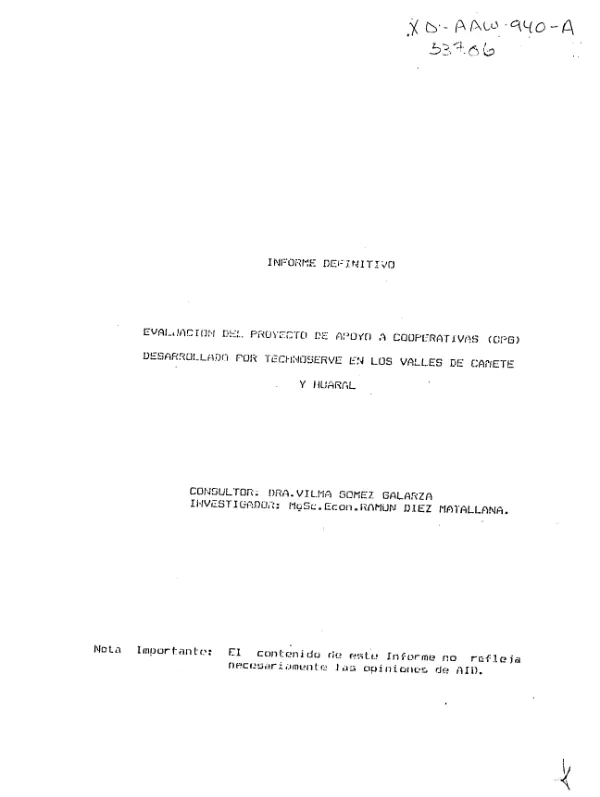
EVALUACION DEL PROYECTO DE FOMENTO DE EXPORTACIONES DE PRODUCTOS AGROPECUARIOS NO TRADICIONALES
Sign inUSAID DEC
EVALUACION DEL PROYECTO DE FOMENTO DE EXPORTACIONES DE PRODUCTOS AGROPECUARIOS NO TRADICIONALES
The project evaluation for the promotion of non-traditional agricultural products exports, III A5E50lII, focuses on assessing the development of institutions, project management, and the impact on entrepreneurs.
2010 · 209 pages
Sign in to readA free account is required to download.
Abstract
The evaluation aims to establish the validity and consistency of the project's objectives. The development of institutions is a key area of evaluation, with objectives including determining the level of institutional strengthening of national private sector institutions that provide support and assistance to agro-industrial companies. Additionally, the evaluation aims to determine the number and level of personnel contracted for projects within the program, as well as the training provided to personnel involved in policy analysis. Project management is another area of evaluation, with objectives including establishing the level of implementation of project phases, evaluating the validity of steps taken to contact and involve the target group, and determining the impact of the project's public relations process on the promotion and dissemination of the project among entrepreneurs. The evaluation also focuses on the impact on entrepreneurs, with objectives including establishing the level of fortification of national participating companies, determining the number of commercial missions conducted, and evaluating the effect and achievements obtained for the project's purposes, thanks to the granting of credits. The evaluation methodology involves determining the number of meetings held with the target group, their methodology, and scope, as well as the number of working meetings, participants, and analysis of policies contracted. Additionally, the evaluation aims to determine the impact of the project's public relations process, the materials and means used, and the number and level of execution of studies entrusted to ANDE. The evaluation also assesses the development of the "Project of Feasibility" model and its use by members of the target group. The evaluation aims to establish the level of development of the model, its generation, and its use, as well as the impact of the project on the target group. The evaluation of the project's impact on entrepreneurs involves determining the level of commitment and interest of entrepreneurs in participating in the project, as well as the impact of commercial missions on motivation and results in terms of exports. Additionally, the evaluation aims to determine the number of visits made to the target group, the level of execution of studies entrusted to ANDE, and the development of the "Project of Feasibility" model and its use by members of the target group. The evaluation of the project's impact on entrepreneurs also involves determining the level of motivation and commitment of entrepreneurs in participating in the project, as well as the impact of commercial missions on motivation and results in terms of exports. The evaluation aims to establish the level of development of the model, its generation, and its use, as well as the impact of the project on the target group.
Related documents