USAID DEC
Evaluation of Effectiveness of Mobile Kraals in Soil Fertility Management and Crop Productivity
Sign inUSAID DEC
Evaluation of Effectiveness of Mobile Kraals in Soil Fertility Management and Crop Productivity
A study on the effectiveness of mobile kraals in soil fertility management and crop productivity was conducted in Zimbabwe.
2023 · 30 pages
Sign in to readA free account is required to download.
Abstract
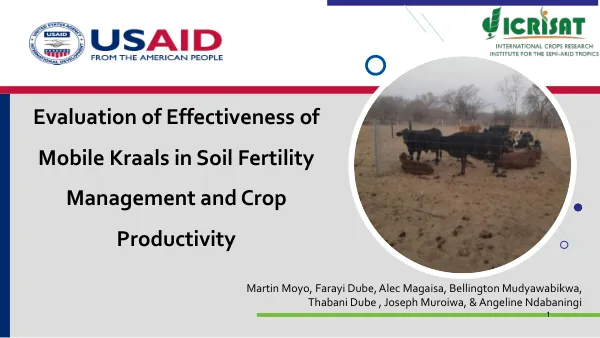
The study aimed to evaluate the impact of animal soil fertilization using mobile kraals on crop productivity, plant growth, and soil fertility. The research questions focused on comparing grain yield and plant growth between mobile kraals fertilized soils and conventionally applied animal manure from fixed kraals, as well as the variation in soil biochemistry under the two methods of soil fertilization. The study was conducted across four districts in Masvingo and Matabeleland North provinces, with a total of 400 m2 of land allocated for each treatment. The study sites were selected based on the availability of arable land, labor, and willingness to host field trials. The majority of the study sites had sandy and loamy sand soil textures. The results showed that mobile kraal fertilization resulted in a significant increase in maize grain yield, with a difference of 1,111 kg/ha compared to the traditional manure application method. The mobile kraal grain yield of 4.5 t/ha was higher than the national average for maize in the 2022/23 season. The study also found that the combination of mobile kraals and Pfumvudza resulted in higher yields compared to Pfumvudza alone. The study's findings have practical significance, as the yield difference of 1,111 kg/ha can feed a family of six for nine months. The results suggest that mobile kraals can be an effective method of soil fertility management and crop productivity, particularly when combined with other interventions such as Pfumvudza.