USAID DEC
Evaluation of the Indonesian Animal Brucellosis Surveillance System in 2016 using the Outild’analyse des systèmes de surveillance (OASIS) Method
Sign inUSAID DEC
Evaluation of the Indonesian Animal Brucellosis Surveillance System in 2016 using the Outild’analyse des systèmes de surveillance (OASIS) Method
The Indonesian Animal Brucellosis Surveillance System was evaluated in 2016 using the Outild'analyse des systèmes de surveillance (OASIS) method.
2019 · 8 pages
Sign in to readA free account is required to download.
Abstract
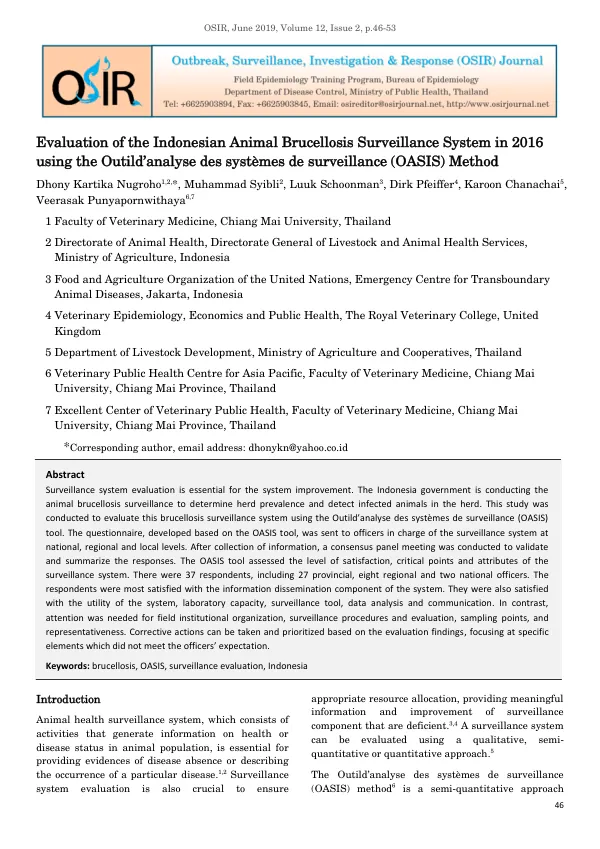
The evaluation aimed to assess the system's characteristics and identify areas for improvement. The OASIS tool assesses 10 components of the surveillance system, including objective, central organizational aspects, field institutional aspects, laboratories, surveillance tools, surveillance procedures, data management, training, communication, and evaluation. The evaluation process involved reviewing and modifying the OASIS tool and questionnaire for brucellosis according to different levels of government staff. The questionnaire was pre-tested with national and regional staff before deployment. A total of 78 criteria were included in the evaluation of each component. The results of the evaluation showed that the respondents were most satisfied with the information dissemination component of the system. They were also satisfied with the utility of the system, laboratory capacity, surveillance tool, data analysis, and communication. However, attention was needed for field institutional organization, surveillance procedures, and evaluation, as well as sampling points and representativeness. The evaluation identified several critical points and attributes of the surveillance system. The respondents highlighted the need for improvement in the field institutional organization, including the existence of formal intermediary units covering the entire territory and the active role of intermediary units in the functioning of the system. They also emphasized the importance of harmonization of intermediary units' activities and the adequacy of material and financial resources of intermediary units. The evaluation also highlighted the need for improvement in the laboratory component, including the effective integration of laboratories in the surveillance system and the adequacy of human, material, and financial resources for diagnostic needs. The respondents also emphasized the importance of quality assurance for the tests undertaken and the standardization of work between different laboratories. The results of the evaluation provided recommendations for the prevention and control of brucellosis in Indonesia. The recommendations included the improvement of field institutional organization, laboratory capacity, and surveillance procedures, as well as the enhancement of communication and data management. The evaluation findings can be used to prioritize corrective actions and improve the effectiveness of the brucellosis surveillance system in Indonesia. The brucellosis surveillance system in Indonesia is crucial for determining herd prevalence and detecting infected animals in the herd. The system consists of active and passive surveillance, reporting brucellosis syndromes, and collecting blood samples for laboratory confirmation. The system is managed by the Directorate of Animal Health (DAH) at the national level, the Disease Investigation Center (DIC) at the regional level, and the Provincial and District Veterinary Services at the local level. The evaluation of the brucellosis surveillance system in Indonesia using the OASIS method provided valuable insights into the system's strengths and weaknesses. The results of the evaluation can be used to improve the effectiveness of the system and prevent the spread of brucellosis in Indonesia.
Related documents