USAID DEC
Evaluation of the Responsible, Engaged, and Loving (REAL) Fathers Initiative on Physical Child Punishment and Intimate Partner Violence in Northern Uganda
Sign inGEORGETOWN UNIVERSITY'S INSTITUTE FOR REPRODUCTIVE HEALTH
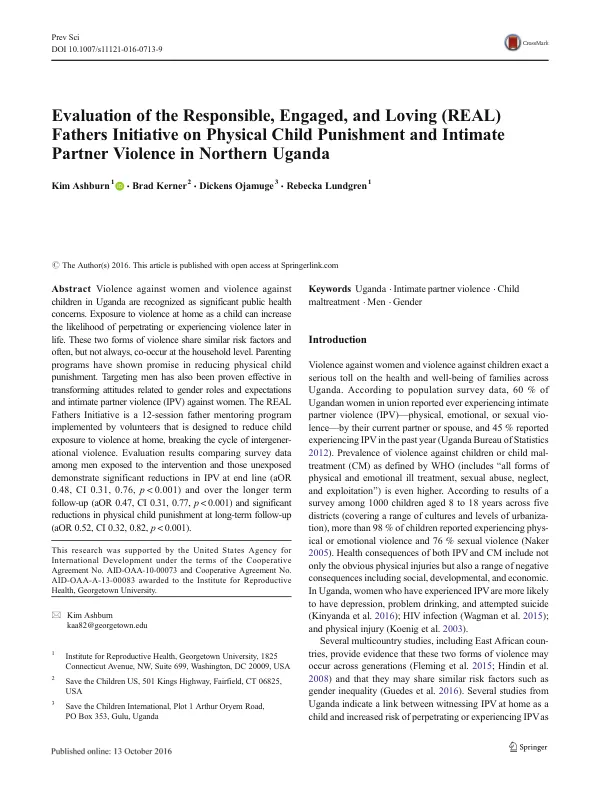
Evaluation of the Responsible, Engaged, and Loving (REAL) Fathers Initiative on Physical Child Punishment and Intimate Partner Violence in Northern Uganda
Violence against women and violence against children in Uganda are significant public health concerns.
2016 · 11 pages
Sign in to readA free account is required to download.
Abstract
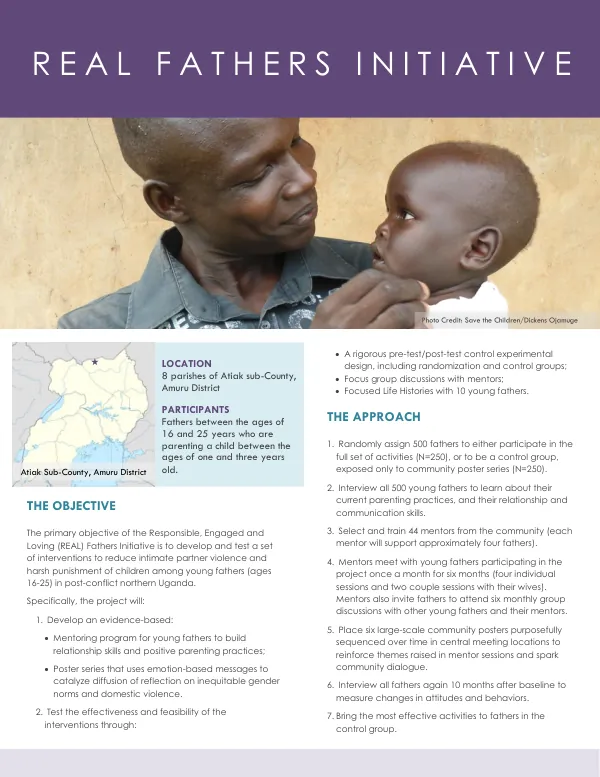
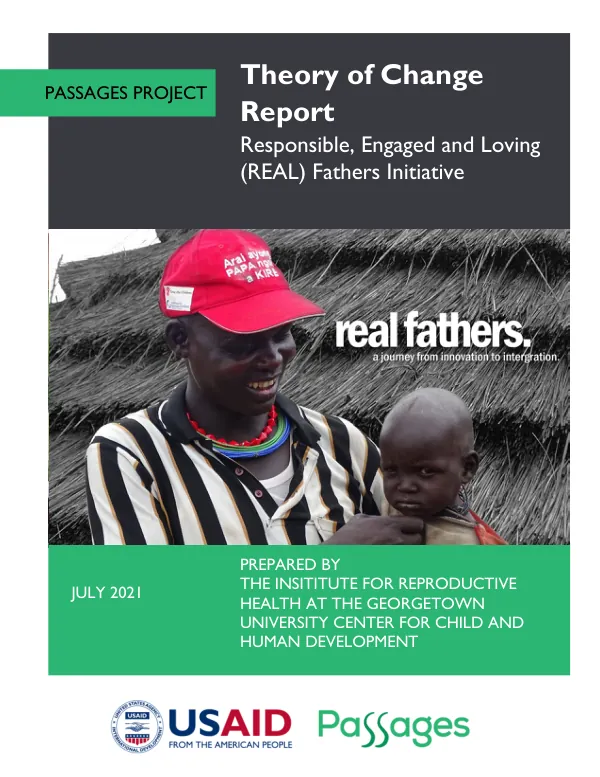
Exposure to violence at home as a child can increase the likelihood of perpetrating or experiencing violence later in life. The two forms of violence share similar risk factors and often co-occur at the household level. Parenting programs have shown promise in reducing physical child punishment, and targeting men has been proven effective in transforming attitudes related to gender roles and expectations and intimate partner violence (IPV) against women. The REAL Fathers Initiative is a 12-session father training program implemented by volunteers, designed to reduce child exposure to violence and break the cycle of intergenerational violence. The program was conducted in Attiak sub-county, Amur district in the Northern region of Uganda, which was heavily affected by the 20-year war waged by the Lord's Resistance Army (LRA) against Uganda's national armed forces. The conflict led to a high level of violence in the region, which has contributed to the existing levels of violence. The program focused on 500 young fathers aged 16 to 25 who have toddler-aged children and are married or cohabiting with their wife or partner. The participants were recruited from villages in Attiak sub-county, where the partner organization, Save the Children International (SCI), was well known and reputable. The study was conducted in two cohorts, with 340 men in cohort 1 and 160 men in cohort 2. Evaluation results comparing survey data from men exposed to the intervention and those unexposed demonstrated significant reductions in IPV at end line (aOR 0.48, CI 0.31, 0.76, p < 0.001) and over the longer term (aOR 0.47, CI 0.31, 0.77, p < 0.001). The results also showed significant reductions in physical child punishment at long-term follow-up (aOR 0.52, CI 0.32, 0.84, p < 0.001). Parenting programs addressing child maltreatment (CM) in post-conflict settings have provided evidence of reduced CM in Liberia and Thailand. Programs targeting fathers as caregivers have generally focused on CM, with a few exceptions such as Program P in Rwanda, which addressed IPV and CM. Analysis of qualitative and quantitative data from SASA!, a community-based HIV and IPV intervention in Uganda, showed important effects on improved parenting, including improved parent-child relationships and less frequent use of physical punishment. Social and gender norms influence the acceptance and occurrence of IPV. In a review of IPV prevention programs, Lundgren and Amin (2015) found limited evidence of effectiveness of interventions that focus on women only. Several studies have shown that working with men can have positive effects on improving attitudes related to gender inequality and reducing perpetration of IPV. The REAL Fathers Initiative was designed to address gender norms that promote the use of violence in child discipline and intimate partner relationships through promotion of positive parenting and partnership skills building. The program aimed to evaluate the effectiveness of the REAL Fathers Initiative on key outcomes, including attitudes toward physical punishment and IPV, confidence in using non-violent strategies, couple communication, and use of physical punishment and IPV.