USAID DEC
Excess mortality associated with the 2009 A(H1N1)v influenza pandemic in Antananarivo, Madagascar
Sign inUSAID DEC
Excess mortality associated with the 2009 A(H1N1)v influenza pandemic in Antananarivo, Madagascar
The 2009 A(H1N1)v influenza pandemic in Antananarivo, Madagascar, resulted in an estimated 20% increase in human deaths compared to the expected number in November 2009.
2012 · 6 pages
Sign in to readA free account is required to download.
Abstract
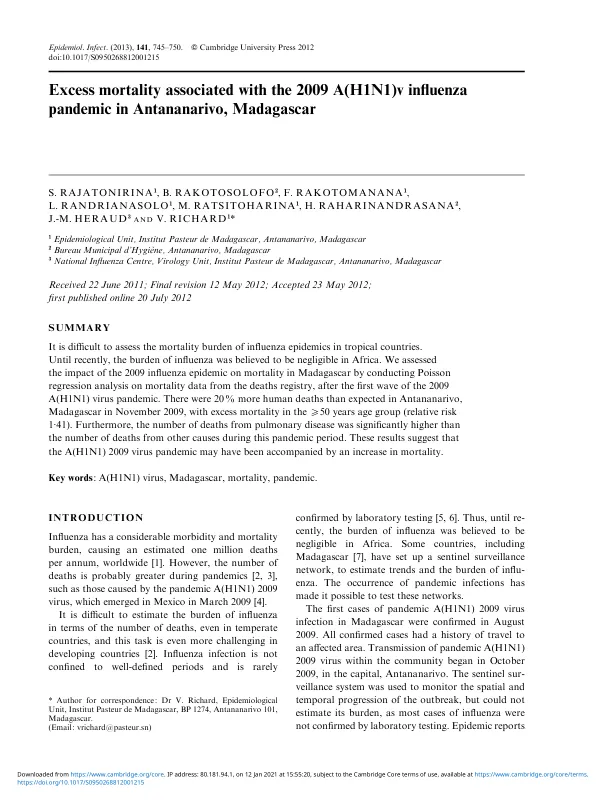
The relative risk of mortality in the o50 years age group was 1.41, indicating a significant increase in mortality among this age group. The number of deaths from pulmonary disease was significantly higher than the number of deaths from other causes during this pandemic period. The study analyzed mortality data from the deaths registry in Antananarivo, Madagascar, from 2007 to 2009. The median age at death was 48 years, and the o50 years age group accounted for 46.7% of all deaths. The sex ratio was 1.24, with no significant difference in death rate between the sexes. The number of deaths per week in Antananarivo in 2009 was plotted against the numbers of deaths per week in 2007 and 2008, showing an increase in deaths in November 2009. Virological surveillance showed that the pandemic A(H1N1) 2009 virus was circulating in the community in Antananarivo between weeks 42 and 53. The annual number of deaths observed in 2009 was significantly lower than expected from the mean crude mortality rate for 2007 and 2008. However, the number of deaths observed in November 2009 was significantly larger than expected, with a relative risk of 1.11. Significant differences were found in the number of deaths occurring each week, with more deaths observed in weeks 46 and 48 than expected from the data for 2007-2008. Differences were also found for age group and year of death, with more deaths observed in the o50 years age group and in November 2009 than expected. The mortality rate in November 2009 was 2.4/1000, significantly higher than the mean mortality rate for the same month in the previous two years. The study suggests that the A(H1N1) 2009 virus pandemic may have been accompanied by an increase in mortality in Antananarivo, Madagascar. The findings highlight the importance of monitoring mortality data and conducting virological surveillance to understand the impact of influenza pandemics on populations in developing countries.