USAID DEC
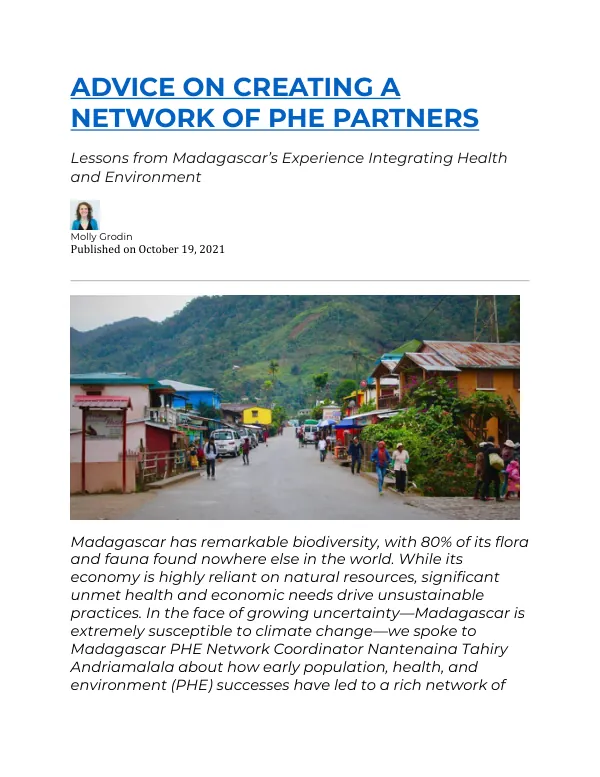
ADVICE ON CREATING A NETWORK OF PHE PARTNERS Lessons from Madagascar’s Experience Integrating Health and Environment
Sign inUSAID DEC
ADVICE ON CREATING A NETWORK OF PHE PARTNERS Lessons from Madagascar’s Experience Integrating Health and Environment
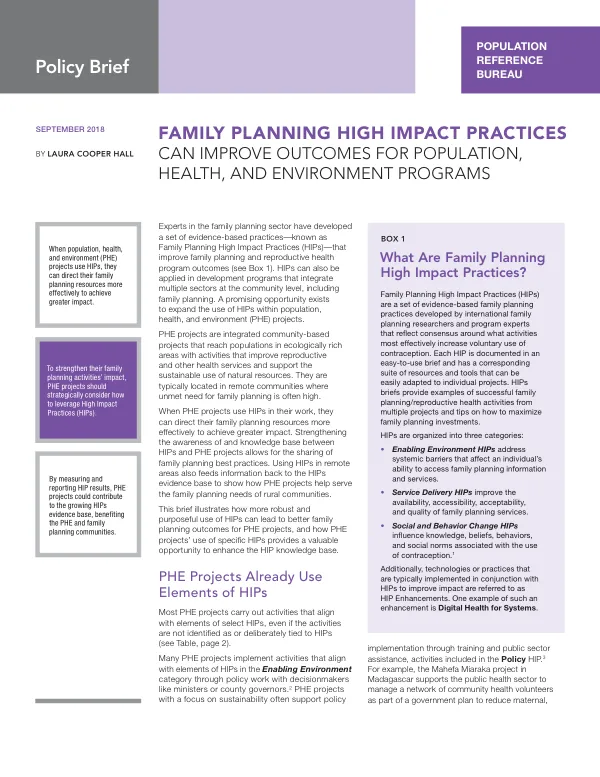
The PHE approach in Madagascar began in 1980 with the Integrated Conservation and Development Project, which linked natural resource management with sustainable development.
2021 · 6 pages
Sign in to readA free account is required to download.
Abstract
This integrated approach expanded to include health and family planning components, marking the start of population, health, and environment (PHE) initiatives in the country. The National Environment Plan and the understanding that protecting people and the environment are interconnected drove this integration. The PHE approach in Madagascar has evolved over time, with a focus on collaboration between health and conservation organizations. A PHE partnership model is considered more effective than a single organization implementing different components. Multidisciplinary teams with strong skills in their respective sectors join forces for site activities, leading to mutual benefits and a more effective approach. The PHE Network in Madagascar was established to connect and support partnerships between health and conservation organizations. Led by Blue, the network emerged from a national workshop with diverse stakeholders and donors who identified the need for better sharing of experiences across the country. The network's primary goal is to facilitate partnerships between health and conservation organizations, offering a platform for sharing experiences, tools, and technical resources. The network provides a range of support services, including listservs for national and regional development, a quarterly newsletter, and coordination meetings to bring staff together. The network also hosts network meetings for each region, including an annual learning exchange visit to engage with field staff and the community. Educational materials are created and shared with all partners, and the network works with relevant ministries to develop a national PHE framework. One of the key lessons from the network is the importance of considering the value it brings to partners. The network was established through a general consultation with partners to map out partners, their current activities, and the best ways to support the network. The network's value lies in its ability to provide tangible benefits, such as sharing funding opportunities, supporting staff capacity with training sessions, and increasing the reach and impact of partner activities. The network has also identified the need to support policymakers and provide resources and materials to help them understand the PHE approach. Cultural norms and cultural norms can be challenging for the adoption of PHE, particularly in the acceptance of reproductive health and family planning. The network has developed strategies to address these challenges, including the use of conservation as a way to engage men in family health sessions and the introduction of alternative income-generating activities to support women. The PHE approach in Madagascar has the potential to change the lives of communities, particularly in the face of climate change. The approach adds tangible value and can support both health and conservation efforts. The network is confident that this approach can make a significant difference in the lives of communities, particularly women and youth who are most vulnerable to climate disruptions.