JHPIEGO
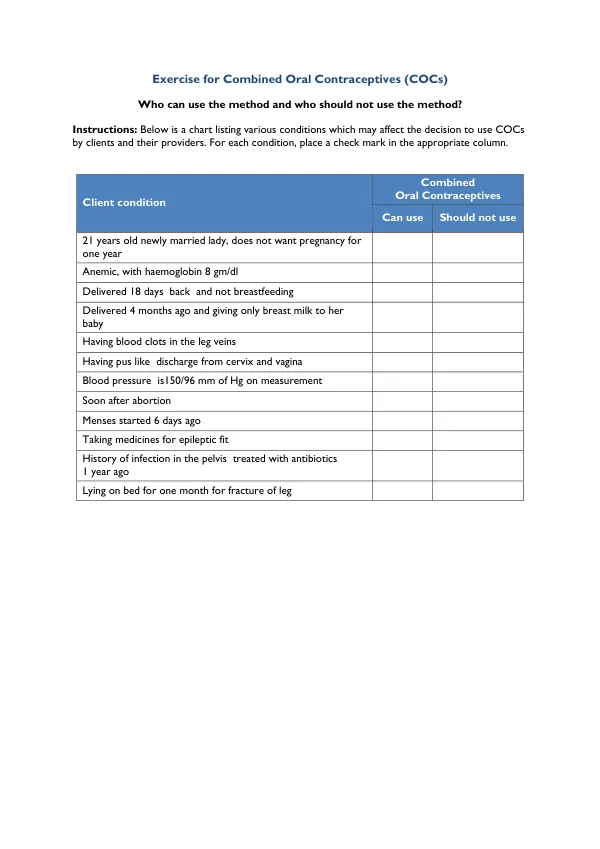
Exercise for Combined Oral Contraceptives (COCs)
The use of Combined Oral Contraceptives (COCs) is determined by various factors, including client conditions and medical history.
2016 · 1 pages
Sign in to readA free account is required to download.
Abstract
A 21-year-old newly married lady who does not want pregnancy for one year can use COCs. Anemic clients with a haemoglobin level of 8 gm/dl should not use COCs, as they may be at increased risk of worsening anaemia due to the potential decrease in iron levels associated with COC use. Women who have recently given birth, such as those who delivered 18 days ago and are not breastfeeding, can use COCs. However, those who delivered 4 months ago and are exclusively breastfeeding should not use COCs, as they may be at increased risk of blood clots. Clients with a history of blood clots in the leg veins should not use COCs, as this increases their risk of further clotting events. Those with a pus-like discharge from the cervix and vagina should not use COCs, as this may indicate an active infection. Women with high blood pressure, such as a blood pressure of 150/96 mm of Hg, should not use COCs, as this may increase their risk of cardiovascular events. Clients who have recently undergone an abortion should not use COCs for a period of time, typically 4-6 weeks, to allow for healing and reduce the risk of complications. Women who have started their menstrual cycle in the past 6 days can use COCs. Clients taking medicines for epileptic fits can use COCs, but may require additional monitoring to ensure that the medication does not interact with the COCs. A history of pelvic infection treated with antibiotics 1 year ago does not necessarily preclude the use of COCs. However, clients who have been bedridden for an extended period, such as one month due to a leg fracture, may be at increased risk of blood clots and should use COCs with caution.