USAID DEC
Exploration culturable bacterial symbionts of sponges from Ternate Islands, Indonesia
Sign inUNIVERSITY OF CALIFORNIA AT DAVIS
Exploration culturable bacterial symbionts of sponges from Ternate Islands, Indonesia
The study aimed to explore the culturable bacterial symbionts of sponges from Ternate Island, Indonesia.
2019 · 7 pages
Sign in to readA free account is required to download.
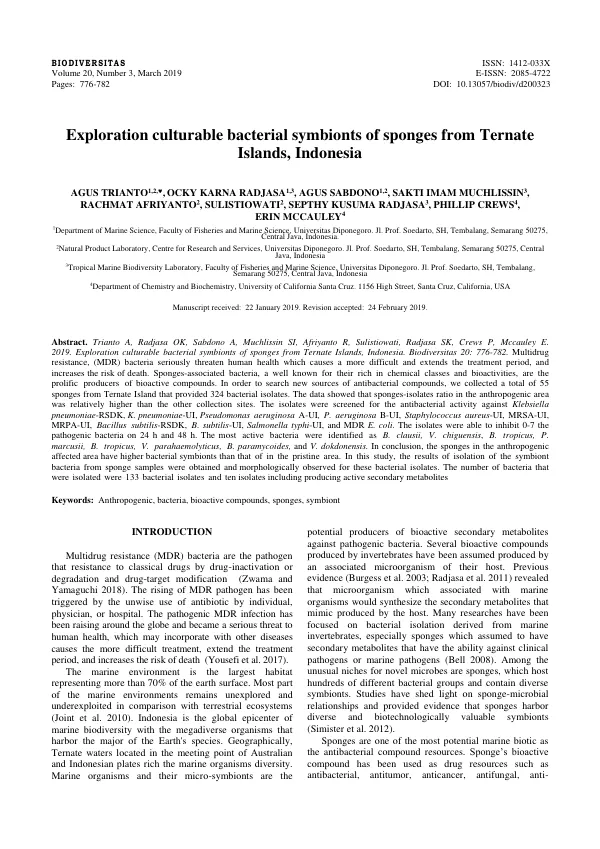
Abstract
A total of 55 sponges were collected from various sites, including Falajoh beach, Taman Nila, Big O1, Big O2, Tanjung Holl, and Taman Jikomol. The sponges were washed and then subjected to bacterial isolation using a dilution method. The bacteria were grown on Zobell 2216E agar plates and incubated for 7 days. The resulting colonies were then identified using a KOH 3% string test and Gram staining tests. A total of 324 bacterial isolates were obtained from the sponges. The isolates were screened for their antibacterial activity against various pathogenic bacteria, including Klebsiella pneumoniae, Pseudomonas aeruginosa, Staphylococcus aureus, and MRSA. The results showed that some of the isolates were able to inhibit the growth of these pathogenic bacteria. The study found that the sponges from the anthropogenic area had a higher number of bacterial symbionts compared to those from the pristine area. This suggests that the sponges from the anthropogenic area may have a greater potential for producing bioactive compounds. The study also found that some of the bacterial isolates were able to produce secondary metabolites, which may have antibacterial properties. The study highlights the importance of exploring the culturable bacterial symbionts of sponges from various environments. The results of this study provide new insights into the potential of sponges as a source of bioactive compounds. The study also emphasizes the need for further research into the antibacterial properties of these compounds. The study's findings have significant implications for the development of new antibacterial agents. The discovery of new antibacterial compounds from sponges and their associated bacteria could lead to the development of new treatments for bacterial infections. The study's results also highlight the importance of preserving the marine environment and the need for further research into the potential of sponges as a source of bioactive compounds. The study's methodology involved collecting sponges from various sites, isolating bacteria from the sponges, and screening the isolates for their antibacterial activity. The study's results provide new insights into the potential of sponges as a source of bioactive compounds and highlight the need for further research into the antibacterial properties of these compounds.
Related documents
Documents in this collection
 2024
2024USAID DEC
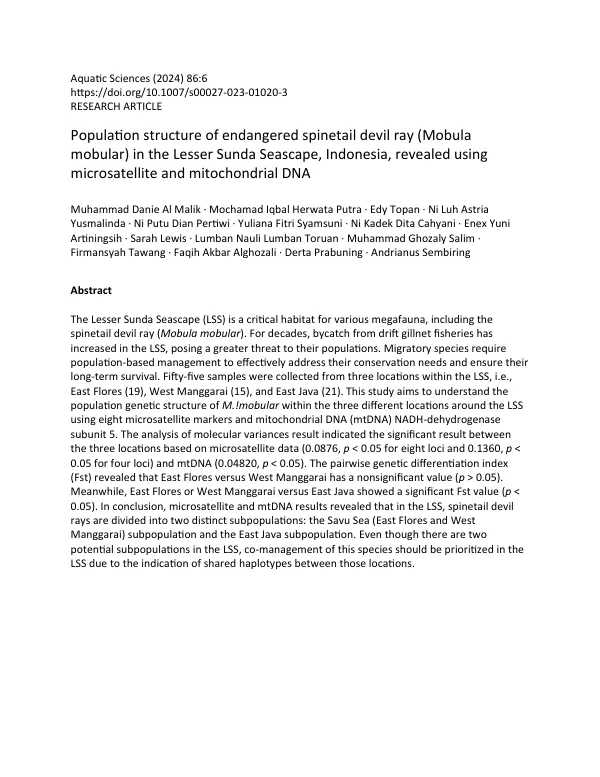
Population structure of endangered spinetail devil ray (Mobula mobular) in the Lesser Sunda Seascape, Indonesia, revealed using microsatellite and mitochondrial DNA
Open record 2016
2016USAID DEC