TETRA TECH
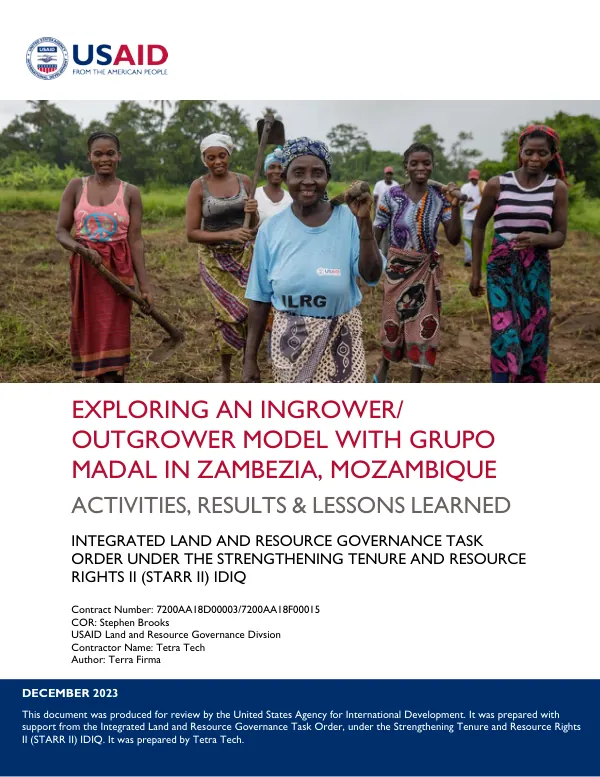
Exploring an Ingrower/Outgrower Model with Grupo Madal in Zambezia, Mozambique
The agricultural development initiative in Zambezia, Mozambique, began with the transformation of Grupo Madal's business model.
2023 · 24 pages
Sign in to readA free account is required to download.
Abstract
The company, which had previously relied on large-scale estate production, shifted towards a more inclusive approach that integrated neighboring communities. This change was driven by the growing population and lack of available farmland, which led to thousands of people, mostly women, informally growing their own crops on unused areas of Madal's farms. Madal's new management, which took over in 2016, recognized the land hunger of these smallholders and designed an approach to bring them into the system. The company introduced an ingrower/outgrower model, which combines core estate production, outgrowers, and ingrowers. Ingrowers are individuals who were previously informally using company land and are now formally accepted farmers, working within the company's farms under long-term contracts. The ingrower program aimed to address the land hunger of women-headed households and other smallholders. Madal agreed to provide them with access to company land, which they could use to grow food and cash crops that the company would purchase. This approach was designed to benefit both the company and the local communities, by increasing productivity and providing a stable source of income for smallholders. Implementation of the ingrower program involved several key activities. These included the registration of ingrowers and delimitation of ingrower parcels, establishment of community land associations, community land delimitation, and delimitation of existing land uses, including family parcels. Additionally, Madal established a gender-responsive agricultural extension system to support the ingrowers and outgrowers. The program also involved the development of land and natural resources management plans, which aimed to ensure sustainable use of the company's land and resources. These plans were designed to balance the needs of the company with those of the local communities, and to promote environmentally friendly practices. Despite the challenges encountered during the implementation of the program, Madal's ingrower/outgrower model has shown promising results. The program has helped to increase productivity and provide a stable source of income for smallholders, while also promoting sustainable land use practices. The lessons learned from this program can be applied to other similar initiatives, and can help to inform the development of more inclusive and sustainable agricultural development models.