USAID DEC
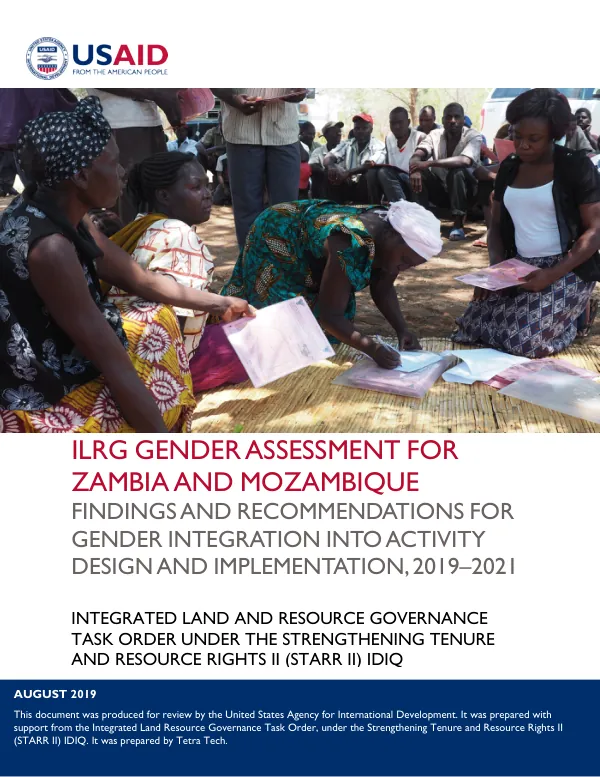
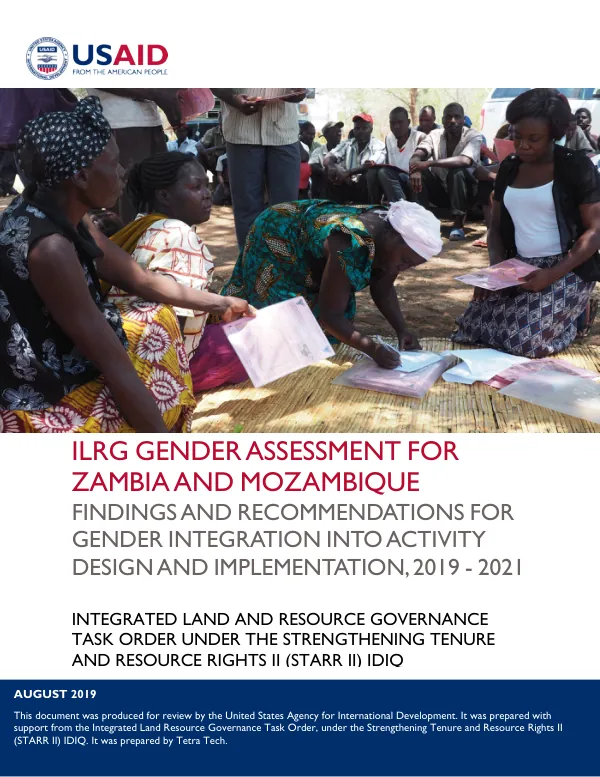
ILRG Gender Assessment for Zambia and Mozambique: Findings and Recommendations for Gender Integration into Activity Design and Implementation 2019 – 2021
Sign inLANDESA
ILRG Gender Assessment for Zambia and Mozambique: Findings and Recommendations for Gender Integration into Activity Design and Implementation 2019 – 2021
The Integrated Land and Resource Governance (ILRG) program's Gender Integration Strategy aims to apply its principles to project objectives and activities in Zambia and Mozambique.
2019 · 27 pages
Sign in to readA free account is required to download.
Abstract
The assessment focuses on four areas: documentation of customary/community land rights, administration of customary/community land rights, land use planning, and governance of forestry and wildlife resources. The primary source of data for the assessment relates to work previously done under the Tenure and Global Climate Change (TGCC) program in Zambia and the Responsible Investment Pilot in Mozambique. In Zambia, the assessment identified issues related to broader social and customary settings, including limited access to land and resources for women and other vulnerable groups. The project's year one work plan provides little guidance on how to implement objectives in a way that equally includes and benefits both women and men. The ILRG gender strategy emphasizes the importance of addressing these gaps to ensure gender equitable processes and outcomes. In Mozambique, the assessment highlighted the need for follow-up research and understanding of the country's legislative and policy framework. The project's gender advisor will use the assessment as a basis for their work planning activities on a quarterly basis. The assessment will be built upon through time, as the management and technical team periodically review the report to ensure that principles and activities are actively integrated. The assessment team conducted key informant interviews and focus group discussions with stakeholders in Zambia and Mozambique. The findings indicate that women's equal participation in land and resource governance is hindered by various factors, including limited access to information, lack of representation in decision-making processes, and social and cultural norms that perpetuate gender-biased attitudes. The assessment recommends that the project prioritize the integration of the ILRG gender strategy into its activities and objectives. This includes providing training and capacity-building programs for project staff and implementing partners on gender equality and women's empowerment. The project should also establish mechanisms for monitoring and evaluating the impact of its activities on gender equality and women's empowerment. In Zambia, the assessment recommends that the project focus on general community engagement and customary rights registration, customary land administration, land use planning, community management of forestry and wildlife, and legal and policy engagement. In Mozambique, the assessment recommends that the project prioritize follow-up research and understanding, gender integration in design and implementation, and legal and policy engagement. The assessment emphasizes the importance of working with governments, communities, civil society, and the private sector to ensure a robust integration of the gender strategy. The project should also establish partnerships with organizations that specialize in gender equality and women's empowerment to leverage their expertise and resources. The assessment concludes that the ILRG program has a critical role to play in promoting gender equality and women's empowerment in Zambia and Mozambique. By integrating the ILRG gender strategy into its activities and objectives, the project can make a significant contribution to addressing the challenges faced by women and other vulnerable groups in these countries.