USAID DEC
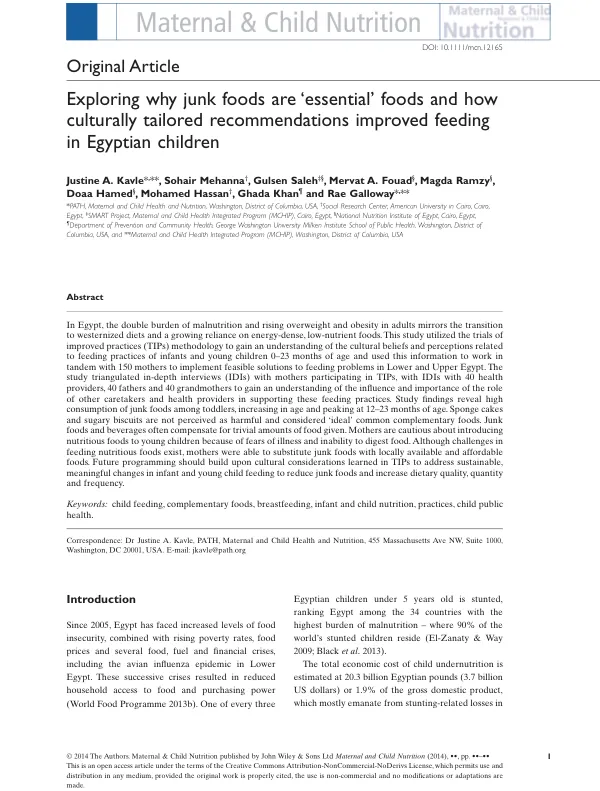
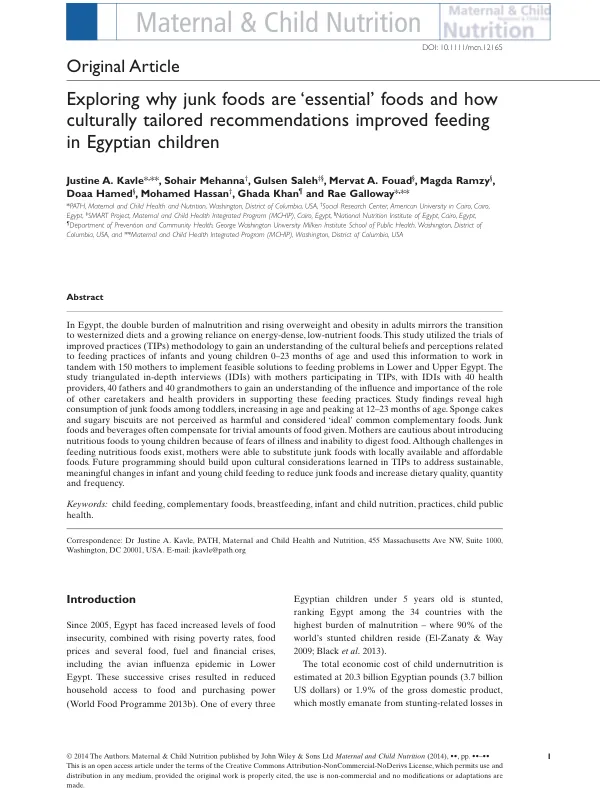
Exploring why junk foods are essential foods and how culturally tailored recommendations improved feeding in Egyptian children
Sign inNATIONAL INSTITUTE OF NUTRITION
Exploring why junk foods are essential foods and how culturally tailored recommendations improved feeding in Egyptian children
Egypt has faced increased levels of food insecurity since 2005, combined with rising poverty rates, food prices, and several food, fuel, and financial crises.
2014 · 25 pages
Sign in to readA free account is required to download.
Abstract
These successive crises have resulted in reduced household access to food and purchasing power. One of every three Egyptian children under 5 years old is stunted, ranking Egypt among the 34 countries with the highest burden of malnutrition. The total economic cost of child undernutrition is estimated at 20.3 billion Egyptian pounds (3.7 billion US dollars) or 1.9% of the gross domestic product, mostly emanating from stunting-related losses in manual labor productivity, affecting 64% of Egyptians. Egypt is experiencing the double burden of malnutrition, with rising prevalence of stunting, accompanied by rising levels of overweight and obesity in adults and children. Twenty percent of children under the age of 5 are overweight or obese, and nearly 75% of adult women are overweight. In Egypt, losses because of chronic disease associated with obesity are estimated to be US$1.3 billion by 2015. A growing reliance on energy-dense, low-nutrient foods and subsidized foods, such as oil and bread, has contributed to limited dietary diversity. About 35% of Egyptians suffer from limited dietary diversity as a consequence of limited awareness of the connection between nutritious foods and health. The current study explored perceptions and beliefs of mothers and other key informants related to infant and young child feeding (IYCF) practices in Egypt. The study aimed to gain an understanding of the cultural and contextual influences on nutrition practices, including consumption of junk foods in Egyptian children 0-23 months of age. The research objectives were twofold: to understand the cultural beliefs, perceptions, and motivations for optimal and poor feeding practices, including feeding junk foods to children younger than 2 years of age, and to assess the role of other caretakers and health providers in supporting mothers' feeding practices of toddlers. The study was conducted in two governorates in Egypt: Qaliobia in Lower Egypt and Sohag in Upper Egypt. Qaliobia is a semi-urban region with an estimated population of 4.2 million, while Sohag is an agricultural rural region with nearly half of the population considered poor. Mothers, 18 years and older with children 0-23 months of age, were randomly selected from the SMART project-generated lists of project participants. The study participants were stratified according to child's age: 0-5, 6-8, 9-11, and 12-23 months. The study found that high consumption of junk foods among toddlers increased with age and peaked at 12-23 months of age. Sponge cakes and sugary biscuits were not perceived as harmful and were considered 'ideal' common complementary foods. Junk foods and beverages often compensated for trivial amounts of food given. Mothers were cautious about introducing nutritious foods to young children because of fears of illness and inability to digest food. However, mothers were able to substitute junk foods with locally available and affordable foods. The study revealed that mothers and family members routinely gave junk foods as part of the daily meal, with small amounts of nutritious foods. 'Junk' foods were considered good, natural, and 'essential' complementary foods and an easy way to feed toddlers. The study suggested that educational strategies should target families and health providers to not feed junk foods prior to 2 years of age to ensure that children reach their potential for growth.
Related documents