USAID DEC
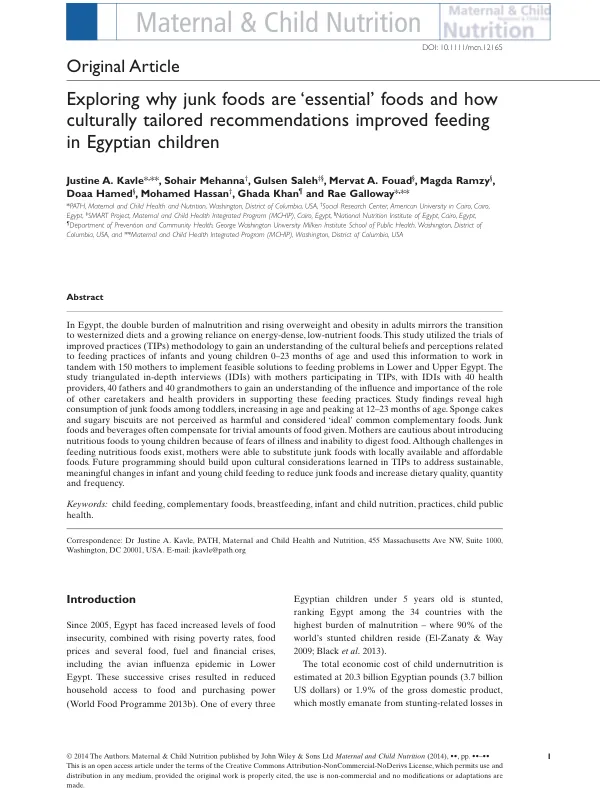
Exploring why junk foods are essential foods and how culturally tailored recommendations improved feeding in Egyptian children
Sign inNATIONAL INSTITUTE OF NUTRITION
Exploring why junk foods are essential foods and how culturally tailored recommendations improved feeding in Egyptian children
In Egypt, the double burden of malnutrition and rising overweight and obesity in adults mirrors the transition to westernized diets and a growing reliance on energy-dense, low-nutrient foods.
2014 · 25 pages
Sign in to readA free account is required to download.
Abstract
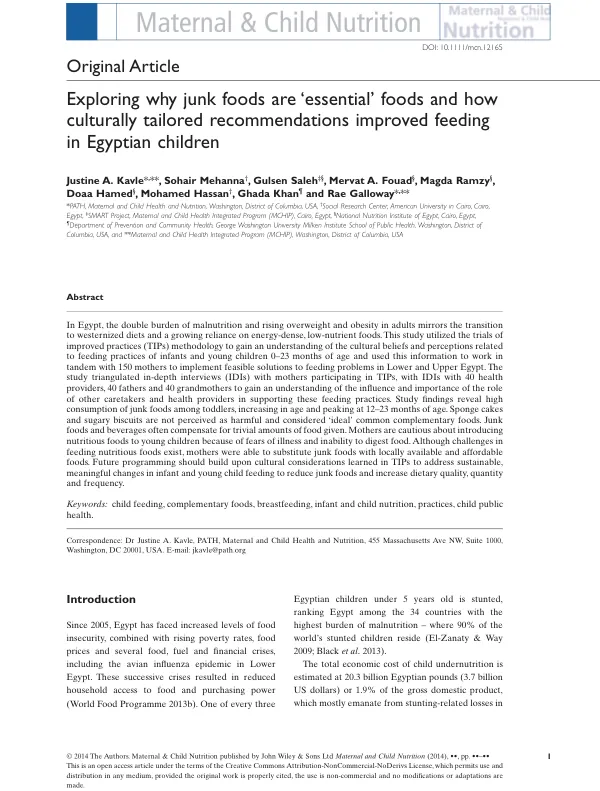
This study utilized the trials of improved practices (TIPs) methodology to gain an understanding of the cultural beliefs and perceptions related to feeding practices of infants and young children 0–23 months of age. The study aimed to work in tandem with 150 mothers to implement feasible solutions to feeding problems in Lower and Upper Egypt. The study found high consumption of junk foods among toddlers, increasing in age and peaking at 12–23 months of age. Sponge cakes and sugary biscuits are not perceived as harmful and considered 'ideal' common complementary foods. Junk foods and beverages often compensate for trivial amounts of food given. Mothers are cautious about introducing nutritious foods to young children because of fears of illness and inability to digest food. Although challenges in feeding nutritious foods exist, mothers were able to substitute junk foods with locally available and affordable foods. The study sites reflect two of six SMART project governorates and allowed for comparisons of IYCF practices between regions with the highest (Lower Egypt) and the lowest (Upper Egypt) levels of stunting. The two study sites were Qaliobia governorate in Lower Egypt and Sohag governorate in Upper Egypt. Qaliobia, Lower Egypt is a semi-urban region, north of Cairo in the Egypt Delta, with an estimated population of 4.2 million. Sohag governorate, Upper Egypt, an agricultural rural region, nearly half of the population (3.7 million) is considered poor. The study revealed that mothers and family members routinely give these 'preferred' and 'liked' junk foods, as part of the daily meal, with small amounts of nutritious foods. 'Junk' foods are considered good, natural and 'essential' complementary foods and an easy way to feed toddlers. Trials of Improved Practices (TIPs) revealed that mothers can substitute locally available nutritious snacks for junk foods. Educational strategies should target families and health providers to not feed junk foods prior to 2 years of age to ensure that children reach their potential for growth.
Related documents