BANK FOR WEST AFRICAN DEVELOPMENT
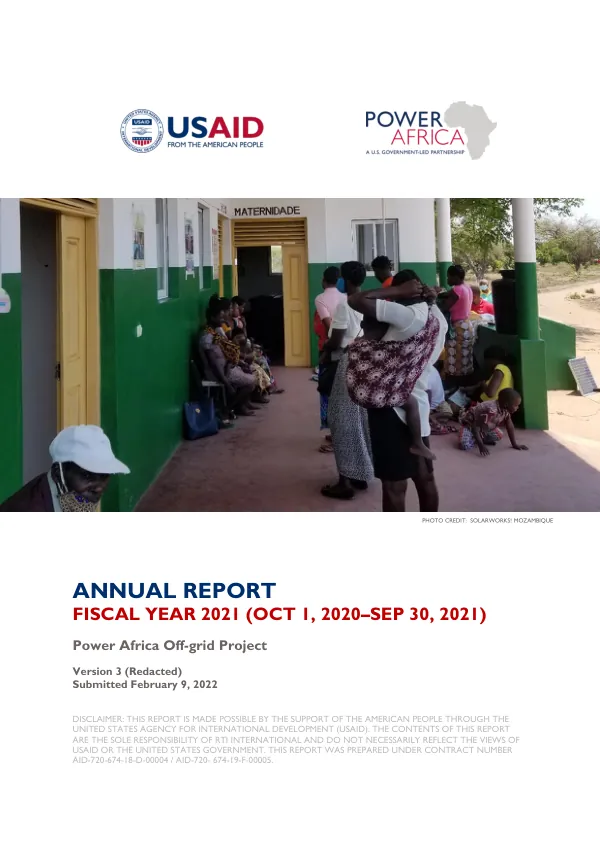
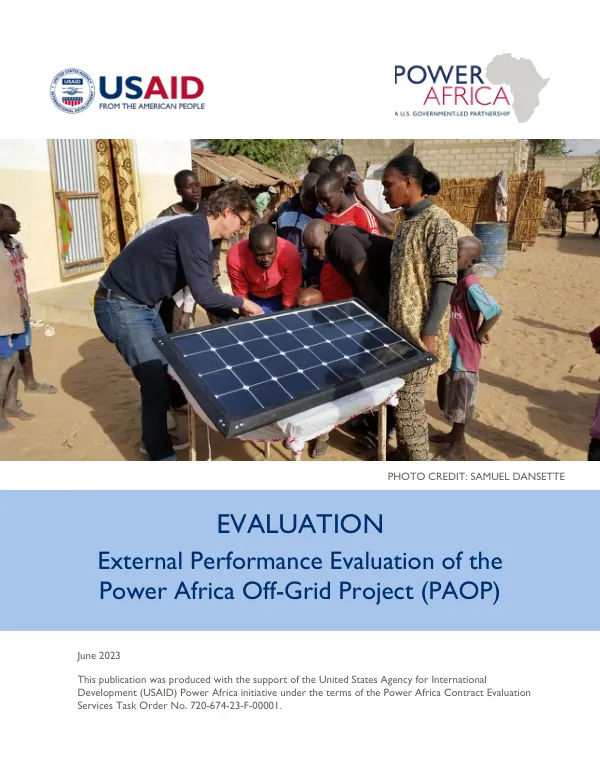
External Performance Evaluation of the Power Africa Off-Grid Project (PAOP)
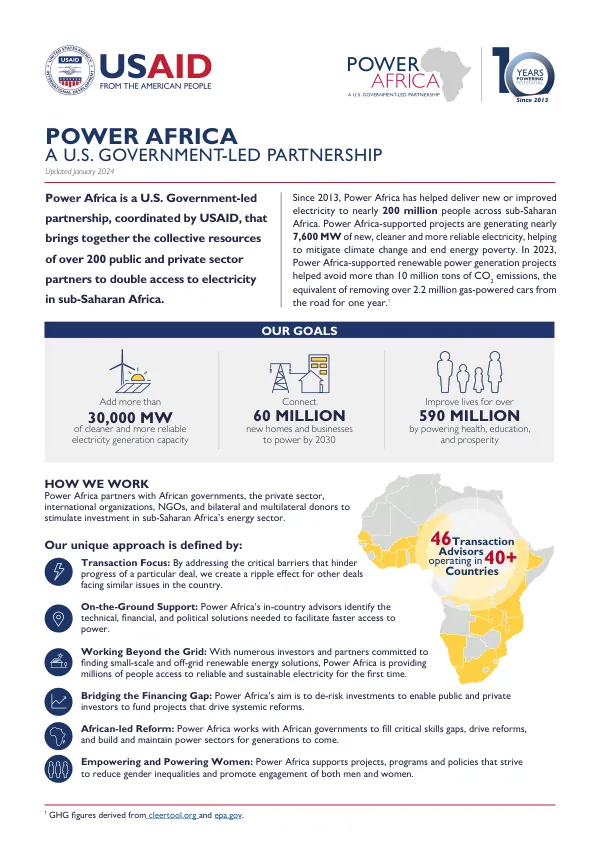
The Power Africa Off-Grid Project (PAOP) is a key component of the broader Power Africa initiative, which aims to double electricity access across Sub-Saharan Africa by 2030.
2023 · 77 pages
Sign in to readA free account is required to download.
Abstract
PAOP focuses on increasing the number of off-grid connections in the region, with a target of 6 million new connections by the end of the project in November 2023. The project's activities also seek to improve national off-grid policies and regulations, as well as increase private sector financing for off-grid companies and projects. PAOP began implementation in November 2018 and is implemented by a consortium led by RTI International. The project's funding is $50,860,572, and it operates in 27 countries, with a primary focus on 12 focus countries. These countries include Benin, Burkina Faso, Cameroon, Côte d'Ivoire, Democratic Republic of the Congo, Ghana, Kenya, Liberia, Rwanda, Senegal, Tanzania, and Uganda. The evaluation highlights the importance of productive use of energy (PUE) in achieving the economic impact of energy access. PUE offers a sustainable basis for the operation of off-grid energy users and provides a market for off-grid energy providers. However, the companies developing in this field require more support, as their business models and products are specialized and often struggle to access a mass market. The evaluation also emphasizes the need for continued support from donors and external sources to address the challenges faced by off-grid companies. Without this support, companies may revert to standardized business models, which may not prioritize gender considerations. The evaluation suggests that working with the private sector can lead to rapid success, as it allows for more robust work and faster implementation of activities. In addition, the evaluation highlights the importance of working with governments to achieve an impact in the sector. Governments play a crucial role in determining the overall policy direction of a given sector and setting framework conditions, including technical standards, taxation, and importation regimes. The evaluation suggests that the PA partnership is well-suited for working with governments, as it allows for regular and direct contact with communities and provides support for the private sector. Overall, the evaluation provides valuable insights into the challenges and opportunities faced by PAOP and highlights the importance of continued support from donors and external sources to achieve the project's goals.
Related documents