USAID DEC
Extraction of Antioxidant and Antimicrobial Potential of Polyphenols in Scenedesmus sp. and Chlorella sp.
Sign inUSAID DEC
Extraction of Antioxidant and Antimicrobial Potential of Polyphenols in Scenedesmus sp. and Chlorella sp.
Extraction optimization using response surface methodology and evaluation of the antioxidant and antimicrobial properties of polyphenols in Scenedesmus sp.
2021 · 1 pages
Sign in to readA free account is required to download.
Abstract
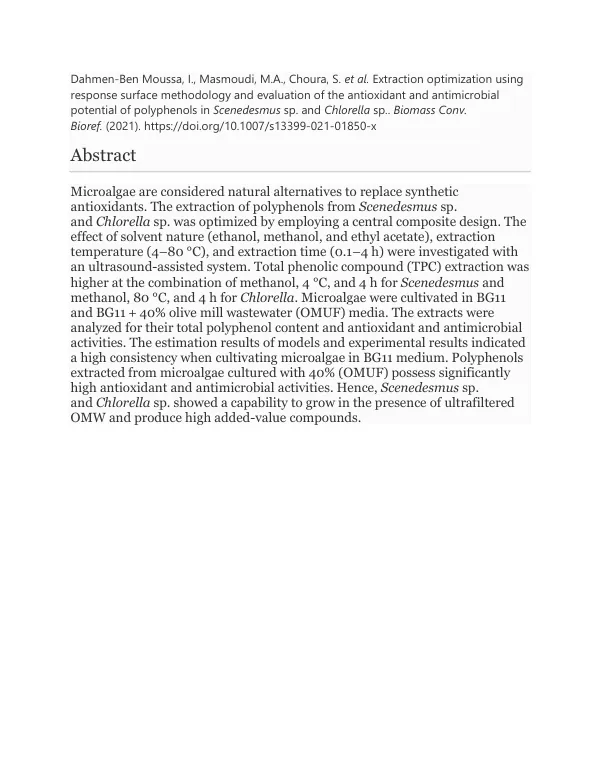
and Chlorella sp. were investigated in a study published in 2021. Microalgae are considered natural alternatives to replace synthetic antioxidants. The extraction of polyphenols from Scenedesmus sp. and Chlorella sp. was optimized by employing a central composite design. The effect of solvent nature, extraction temperature, and extraction time on the extraction of total phenolic compound (TPC) was investigated with an ultrasound-assisted system. The results showed that the combination of methanol, 4 °C, and 4 h was optimal for extracting TPC from Scenedesmus sp., while the combination of methanol, 80 °C, and 4 h was optimal for Chlorella sp. The microalgae were cultivated in BG11 and BG11 + 40% olive mill wastewater (OMUF) media. The extracts were analyzed for their total polyphenol content and antioxidant and antimicrobial activities. The results showed a high consistency when microalgae were cultivated in BG11 medium. However, polyphenols extracted from microalgae cultured with 40% OMUF possessed significantly high antioxidant and antimicrobial activities. The study demonstrated that Scenedesmus sp. and Chlorella sp. have the capability to grow in the presence of ultrafiltered OMW and produce high added-value compounds. The findings of this study suggest that Scenedesmus sp. and Chlorella sp. can be used as natural sources of antioxidants and antimicrobial agents. The results also indicate that the use of OMUF as a medium for microalgae cultivation can enhance the production of polyphenols with high antioxidant and antimicrobial activities. This study contributes to the development of sustainable and eco-friendly methods for the production of bioactive compounds from microalgae. The study's results have implications for the development of new products and applications in the fields of food, pharmaceuticals, and cosmetics. The use of microalgae as a natural source of antioxidants and antimicrobial agents can provide a sustainable alternative to synthetic chemicals. The findings of this study can also contribute to the development of new technologies for the production of biofuels and other value-added products from microalgae.