DAI GLOBAL, LLC
FAA 118/119 BEST PRACTICES GUIDE
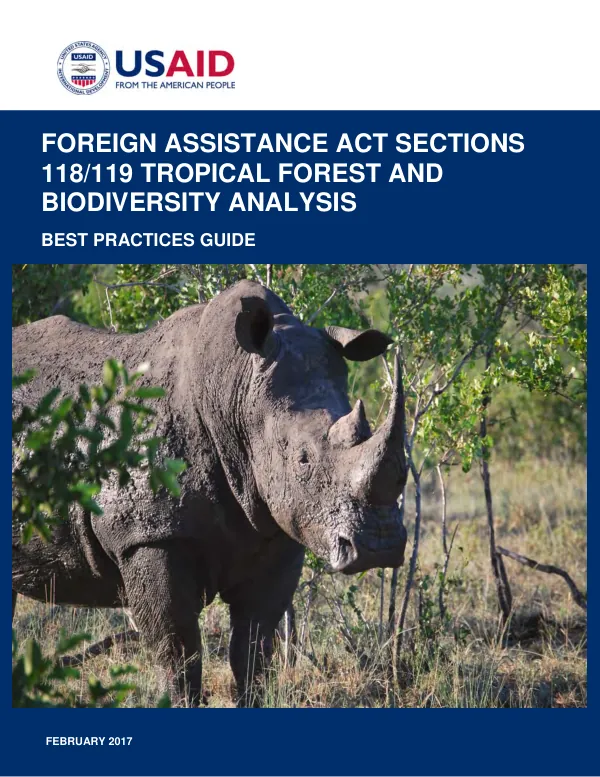
The Foreign Assistance Act (FAA) Sections 118/119 Tropical Forest and Biodiversity Analysis Best Practices Guide is a comprehensive resource for USAID missions and implementing partners.
2017 · 55 pages
Sign in to readA free account is required to download.
Abstract
The guide provides a framework for conducting a thorough analysis of a country's tropical forests and biodiversity, as required by FAA Sections 118 and 119. The guide emphasizes the importance of a well-structured analysis team, comprising experts from various disciplines, including ecology, conservation biology, and social sciences. The team should be composed of individuals with a deep understanding of the country's biophysical setting, including its ecosystems, species diversity, and genetic diversity. The analysis should begin with a thorough review of the country's context, including its location, biophysical setting, and biodiversity status. This should be followed by an assessment of the country's protected areas, key natural resources outside protected areas, and the value and economic potential of its biodiversity. The guide also provides a detailed outline for developing the analysis report, including the drafting of the report, USAID review and approval, and dissemination of the findings. Additionally, it highlights the importance of integrating biodiversity into the Country Development Cooperation Strategy (CDCS) and using the analysis to inform program design and implementation. The guide includes several annexes, including a scope of work template and analysis outline, which can be used as a starting point for developing a comprehensive analysis. The annexes provide a detailed outline of the tasks and deliverables required for a successful analysis, including data collection and analysis, preparation of the FAA 118/119 analysis, and role of the USAID mission. The guide is a valuable resource for USAID missions and implementing partners seeking to conduct a thorough analysis of a country's tropical forests and biodiversity. By following the best practices outlined in the guide, missions can ensure that their analysis is comprehensive, accurate, and effective in informing program design and implementation. The guide's emphasis on a well-structured analysis team, thorough review of the country's context, and detailed outline for developing the analysis report are key components of a successful analysis. Additionally, the guide's focus on integrating biodiversity into the CDCS and using the analysis to inform program design and implementation highlights the importance of considering biodiversity in development programming. The guide's annexes provide a detailed outline of the tasks and deliverables required for a successful analysis, including data collection and analysis, preparation of the FAA 118/119 analysis, and role of the USAID mission. The annexes can be used as a starting point for developing a comprehensive analysis, ensuring that all necessary tasks and deliverables are included.