USAID DEC
Factors influencing somatic embryogenesis, regeneration, and Agrobacterium-mediated transformation of cassava (Manihot esculenta Crantz) cultivar TME14
Sign inINTERNATIONAL INSTITUTE OF TROPICAL AGRICULTURE
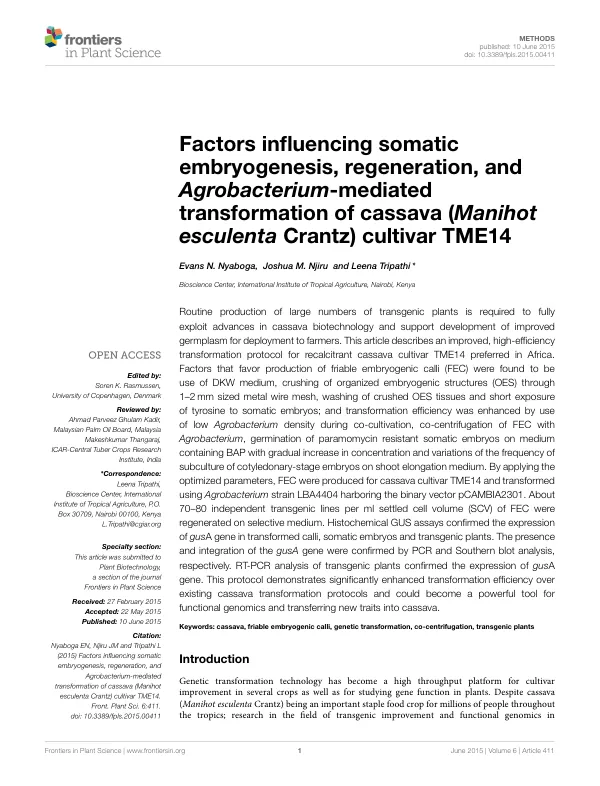
Factors influencing somatic embryogenesis, regeneration, and Agrobacterium-mediated transformation of cassava (Manihot esculenta Crantz) cultivar TME14
Cassava cultivar TME14 is a landrace commonly grown in West, Central, and East Africa, and is considered one of the most preferred cultivars in Africa.
2015 · 13 pages
Sign in to readA free account is required to download.
Abstract
It is ranked highest by farmers for its plant establishment, resistance to cassava mosaic disease, early maturation, high yield, mealiness, flavor, cooking qualities, and market value. However, its production is severely affected by cassava brown streak disease, cassava bacterial blight, and various insect pests. Routine production of large numbers of transgenic plants is required to fully exploit advances in cassava biotechnology and support development of improved germplasm for deployment to farmers. An improved, high-efficiency transformation protocol for recalcitrant cassava cultivar TME14 is crucial for cassava genomics and improvement initiatives. Factors that favor production of friable embryogenic calli (FEC) were found to be the use of DKW medium, crushing of organized embryogenic structures (OES) through 1–2 mm sized metal wire mesh, washing of crushed OES tissues, and short exposure of tyrosine to somatic embryos. Transformation efficiency was enhanced by the use of low Agrobacterium density during co-cultivation, co-centrifugation of FEC with Agrobacterium, germination of paramomycin resistant somatic embryos on medium containing BAP with gradual increase in concentration, and variations of the frequency of subculture of cotyledonary-stage embryos on shoot elongation medium. By applying the optimized parameters, FEC were produced for cassava cultivar TME14 and transformed using Agrobacterium strain LBA4404 harboring the binary vector pCAMBIA2301. About 70–80 independent transgenic lines per ml settled cell volume (SCV) of FEC were regenerated on selective medium. Histochemical GUS assays confirmed the expression of gusA gene in transformed calli, somatic embryos, and transgenic plants. The presence and integration of the gusA gene were confirmed by PCR and Southern blot analysis, respectively. RT-PCR analysis of transgenic plants confirmed the expression of gusA gene. This protocol demonstrates significantly enhanced transformation efficiency over existing cassava transformation protocols and could become a powerful tool for functional genomics and transferring new traits into cassava. The optimized protocol for cassava cultivar TME14 involves the use of DKW basal medium, wounding and washing of somatic embryos, and short exposure of tyrosine to somatic embryos. The critical point in developing an efficient transformation system is to optimize the right combination of several factors during transformation. The effects of density of Agrobacterium suspension, Agrobacterium strains, and co-centrifugation of FEC and Agrobacterium cells were evaluated, as these factors are known to improve transformation efficiency in other crops. To significantly improve the regeneration frequency of Agro-infected calli, the effect of stepwise increase in BAP concentration, explant size, addition of silver nitrate (AgNO3), and frequency of sub-culturing of cotyledonary-stage embryos on shoot elongation medium was investigated. The comprehensive protocol combines all these modifications to attain enhanced transformation and regeneration efficiency, thus overcoming the main hurdle in genetic manipulation of cassava. This protocol yields the highest number of transgenic lines reported to date for any cassava cultivar tested, including cv. 60444, which is easy to transform.
Related documents
Documents in this collection
 2019
2019USAID DEC
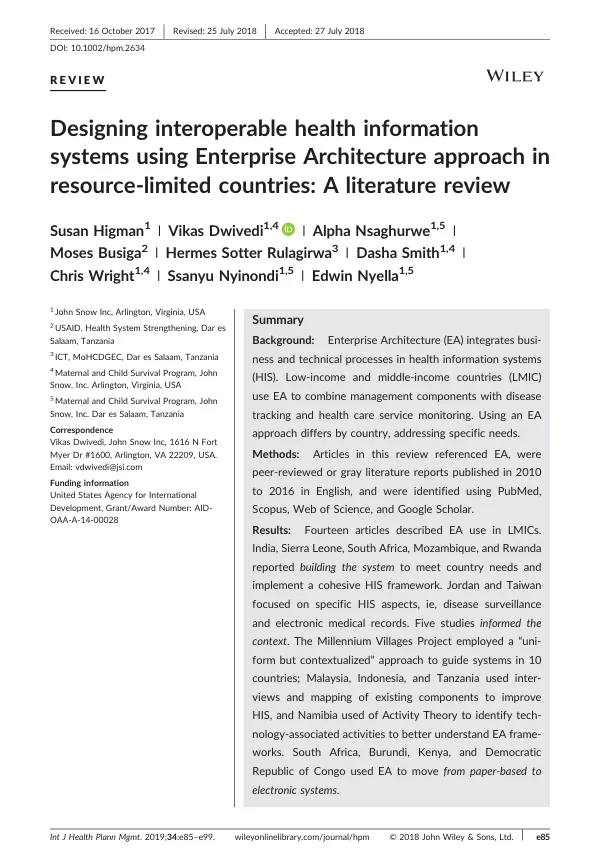
Designing interoperable health information systems using Enterprise Architecture approach in resource-limited countries: A literature review
Open record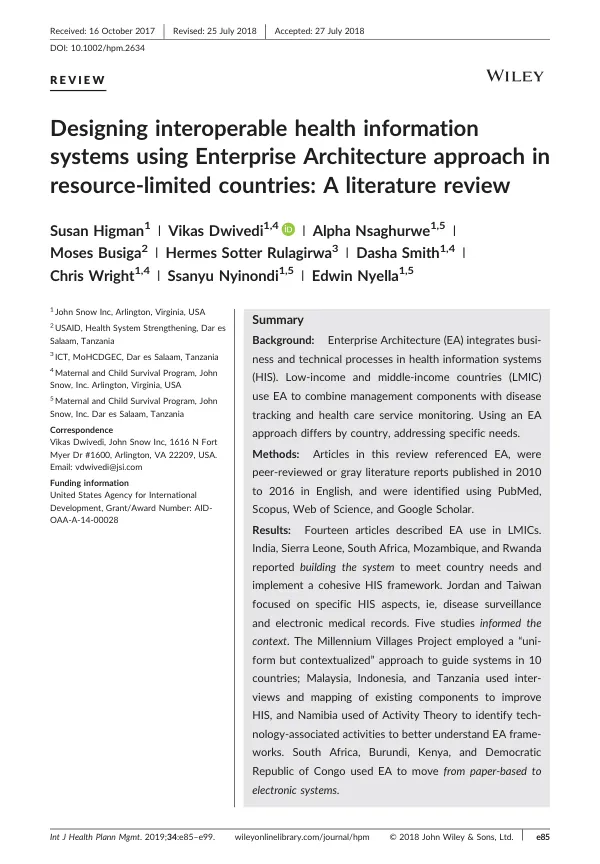 2019
2019USAID DEC