USAID. MISSION TO RWANDA
Farming systems research project (FSRP)
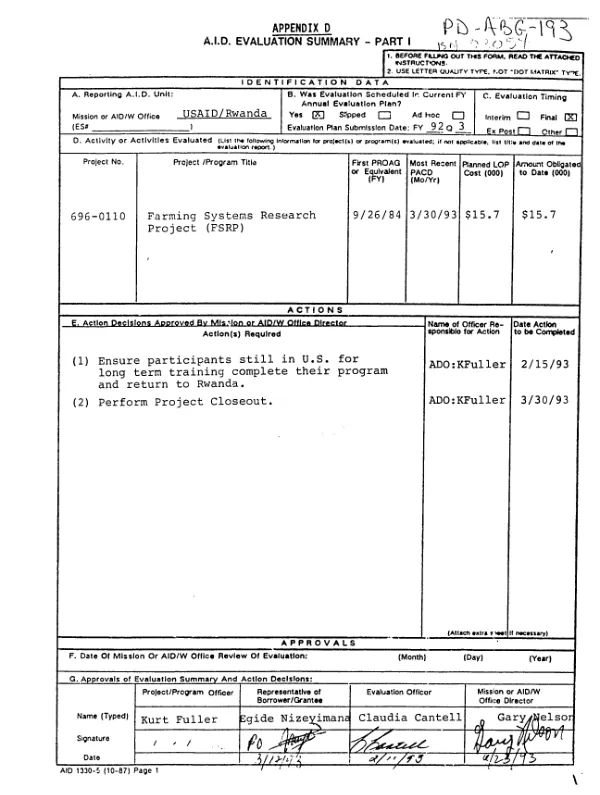
Summarizes final evaluation (PD-ABF-051) of a farming systems and research and extension project in Rwanda.
1993
Sign in to readA free account is required to download.
Abstract
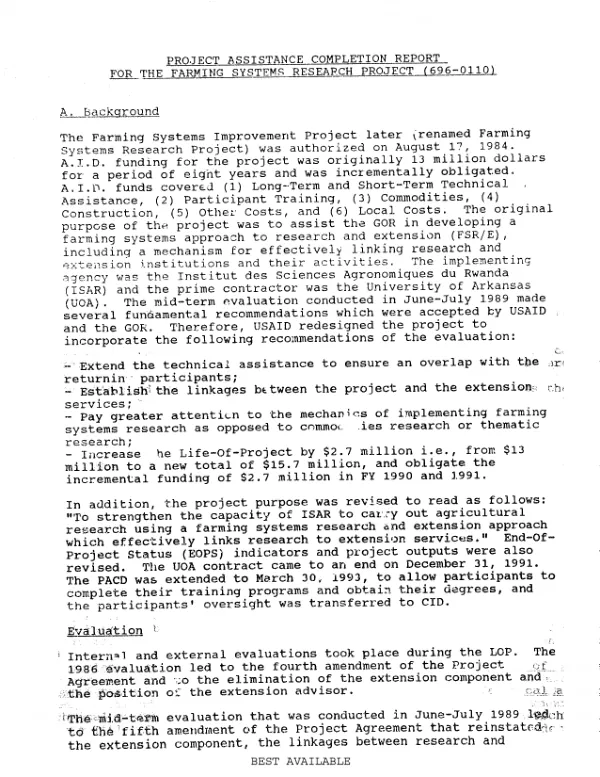
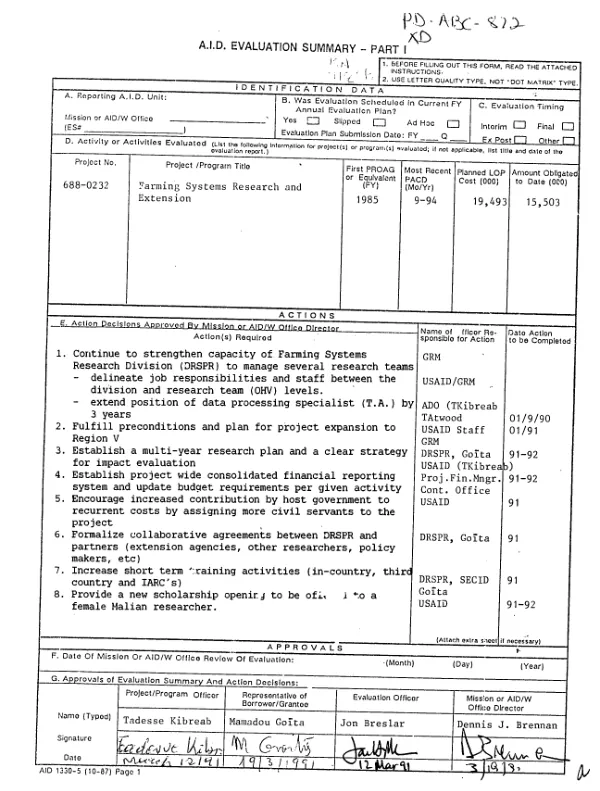
Evaluation covers the period 9/84-3/93. The project"s training efforts, improvements to infrastructure, and work with women farmers were beneficial. A total of 22 Rwandans earned Ph.D., M.S., and B.S. degrees from U.S. universities, and more than half of these graduates were reemployed by Institut des Sciences Agronomiques du Rwanda (ISAR). AFRICARE, for the modest sum of $750,000, repaired roads, installed potable water systems, built training centers, and constructed storage hangars in the project area. These improvements will be of continuing value to the rural community. The project worked with women farmers (who comprise an estimated 40% of the country"s farmers) -- they were recruited as extension agents, and represented among Rwandan counterparts for long-term training. However, the project suffered from poor management and a lack of farming systems expertise among the project implementation team. Because farming systems methodology was not implemented, few of the developed or proposed technologies were subjected to requisite socioeconomic analysis. As a result, sustainability of technologies tested among farmers was not fully assured. Although the higher-yielding varieties of beans, wheat, and potatoes continued to be used by farmers, the value of the much preferred bean variety, G2333, was compromised by the onset of a fungal root disease. Other technologies, such as the Lime plus NPK treatment, and the agroforestry species, Sesbania, were either abandoned or recognized as inappropriate. Success of the project was limited because recommendations from previous project evaluations were not followed. The 1986 evaluation led to the fourth project amendment, in which USAID unilaterally eliminated the extension component and the extension advisor"s position, compromising the project"s relevance to farming systems research and extension. In 1988, the Inspector General recommended an evaluation to determine the significance of extension for continued project implementation. The 1989 project evaluation that followed led to a fifth amendment, in which the extension component was reinstated and continued until the project agreement completion date. (Author abstract, modified)
Related documents