WORLD BANK
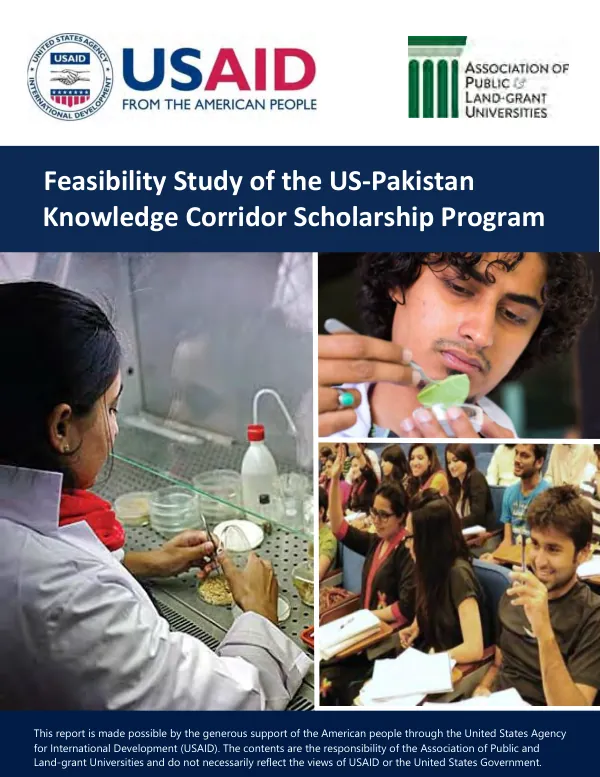
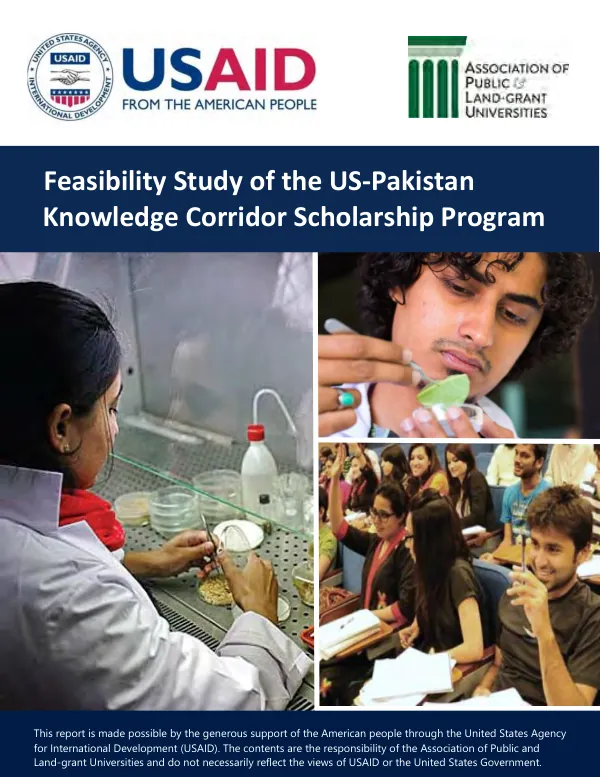
Feasibility Study of the US-Pakistan Knowledge Corridor Scholarship Program
The US-Pakistan Knowledge Corridor Scholarship Program aims to strengthen Pakistan's higher education sector by providing opportunities for Pakistani students to pursue doctoral degrees in the United States.
2018 · 91 pages
Sign in to readA free account is required to download.
Abstract
The program is part of the Higher Education Commission (HEC) of Pakistan's "aspirational plan" for the country's higher education sector, known as HEC Vision 2025. This plan was developed with input from the World Bank's Pakistan Tertiary Education Support Project (TESP) team and consultation with key stakeholders in the higher education sector. The HEC Vision 2025 document sets out guiding principles for continued improvement of Pakistan's higher education system, which is viewed as essential to support Pakistan's move from an agrarian state to a knowledge economy. The plan is part of a broader Vision 2025 agenda setting out a path for socio-economic development over the next eight years, with seven "pillars for development" including "Putting People First - Developing Human and Social Capital." The US-Pakistan Knowledge Corridor Scholarship Program is designed to support the HEC's strategy for strengthening Pakistan's higher education sector. The program aims to provide scholarships to Pakistani students to pursue doctoral degrees in the United States, with the goal of increasing the number of Pakistani students pursuing higher education abroad. The program also aims to promote collaboration between Pakistani and American universities, and to support the development of research capacity in Pakistan. The program's goals and strategies are aligned with the HEC's vision for the higher education sector, which includes increasing access to higher education, improving the quality of higher education, and promoting research and innovation. The program's implementation will require careful planning and management, including outreach and preparation of students, student placement in US doctoral programs, and support for returning students. The program's implementation options include providing "research and assistantship grants" to US universities, working through Centers for Advanced Studies to expand PhD training, investing in student preparation and providing "return grants" to successful students, and providing scholarships funds directly to students. The Association of Public and Land-grant Universities (APLU) recommends a combination of these options for optimal results. The APLU assessment of the program's goals and strategies with recommendations highlights the importance of aligning the program with the HEC's articulated goals, including increasing access to higher education, improving the quality of higher education, and promoting research and innovation. The APLU also recommends considering outreach and preparation of students, student placement in US doctoral programs, and support for returning students. The program's implementation will require careful consideration of several key factors, including the costs of a US doctoral degree, the planned budget for the scholarship program, and the estimated pipeline of potential candidates for the program. The APLU recommends a detailed program implementation plan, including budget scenarios and key recommendations, to ensure the program's success. The program's management will require careful planning and coordination, including options for outsourcing program management. The APLU recommends a program management structure that includes a project manager, a program coordinator, and a team of experts in international higher education, experience in administering government-sponsored scholarship and exchange programs, and knowledge of the higher education sector in Pakistan and in the United States. Overall, the US-Pakistan Knowledge Corridor Scholarship Program has the potential to make a significant contribution to the development of Pakistan's higher education sector, and to promote collaboration between Pakistani and American universities. The program's implementation will require careful planning and management, including outreach and preparation of students, student placement in US doctoral programs, and support for returning students.
Related documents