WORLD BANK
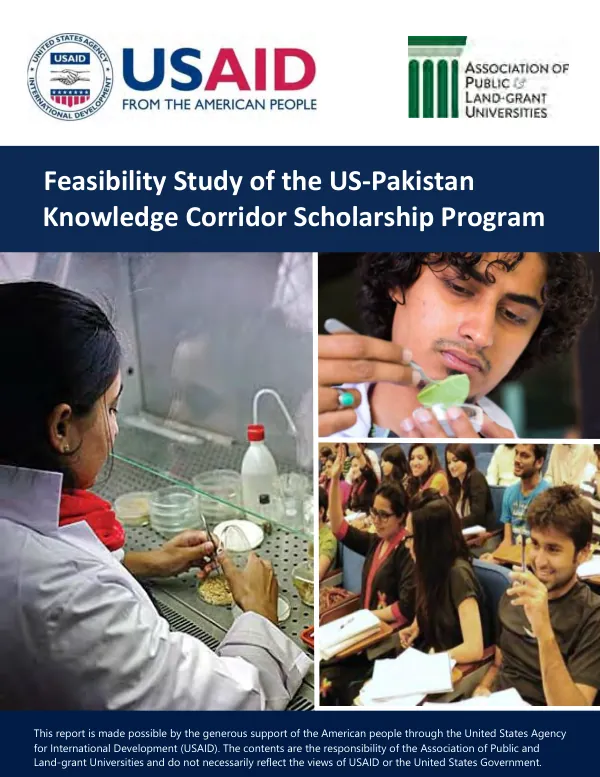
Feasibility Study of the US-Pakistan Knowledge Corridor Scholarship Program
The Higher Education Vision 2025 is a plan developed by the Higher Education Commission (HEC) of Pakistan to strengthen Pakistan's higher education sector.
2023 · 91 pages
Sign in to readA free account is required to download.
Abstract
The plan supersedes the Higher Education Medium Development Framework II (MDF-II), which covered the period 2011-2015. The development of the Vision 2025 document began in the closing stages of the previous framework and is intended to reflect the successes and failures of the MDF-II. The plan was developed with input from the World Bank's Pakistan Tertiary Education Support Project (TESP) team and consultation with stakeholders in the higher education sector. The Higher Education Vision 2025 sets out guiding principles for continued improvement of Pakistan's higher education system, which is viewed as essential to support Pakistan's move from an agrarian state to a knowledge economy. The plan is part of a broader Vision 2025 agenda, which aims to make Pakistan the next Asian tiger through seven pillars of development: Putting People First, Developing Human and Social Capital, Strengthening Institutions, Promoting Economic Growth, Enhancing Human Security, Ensuring Environmental Sustainability, and Fostering Global Partnerships. The plan aims to achieve several key objectives, including increasing access to higher education, improving the quality of higher education, and enhancing the relevance of higher education to the needs of the economy. The plan also emphasizes the importance of international collaboration and partnerships in achieving these objectives. The Higher Education Commission (HEC) of Pakistan has been working to implement the Vision 2025 plan, which includes several key initiatives such as the establishment of new universities, the expansion of existing universities, and the development of new programs and courses. The HEC has also been working to strengthen the quality of higher education in Pakistan, including the development of new accreditation standards and the establishment of a quality assurance agency. The US-Pakistan Knowledge Corridor Scholarship Program is a key initiative of the HEC Vision 2025 plan, which aims to strengthen the higher education sector in Pakistan by providing scholarships to Pakistani students to pursue higher education in the United States. The program is designed to support the development of human capital in Pakistan by providing opportunities for Pakistani students to pursue advanced degrees in the United States. The program will provide scholarships to Pakistani students to pursue master's and doctoral degrees in the United States. The scholarships will cover tuition fees, living expenses, and other expenses related to studying in the United States. The program will also provide support to Pakistani students to pursue research and academic research in the United States. The program will be implemented in partnership with the Association of Public and Land-grant Universities (APLU) and other US universities. The APLU will provide technical assistance and support to the HEC in implementing the program. The program will also provide opportunities for Pakistani students to pursue internships and research opportunities in the United States. The program will be funded by the Higher Education Commission (HEC) of Pakistan and the US Agency for International Development (USAID). The program will be implemented over a period of five years, with the first cohort of students expected to start their studies in the United States in the fall of 2023. The program will provide opportunities for Pakistani students to pursue higher education in the United States, which will help to strengthen the higher education sector in Pakistan. The program will also provide opportunities for Pakistani students to develop their skills and knowledge in areas such as research, academic research, and leadership, which will help to support the development of human capital in Pakistan. The program will also provide opportunities for Pakistani students to pursue internships and research opportunities in the United States, which will help to support the development of human capital in Pakistan. The program will also provide opportunities for Pakistani students to develop their skills and knowledge in areas such as