USAID DEC
Feed the Future Egypt Rural Agribusiness Strengthening Project FY20 Q3 Quarterly Report
Sign inABT ASSOCIATES
Feed the Future Egypt Rural Agribusiness Strengthening Project FY20 Q3 Quarterly Report
The Feed the Future Egypt Rural Agribusiness Strengthening Project is a five-year initiative that began on August 1, 2018, and aims to develop the horticulture industry's ability to respond to domestic and international buyer demand.
2020 · 32 pages
Sign in to readA free account is required to download.
Abstract
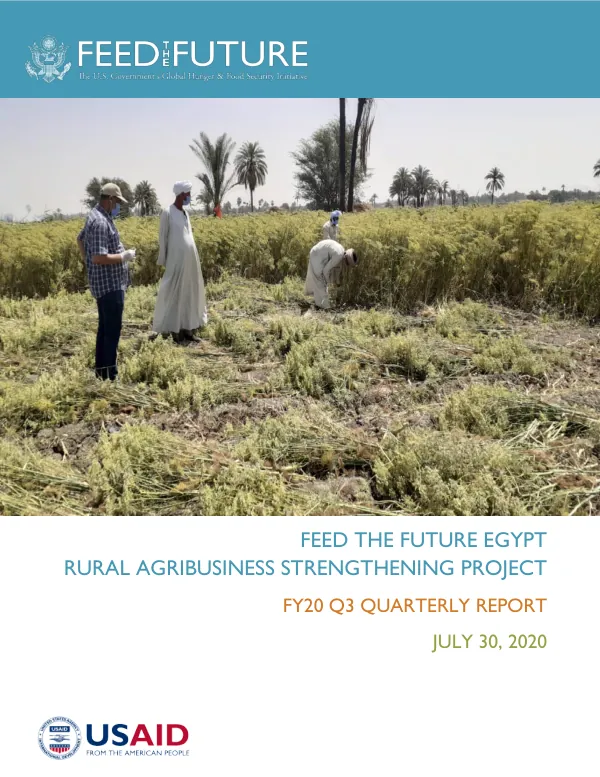
The project focuses on improving the industry's competitiveness by applying a market-driven, systems-strengthening approach. Abt Associates is the prime implementing partner, working with Egyptian firm CID Consulting, U.S. small businesses J.E. Austin Associates and 20/20 Development Company, and the Global Cold Chain Alliance. The project's goal is to create a more competitive and inclusive Egyptian economy through horticulture sector growth, with a special focus on securing employment and increasing agriculture-related incomes of smallholder farmers in Upper Egypt and the Delta. To achieve this, the project aims to strengthen sustainable domestic and international market linkages, improve post-harvest handling and storage, increase productivity of smallholder farmers and food processors, and improve the nutritional status of women and children. During the third quarter of fiscal year 2020, the project conducted four virtual trainings on various topics, including Good Agriculture Practices for Pomegranate and Integrated Pest Management for Date Palm. The project also provided remote technical assistance in production, post-harvest handling, food safety, nutrition, and gender. Additionally, the project facilitated fennel and mango shipments for several companies, hosted virtual events, and facilitated the virtual signing of contracts with three companies. The project directly contributes to USAID/Egypt's Development Objective of a more competitive and inclusive Egyptian economy through growth in selected sectors. The project is strengthening Egypt's horticulture market system and improving the capacity of smallholder farmers and processors, producer organizations, and horticultural institutions through agricultural knowledge transfer and training. The project's activities aim to achieve four intermediate results: strengthened sustainable domestic and international market linkages, improved post-harvest handling and storage, increased productivity of smallholder farmers and food processors, and improved nutritional status of women and children. In the third quarter, the project engaged 49 individuals in virtual training, identified 16 new potential buyers for business linkages, and facilitated the signing of three contracts between producer organizations and companies. The project's progress is closely monitored and evaluated through regular assessments and evaluations. The project team rapidly adjusted activities and implementation approaches in response to the COVID-19 global outbreak, ensuring continued engagement with agribusinesses, smallholder farmers, packhouses, and other key actors virtually. The project's achievements demonstrate its commitment to improving the horticulture industry's competitiveness and contributing to a more inclusive Egyptian economy.